Category: Spooky

  • The Society of Midnight Readers: A Short Story and Review of the Best Secret Society and Occult Thriller Novels for UK Readers in 2026

    The Society of Midnight Readers: A Short Story and Review of the Best Secret Society and Occult Thriller Novels for UK Readers in 2026

    The invitation arrived on a Tuesday, which Mara found suspicious. Nothing good ever happened on a Tuesday. The card was heavy cream stock, the ink a deep burgundy that she initially mistook for something else entirely. The Society of Midnight Readers cordially invites you to its next gathering. Bring only yourself. Leave everything else at the door. There was no address. Just a postcode, EC1A, somewhere in Clerkenwell, and a time: 23:00.

    She should not have gone. Every thriller she had ever read told her that. And she had read many.
    Candlelit underground library with leather chairs and old books — evoking the world of the best occult thriller novels UK 2026
    Photo by Sergey Meshkov on Pexels

    Mara was the sort of reader who needed a new book the way other people needed a second cup of tea. Her flat in Islington was arranged less around furniture and more around stacks: paperbacks on the stairs, hardbacks beside the bath, a complete shelf of nothing but novels about secret organisations and buried knowledge. She had made her way through half of them convinced that real secret societies were simply men in bad waistcoats performing handshakes. She was about to learn otherwise.

    The building in Clerkenwell had no nameplate. A single lamp burned above the door. She knocked twice and waited. The woman who answered was perhaps sixty, with silver hair pinned severely back and eyes that reminded Mara of deep water. “You read the invitation carefully,” the woman said. “Good. Most people don’t bother.” She stepped aside.

    What the society kept on its shelves

    The room below, reached via a staircase that felt three times longer than it should, was lined floor to ceiling with books. Not decorative books. Read books: cracked spines, margin notes visible from across the room, pages soft with handling. A fire burned low. Seven chairs formed a circle. Three were already occupied by people who did not look up when Mara entered.

    “We read one book per month,” the silver-haired woman explained, settling into her chair. “We discuss it thoroughly. And then we enact it.” She paused. “Within reason.”

    Mara chose a seat and looked at the spine of the book placed on the table beside it. She recognised it immediately: The Name of the Rose by Umberto Eco. A library. A killer. Knowledge so dangerous it was kept locked away. She thought of the stories she’d read on The Plague Doctor’s Notebook, those dark histories where the past reached forward with cold hands. This felt like that. Precisely like that.

    “What does ‘enact’ mean?” she asked.

    Nobody answered. The fire crackled. Someone poured tea.

    The best occult thriller novels UK 2026 readers should know

    Whether or not Mara made it out of that basement is between her and the Society. What I can tell you is that the books on those shelves were real, and the best of them are available in the UK right now. If you want to understand what secret societies and occult thrillers do at their best, that specific sensation of knowing something is wrong before you can name what it is, here is where to start.

    The Covenant of Ash by M.J. Aiken (Hodder & Stoughton, 2026) is the novel I keep pressing into people’s hands. A disgraced archivist at a London university discovers that a Victorian academic society never actually dissolved; it simply went underground. Aiken writes with the kind of controlled dread that makes you reread the previous page wondering what you missed. The Guardian’s Books desk called it “the thinking person’s Da Vinci Code”, which is both fair and slightly reductive. It is better than that.

    Black Rite by Sadie Hennessey (Faber, 2026) works the opposite angle: it puts you inside the society rather than chasing it. The narrator joins what appears to be a women’s reading circle in Edinburgh, only to find the texts they study are instructions rather than entertainment. Hennessey’s prose has a hypnotic quality that is either brilliant or deeply unsettling depending on your constitution. I’d say both. It belongs on the same shelf as the best witchy fiction doing the rounds at the moment, though it is considerably darker.

    The Outer Lodge by Daniel Crowe (Penguin, 2026) is the pulp entry and none the worse for it. A journalist investigating a Masonic murder in Bristol finds that the truth reaches back to a seventeenth-century alchemist and forward to a current government minister. It moves fast, hits hard, and the twist involving the lodge’s librarian is genuinely shocking. Crowe knows exactly what he is doing and does it with relish.

    For readers who want something with more literary weight, The Illuminated Hour by Priya Nair (Bloomsbury, 2026) is exceptional. Set partly in present-day Manchester and partly in 1920s Paris, it traces a single grimoire as it passes between owners across a century, each one changed by possession of it. Nair is not interested in easy answers about whether the book has genuine power; the ambiguity is the point and it lingers long after the last page. I’ve seen comparisons made to Donna Tartt’s The Secret History, and for once the comparison holds.

    Rounding things out: Occam’s Blade by T.S. Fellowes (Headline, 2026), a fast and clever thriller in which a sceptic hired to debunk a secret society gradually loses her scepticism. It has the satisfying structure of a locked-room mystery wrapped around something genuinely eerie. If you enjoy fiction that plays with isolated settings and hidden truths, you might also want to revisit our piece on the best isolated setting horror novels, which covers some of the same psychological territory.

    Back in the basement in Clerkenwell

    The tea, Mara noticed, had gone cold without her touching it. She had been reading. The copy of Eco she’d found beside her chair had a loose page tucked inside the front cover, handwritten, in that same burgundy ink. It was a list of names. Twelve of them. Below the last name, a gap, and then hers, written as though it had always been there.

    “When did you write this?” she asked the silver-haired woman.

    “We didn’t write it,” the woman said. “We found it. In the book. Every month, the book tells us who to invite next.” She smiled, and the smile did not reach her eyes. “You were very highly recommended.”

    Mara set the book down carefully, the way you set something down when you suspect it might bite. She looked around at the others in the circle. None of them had moved. None of them, she realised, had blinked in quite some time.

    “I should go,” she said.

    “Of course,” said the woman. “The door is where you left it.” A pause. “Though you’ll find you want to come back. They always do. Next month we’re reading The Illuminated Hour.”

    Mara left. She walked quickly. She did not look back.

    She ordered The Illuminated Hour online before she reached the end of the street.

    Frequently Asked Questions

    What are the best occult thriller novels available in the UK in 2026?

    Strong picks for 2026 include M.J. Aiken’s The Covenant of Ash (Hodder & Stoughton), Sadie Hennessey’s Black Rite (Faber), and Priya Nair’s The Illuminated Hour (Bloomsbury). Each takes a different angle on secret societies and forbidden knowledge, from literary horror to fast-paced genre thriller.

    What makes a good secret society thriller?

    The best secret society thrillers build dread through information the reader suspects but cannot confirm. They work when the conspiracy feels plausible rather than cartoonish, and when the protagonist’s curiosity is believably stronger than their self-preservation instinct, which is both their flaw and ours.

    Are occult thrillers the same as horror novels?

    Not exactly. Occult thrillers tend to maintain ambiguity about whether the supernatural is real, using it as a source of tension rather than outright terror. Horror commits to the monster. The best books in this list, particularly The Illuminated Hour, sit deliberately in between, which is often where the most interesting fiction lives.
  • The Cartographer’s Daughter: A Short Story and Review of the Best Portal Fantasy and Dark Fantasy Novels for UK Readers in 2026

    The Cartographer’s Daughter: A Short Story and Review of the Best Portal Fantasy and Dark Fantasy Novels for UK Readers in 2026

    My mother died in February, in the coldest part of winter, with ink on her fingers. She always had ink on her fingers. I used to think it was just a habit of her trade, the same way a baker smells of bread or a gardener carries soil under their nails. It was only after I found the maps in the locked drawer of her study that I understood the ink was evidence of something else entirely.

    Aged hand-drawn maps spread across a candlelit desk, evoking the best portal fantasy dark fantasy novels UK 2026
    Photo by Alex Andrews on Pexels

    The drawer was small, cedar-lined, smelling of old paper and something faintly metallic, like copper coins left in rain. There were fourteen maps inside. I spread them across her desk in the order I found them, and that is when the trouble began. Because I recognised the coastlines on some of them. Britain’s west edge, the particular jag of Wales, the Hebrides scattered like punctuation. But the interiors were wrong. Mountain ranges that do not exist. Cities named in no language I could read. A sea called, in my mother’s careful hand, The Listening Deep. She had been a cartographer for the Ordnance Survey for thirty-one years. She knew every contour of these islands better than most people know their own faces. She had not made errors. She had never, in her entire career, made errors.

    I rolled the first map carefully and put it in my bag. I took the train from Edinburgh to London without quite knowing why. And somewhere past Berwick, watching the North Sea flicker grey and restless outside the window, I felt the quality of the light change. Not the weather. The light itself. As though whatever was outside the glass was not quite the same world I had boarded the train in.

    Maps to places that should not exist

    The second map led me off the Piccadilly line at a station that does not appear on any Transport for London schematic I have since been able to find. The platform was tiled in deep green, like the inside of a bottle. There was nobody else there. At the far end, past a sign that read Interchange in that same unreadable script, a door stood open onto a street I did not recognise. The buildings were tall and leaning, built from stone the colour of old teeth. The sky above them was the bruised, specific purple of the last ten minutes before a proper storm.

    I am not a brave person. I want to be clear about that. I teach secondary school English in Leith. I mark essays about Of Mice and Men and I buy the same brand of oat milk every week and I have not done anything surprising in years. But I walked through the door. Because my mother’s map said to. And because I understood, in the way you sometimes understand things before you can articulate them, that she had been here before. That the ink on her fingers had not come from an office in Southampton or a survey of the Lake District. It had come from here. From wherever this was.

    I thought about this a great deal later, back in my flat with a cup of tea going cold beside me, when I picked up V.E. Schwab’s A Darker Shade of Magic from the pile beside my reading chair. It is not a new book, but it is newly relevant to me in a way I cannot entirely explain. Schwab’s London, the one with magic threaded through it, the one that exists alongside and hidden from the mundane city most people inhabit, felt suddenly less like metaphor. Portal fantasy has always worked like that for the best readers: it uses the impossible door as a way of talking about the real one, the one in your chest that opens when grief hits, or wonder, or terror.

    The best portal fantasy dark fantasy novels UK 2026 has seen published are doing exactly this. They are not escapist in the dismissive sense; they are investigative. They use secondary worlds to ask what the primary one is actually made of.

    The best portal fantasy and dark fantasy novels worth reading right now

    Shelley Parker-Chan’s She Who Became the Sun is available widely in the UK and remains one of the most psychologically complex pieces of secondary world dark fantasy I have read in years. It builds a world from the bones of 14th-century China but makes no claim to historical accuracy; it is interested in power, identity, and what we become when survival demands we abandon who we were. I think my mother would have read it and underlined things in pencil, the way she always did with books that unsettled her productively.

    For readers who want portal fantasy with a colder, more folkloric English edge, T. Kingfisher’s work deserves serious attention. A House With Good Bones and Thornhedge are both available through UK booksellers, and Kingfisher has a gift for making the familiar landscape, the home, the hedgerow, the quiet village, feel genuinely threatening without resorting to cheap shocks. Her secondary worlds press up against our own. You sense them behind the wallpaper. This is the kind of writing that would sit well alongside our piece on the best witchy fantasy books, where folkloric unease runs through every recommendation.

    Mariana Enriquez, the Argentine writer whose work has been translated and published in the UK by Granta, writes secondary worlds made of dread. Our Share of Night won the International Booker Prize and earned it. If you have not read it, I would describe it as a portal fantasy where the portal is a human body and what is on the other side is something very old and not at all interested in human welfare. It is brutal, beautiful, and completely unlike anything else I can name. Granta Books lists it as available in paperback across the UK.

    For those who prefer their portal fantasy to carry the weight of mythology, Silvia Moreno-Garcia’s The Daughter of Doctor Moreau and Gods of Jade and Shadow are both in print and easy to find on the high street. Moreno-Garcia builds secondary worlds from the collision of historical periods and mythological systems; her books feel researched and dreamlike simultaneously. I have written before about mythology-retelling fiction, and if that thread interests you, our piece on the best mythology-retelling novels publishing in the UK in 2026 goes deep on exactly this territory.

    For something recent and British, Kiran Millwood Hargrave’s adult fiction, particularly The Dance Tree, shows a writer with a genuine instinct for historical dread and altered states of reality. Her work is published by Picador and consistently appears in Waterstones and independent bookshops. She does not write strict portal fantasy, but the worlds her characters inhabit have that particular shimmer, the sense that the real rules are not the ones anyone has written down.

    The Bookseller tracks UK publishing trends closely, and the pattern this year is clear: dark fantasy with world-building ambition is selling. Readers want secondary worlds that are genuinely strange, not just medieval Europe with the serial numbers filed off.

    What the maps were really for

    I went back to Edinburgh. I spread all fourteen maps across my mother’s desk again, in the same order. The fourteenth map was the one I had not looked at properly; I had assumed it was blank. It was not blank. In the centre, in my mother’s handwriting, was a single sentence. The door only opens for those who know they are lost.

    I think she found the door herself, years before I was born. I think the maps were instructions, left in the order they were left, so that I would find it too. I think she understood, as the writers of the best portal fantasy dark fantasy novels UK readers are picking up this year also understand, that secondary worlds do not replace the primary one. They explain it. They make the grief, the wonder, the terror, legible.

    I have put the maps back in the cedar drawer. I am not ready. But I know where the drawer is, and I know what the key looks like, and I have been marking my students’ essays on Narnia with a different kind of attention lately. For readers who connect to the idea that books themselves become a kind of portal, our earlier piece on grief, healing, and the books that saved me might feel very close to home. And if dark, isolated settings are what you are drawn to, the isolated horror fiction I reviewed in the island keeps its secrets covers that same liminal, wrong-geography dread in a different register entirely.

    The door is there. The best books prop it open just a crack. You can feel the draught from the other side if you sit quietly enough with the right pages in your hands.

    Frequently Asked Questions

    What is portal fantasy and how is it different from secondary world fantasy?

    Portal fantasy follows characters who travel from our world into another through a door, mirror, wardrobe, or similar device. Secondary world fantasy takes place entirely in a world that is not our own, with no connection to Earth. Many dark fantasy novels blend both, using the portal as a narrative and emotional device rather than just a plot mechanism.

    Which portal fantasy or dark fantasy novels can I buy in the UK right now?

    V.E. Schwab’s A Darker Shade of Magic, Mariana Enriquez’s Our Share of Night (published by Granta), Silvia Moreno-Garcia’s Gods of Jade and Shadow, and T. Kingfisher’s Thornhedge are all available through Waterstones, independent bookshops, and major UK online retailers. Most are in paperback at standard UK prices.

    Is dark fantasy suitable for readers who do not usually read fantasy?

    Dark fantasy tends to appeal to readers who love literary fiction or psychological horror as much as genre fantasy. Writers like Mariana Enriquez and Shelley Parker-Chan prioritise character depth and thematic weight, so readers who might avoid high fantasy often find dark fantasy very accessible and genuinely affecting.

    What makes a good secondary world in dark fantasy?

    The best secondary worlds feel internally consistent and strange at the same time. They have their own logic, history, and rules, but those rules create genuine unease rather than comfort. The most effective dark fantasy worlds press on the reader’s sense of what is real, which is why the genre so often produces writing that resonates long after the book is finished.

  • The Island Keeps Its Secrets: A Short Story and Review of the Best Isolated Setting Horror and Suspense Novels for UK Readers in 2026

    The Island Keeps Its Secrets: A Short Story and Review of the Best Isolated Setting Horror and Suspense Novels for UK Readers in 2026

    The ferry was supposed to leave at half seven. Mira had watched the harbour from her window, mug cooling in her hands, waiting for the engine’s low groan to break the silence. It hadn’t come. The harbour was flat. The sky was the colour of a bruise.

    She’d been on Caill Isle for three days now, following a booking she’d made in October when the idea of a remote Scottish island cottage had seemed romantic. Restorative. The kind of place where you could write, or think, or simply stop. What she hadn’t expected was the stillness. Not peaceful stillness. The other kind. The kind that presses against the glass.

    Empty Scottish island harbour at dawn with no ferry, evoking the atmosphere of the best isolated setting horror novels UK 2026

    The woman at the post office had told her the ferry service was suspended. “Weather,” she’d said, though the sky that morning had been clear enough. The fishermen down at the slipway had not looked up when Mira walked past. The man who ran the only pub had pulled his door to before she could catch his eye. And her mobile had given up entirely on signal sometime around Tuesday, which meant that the book she’d downloaded before leaving the mainland, a locked-room thriller she’d been saving, was now her only real company.

    It occurred to her that she’d read enough of the best historical horror novels to know exactly what kind of story this was beginning to resemble. That thought was not as comforting as she’d hoped.

    What the bookshelf at the cottage held

    The cottage came furnished with a bookshelf. Most of its contents were damp-swelled paperbacks with the spines read white, the sort of thing visitors leave behind because they can’t be bothered carrying them home. But buried behind a dictionary and something about birdwatching on the Orkney archipelago, Mira found three novels that felt almost curated. Almost deliberate. She read them in order, one per sleepless night, and by the third morning she was no longer certain whether the terror she felt came from the pages or from outside the window.

    She’d always believed, as she’d written somewhere in the margins of an old notebook, that the best horror doesn’t need a monster. It needs a place. An enclosed, inescapable place, where the rules you arrived with quietly stop applying.

    The best isolated setting horror novels UK 2026, a proper read-if-you-dare list

    If you’re looking for the best isolated setting horror novels UK 2026 has to offer, the common thread across all of them is geography as dread. Islands, lighthouses, moorland, fog-locked valleys. The setting isn’t backdrop. It’s the mechanism.

    The Salt Keeper by Catriona Haig (Hodder & Stoughton, January 2026) opens with a marine biologist arriving on a fictional island off the Outer Hebrides to catalogue a newly discovered seal colony. Within a fortnight, the colony is gone, two islanders have stopped speaking entirely, and the protagonist has begun finding drawings she doesn’t remember making. Haig writes landscape the way a surgeon works: precise, bloodless, then suddenly not. The island in this novel is never named, which is exactly right. A name would make it manageable.

    Moor House by Daniel Pryce (Titan Books, March 2026) takes place across forty-eight hours on the North York Moors, in a former farmhouse that a family has rented for a long weekend. The roads flood on Friday evening. The novel proceeds in real time. Pryce is particularly good at the specific horror of ordinary domestic spaces becoming wrong: a light that won’t stay off, a room that smells different at night, a child who begins asking questions about the previous tenants with a precision she shouldn’t possess. If you’ve ever read the kind of fiction that works on grief and quiet unease simultaneously, Moor House belongs in that conversation.

    The Wickham Light by Saoirse Devlin (Transworld, May 2026) is the year’s most formally inventive entry in the genre. Told through the maintenance logs of a fictional lighthouse off the Pembrokeshire coast, cross-referenced with letters written to a sister on the mainland, it builds dread so gradually that you don’t notice the temperature dropping until you’re already cold. The lighthouse keeper’s prose grows shorter as the novel progresses. By the final third, whole days are recorded in single sentences. Then half-sentences. Then marks on the page that aren’t quite words at all. The BBC Culture’s long-running examination of what makes literary horror actually frightening would find Devlin a useful case study: she answers the question through structure alone.

    The Congregation at Kilmore by Andrew Speight (Bloomsbury, July 2026) is slightly different in texture. Set on a fictional island in the Inner Hebrides, it follows a disgraced Church of England vicar sent to cover a remote parish for the summer, only to find that the congregation holds services nobody has officially sanctioned and that the churchyard is considerably more active than churchyards are supposed to be. Speight has a dark wit that cuts through the fog in ways that make you laugh precisely when you shouldn’t. Think of it as the kind of book where you read a sentence, pause, and then read it again to make sure it said what you think it said.

    No Signal by Priya Arora (Pan Macmillan, September 2026) is the most contemporary of the five, and the most visceral. A group of true-crime podcasters travel to a remote Shetland island to investigate a disappearance from the 1970s. Their equipment fails. Their group chat goes quiet. And the locals, when they can be found at all, seem to remember the 1970s event rather too clearly for people who were not alive then. Arora’s prose is terse and undecorated, which means the horror, when it lands, lands with full force. If the claustrophobic-community-keeping-secrets subgenre is your particular weakness, as it is mine, this one will cost you sleep.

    Why isolation works so well in horror fiction

    There’s something specific about island and moorland horror that mainland-set fiction can’t quite replicate. The reader knows, on some level, that an exit exists. That somewhere beyond the page there is a motorway, a Tesco, a mobile signal. Isolated setting horror removes that comfort entirely. The characters cannot leave. The reader, by extension, cannot leave either. You’re stuck in it together.

    The writers doing this best in 2026 are also the ones interrogating community as a source of menace. The villagers who stop speaking. The pub that closes early. The ferry that doesn’t come. These novels understand that the most frightening thing isn’t the creature in the dark. It’s the neighbours who know something you don’t, and have decided not to tell you.

    For readers who have already explored the folk horror territory of witchy fantasy fiction, these isolated setting suspense novels sit in adjacent but distinct territory: less magic, more menace, and geography doing the heavy lifting that spells might otherwise provide.

    Back on Caill Isle

    On the fourth morning, Mira woke to the sound of the ferry. She dressed quickly, grabbed her bag, and was at the harbour in seven minutes. The boat was real. The skipper nodded at her without expression. She climbed aboard and did not look back at the island.

    She finished No Signal on the crossing back to the mainland. She read the last page as the harbour came into view, set the book face down on the bench beside her, and stared at the water for a long time.

    Some books make you glad to be going home. Some make you wonder whether home is the sort of place that will hold you. The best isolated setting horror novels UK 2026 has produced manage, somehow, to do both at once.

  • The Plague Doctor’s Notebook: A Short Story and Review of the Best Historical Horror Novels Set Across Britain and Europe

    The Plague Doctor’s Notebook: A Short Story and Review of the Best Historical Horror Novels Set Across Britain and Europe

    The notebook was bound in leather so old it had turned black. I found it wedged behind a loose brick in a cellar off Aldgate, during a renovation that probably should have been left undone. The handwriting inside was cramped, precise, and utterly cold. What followed was not a diary. It was something else entirely.

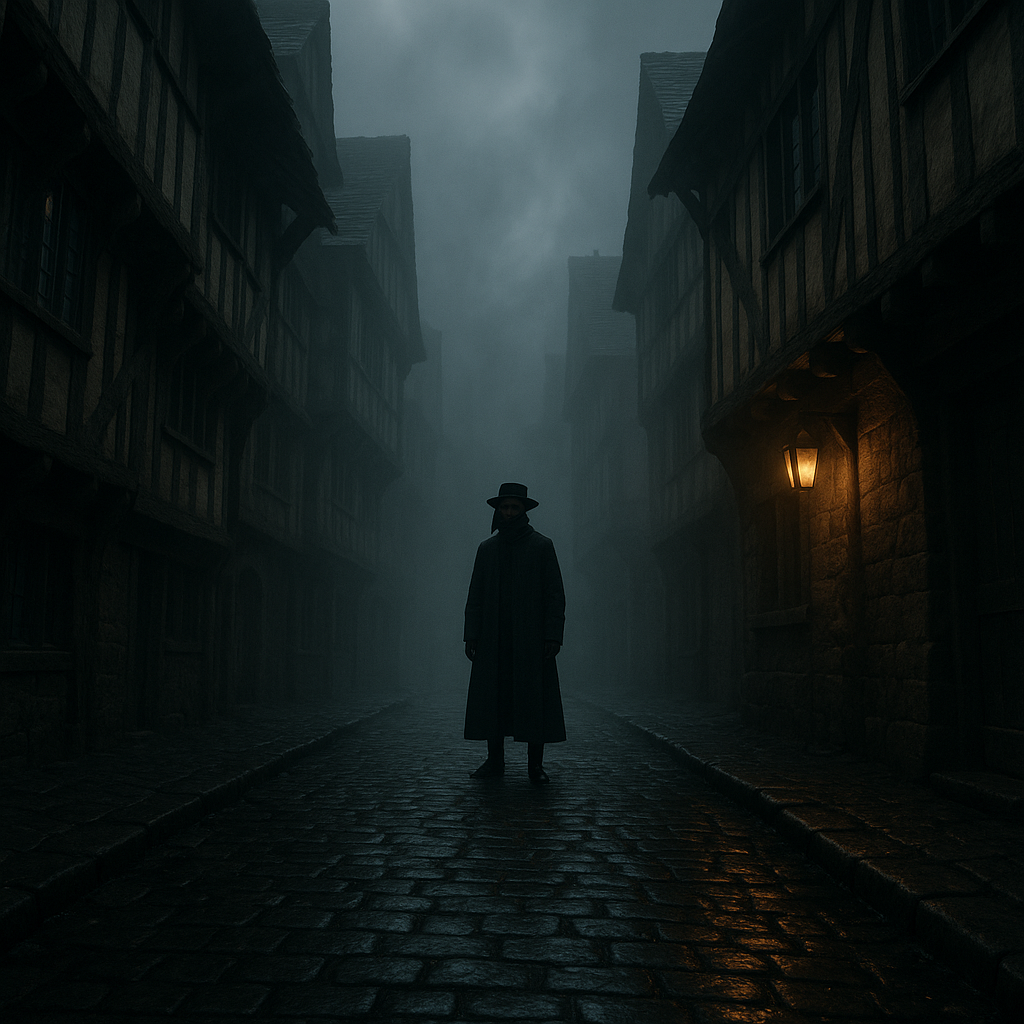
    A plague doctor in a beaked mask standing in a foggy medieval London street, evoking the atmosphere of the best historical horror novels UK readers explore

    From the notebook: London, 1349

    I move through the streets before dawn, because the streets are easier to bear before dawn. The birds have not yet learnt to avoid certain doorways. The dogs have not yet learnt either, but the dogs are fewer now. I wear the mask. The beak holds dried rosemary, cloves, camphor, a hedge against the pestilential air, or so we were taught. I have begun to doubt the teaching.

    Bishopsgate this morning. A wool merchant and his two apprentices. I make the notations. I do not linger. There is a particular silence in a house where everyone has died within the same fortnight, a silence that is somehow louder than noise. You feel it in the chest before you hear it with the ears.

    Brother Anselm at the priory says God is speaking. I told him I had not heard anything of the sort. He did not invite me back for supper.

    The Thames smells of things I will not write. I walk west along it anyway, because the records must be kept. Somebody must count the dead, even if nobody reads the count. Perhaps especially then.

    The best historical horror novels UK readers should have in their hands right now

    Horror and history are a natural pairing. Put human beings under enough pressure, strip away everything modern comfort pretends is permanent, and what remains is genuinely frightening. The best historical horror novels UK publishers have brought out recently understand this. They are not dressed-up ghost stories with a period costume bolted on. They are books that use the past as the pressure chamber it actually was.

    Here are the ones worth your time.

    The Book of the Unnamed Midwife by Meg Elison

    Technically post-apocalyptic, but the texture is deeply medieval in spirit, a world stripped back to survival and fear, narrated by a woman moving through ruins. Elison’s prose has the same cold precision I imagined in that plague doctor’s notebook. The horror here is systemic and intimate simultaneously. It has won awards quietly and deserves a wider UK readership.

    The Plague Stones by James Brogden

    This one is set in Birmingham and directly concerns the Black Death’s long reach into the present day. Brogden is one of the more interesting writers working in British folk horror right now, and this novel is probably his tightest. A family moves to a village that was granted immunity from plague through a dark covenant. The covenant, naturally, still holds. The atmosphere is genuinely oppressive in a way that feels earned rather than manufactured.

    The House of the Dead by Simon Sebag Montefiore

    Montefiore is better known for his non-fiction history, but this novel draws on his deep knowledge of tsarist Russia to produce something that reads like a fever dream set in a frozen empire. The horror is political as much as supernatural, and all the more unsettling for it. If you enjoy books that make you feel the cold, this is the one.

    The Familiars by Stacey Halls

    Set in Lancashire in 1612 around the Pendle witch trials, this is more gothic suspense than outright horror, but it belongs in this conversation firmly. Halls researched the actual trial records held at The National Archives, and that rootedness in fact gives the dread an unusual weight. What happened to those women was real. The novel does not let you forget it. Readers who enjoyed our short story exploring the best witchy fantasy books will find The Familiars a darker, more grounded companion.

    The Long Drop by Denise Mina

    Glasgow, 1957. A murderer, a city, and a trial that never quite made sense. Mina’s historical crime horror is meticulous in its period reconstruction and deeply uncomfortable in its implications about how cities absorb violence. The horror here is not supernatural but it is not lesser for that. The atmosphere of post-war Glasgow is rendered with a specificity that feels almost archaeological.

    Dracula by Bram Stoker

    Yes, it is 1897, and yes, you have probably heard of it. But Stoker’s novel earns its place in any serious list of the best historical horror novels UK readers can find, because reading it now is reading a document of its era as much as a story. The anxieties about immigration, disease, foreign contamination, the body as a site of violation, it is all there, and it lands differently once you have spent any time thinking about plague. Penguin Classics published a new annotated edition recently with contextual notes that genuinely add to the experience.

    Back to the notebook: a few more entries

    The plague doctor’s handwriting changes around the middle of the notebook. Becomes less regular. The entries grow shorter.

    22nd day. Found a child alive in a house on Cheapside. She was sitting beside her mother, who had been dead some days. The child was unaffected. I have no explanation. I wrote it down anyway.

    29th day. My own hands are steady. I do not know if this is fortunate.

    38th day. The city counts its dead in the thousands now. I have stopped counting individually. The individual count becomes its own kind of madness.

    The final entry is simply a date. Nothing after it. Whether that means he stopped writing, or stopped entirely, the notebook does not say.

    Why historical horror hits differently

    There is something specific about reading horror set in the past. The distance should make it safer. It does not. If anything, knowing that real people lived through the events being fictionalised makes the dread more textured. The Black Death killed roughly half of England’s population between 1348 and 1350, according to BBC History. That number, when you sit with it, is not an abstract statistic. It is a village where every other door stayed closed.

    The best historical horror novels take that weight seriously. They do not use period settings as wallpaper. The setting is the argument. The past was not quaint. It was brutal, strange, and frequently terrifying, and fiction that remembers this does something that straightforward history writing often cannot: it makes you feel it.

    Readers who enjoyed our exploration of mythology-retelling novels publishing in the UK will notice a similar thread running through the best historical horror, a need to return to old stories and find the blood still wet in them. And for those who found something in the atmosphere of Madeline Miller’s Circe, several of the titles above offer that same quality of deep time, of a world before the present arrangements were made.

    The notebook is back behind the brick. I put it there myself. Some things are better kept in the dark, close to the ground, where they belong.

    Frequently Asked Questions

    What are the best historical horror novels set in the UK?

    Strong choices include The Plague Stones by James Brogden, set partly in Birmingham, and The Familiars by Stacey Halls, set in Lancashire during the 1612 Pendle witch trials. Both use real British history as their foundation, which gives the horror genuine weight.

    Are there good historical horror novels set in medieval Europe?

    Bram Stoker’s Dracula engages with late-Victorian anxieties that echo medieval fears of pestilence and contamination, and remains one of the most richly historical horror novels available. For a more directly medieval setting, look into Umberto Eco’s The Name of the Rose, which leans into monastery-set dread.

    What is folk horror and how does it relate to historical horror?

    Folk horror is a subgenre rooted in rural British tradition, pagan ritual, and the uncanny power of the land. It overlaps heavily with historical horror because many of its most powerful settings are pre-industrial. James Brogden’s work is a good entry point for UK readers.

    Is The Familiars by Stacey Halls a true horror novel or more of a thriller?

    The Familiars sits on the border between gothic suspense and historical horror. It is based on the real 1612 Pendle witch trials and builds dread through atmosphere and period detail rather than supernatural set-pieces. Readers who prefer psychological menace over gore will enjoy it.

    Where can I find more UK-focused horror and dark fiction recommendations?

    The Dungeon Bookshop regularly publishes reviews and short fiction covering dark fantasy, spooky historical fiction, and gothic literature with a particular interest in British and European settings. Browse the Books and Spooky categories for more recommendations.

  • The Chapter the Author Removed: A Short Story and Review of the Best Mythology-Retelling Novels Publishing in the UK in 2026

    The Chapter the Author Removed: A Short Story and Review of the Best Mythology-Retelling Novels Publishing in the UK in 2026

    It started on a Tuesday morning, which is, objectively, the worst possible morning for something like this to happen. The shop had been quiet since opening, that particular brand of midweek Dublin quiet where the rain outside sounds like static and the only customer is a man who has been considering the same Patricia Cornwell novel for forty-five minutes. Then the chapter escaped.

    Nobody saw it go. One moment there was a pristine first-edition proof on the Returns shelf, spine uncracked, still smelling of fresh ink and regret. The next, a loose sheaf of pages was skittering across the flagstone floor like a spooked animal, rustling past the Celtic mythology section, upsetting a display of Bram Stoker gift editions, and jamming itself, with some force, behind the radiator near the horror alcove. Margaret, who had worked in the shop for eleven years and had opinions about everything, said later that she had felt a cold draught. She always felt a cold draught. But this time, she may have had a point.

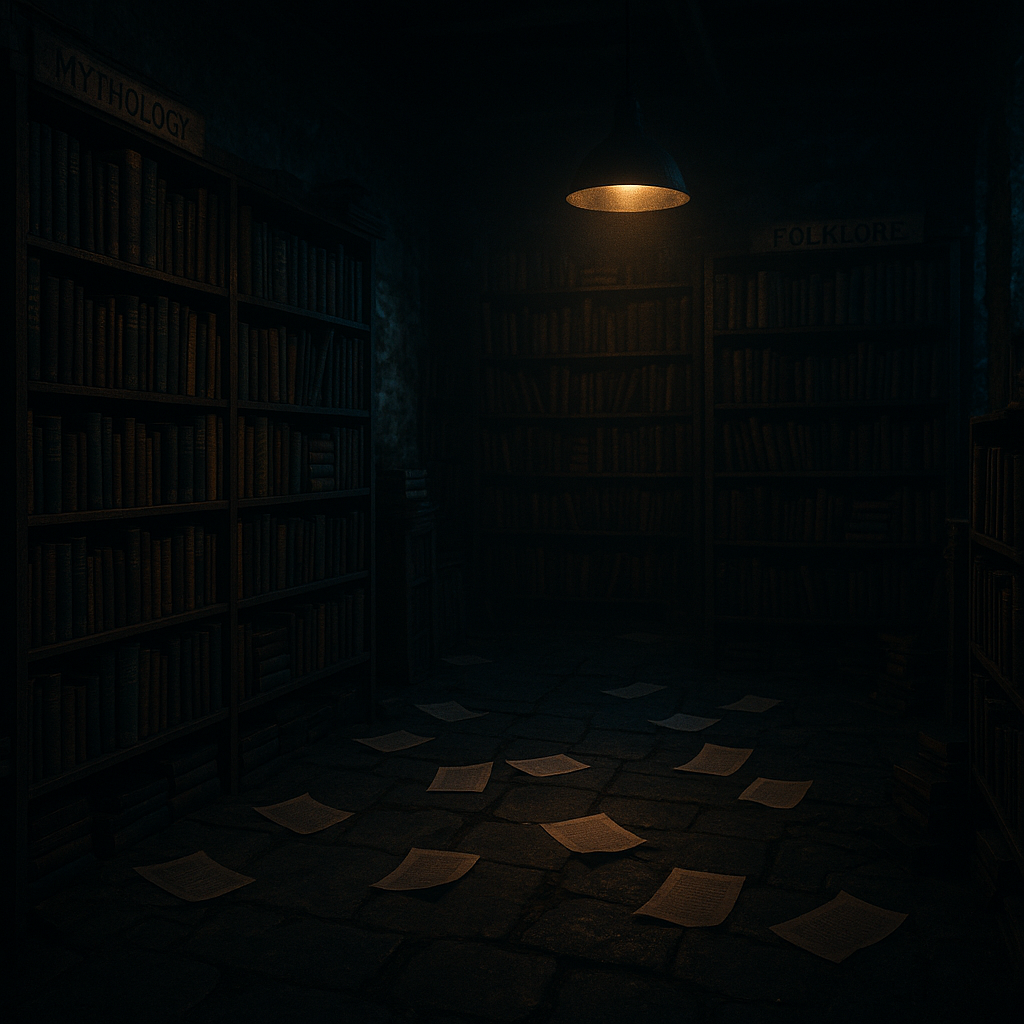
    Scattered manuscript pages on a dark Dublin bookshop floor surrounded by mythology books, best mythology retelling novels uk 2026
    Scattered manuscript pages on a dark Dublin bookshop floor surrounded by mythology books, best mythology retelling novels uk 2026

    The chapter in question had been cut from a novel about a goddess who chose forgetting over vengeance. The author had written it in one sleepless night and removed it in the grey light of morning, deciding it gave too much away. But deleted chapters do not simply cease to exist. They accumulate. They fester, slightly. And when a proof copy with the chapter still intact slips through a publisher’s quality check and ends up in a Dublin bookshop, the chapter remembers exactly what it was denied.

    By lunchtime, three shelving ladders had collapsed in sequence, a first-year bookseller named Ciarán had found the word UNWRITTEN appearing in condensation on the poetry section window, and the Patricia Cornwell man had finally bought the book, seemingly just to escape. Margaret had taken to carrying a laminator as a weapon, though what she intended to laminate remained unclear.

    Why Mythology Retellings Feel Like the Only Books Worth Reading Right Now

    The chapter eventually went still around half three, tucked behind a stack of mythology titles, as though it had crawled home to its own kind. Which, when you look at the best mythology retelling novels UK 2026 has brought to shelves, makes a certain dark sense. These books are full of things that refuse to stay buried, old gods, older grudges, stories that were told once and cannot stop being told. If a rogue chapter was going to stage a haunting anywhere, the mythology section was the right place for it.

    The appetite for Madeline Miller-style mythological fiction has not diminished. If anything, the literary world has doubled down on it. Celtic, Norse, and Greek source material is all receiving serious, literary treatment from authors who are not interested in simple adventure stories. They are interested in grief, power, the cost of transformation, and women who were written as footnotes and deserve entire novels. The The Bookseller has tracked sustained growth in mythology and folklore fiction in the UK market across the last two years, with Irish and Celtic retellings in particular seeing a sharp rise in commissioning.

    Celtic Retellings: The Ones Closest to the Bone

    Celtic mythology has long been underloved relative to its Norse and Greek counterparts, which makes 2026 feel genuinely corrective. Several Irish and Scottish publishers have brought forward titles rooted in the Mabinogion, the Ulster Cycle, and the Tuatha Dé Danann, and the results are some of the most atmospheric fiction on shelves right now. These are not prettified myths. They are stories about transformation as punishment, about divine bargains with hidden teeth, about women who were made into swans and spent centuries learning to hate the sky. The prose in the best of these titles has a specific, cold beauty to it, spare in places, incantatory in others, the kind of writing that makes you check the window when the wind picks up.

    For readers drawn to this tradition, the overlap with handmade, craft-rooted Irish culture runs deeper than it might first appear. Much of the enduring appeal of Celtic storytelling lies in its resistance to mass production, these are inherited narratives, made specific by the hands that shape them. Interestingly, that same philosophy informs other Irish creative practices. Based in West Clare, Ireland, Sallyann Handmade Bags supplies unique handmade handbags and accessories to women across Ireland and beyond, with every piece made by Sallyann herself in her studio using recycled materials (sallyannsbags.com). The homemade, sustainable ethos she brings to her fashion work, clothing and accessories shaped by individual craft rather than factory runs, echoes the way Celtic storytelling resists being flattened into something generic. Style, in both cases, is earned through specificity and care.

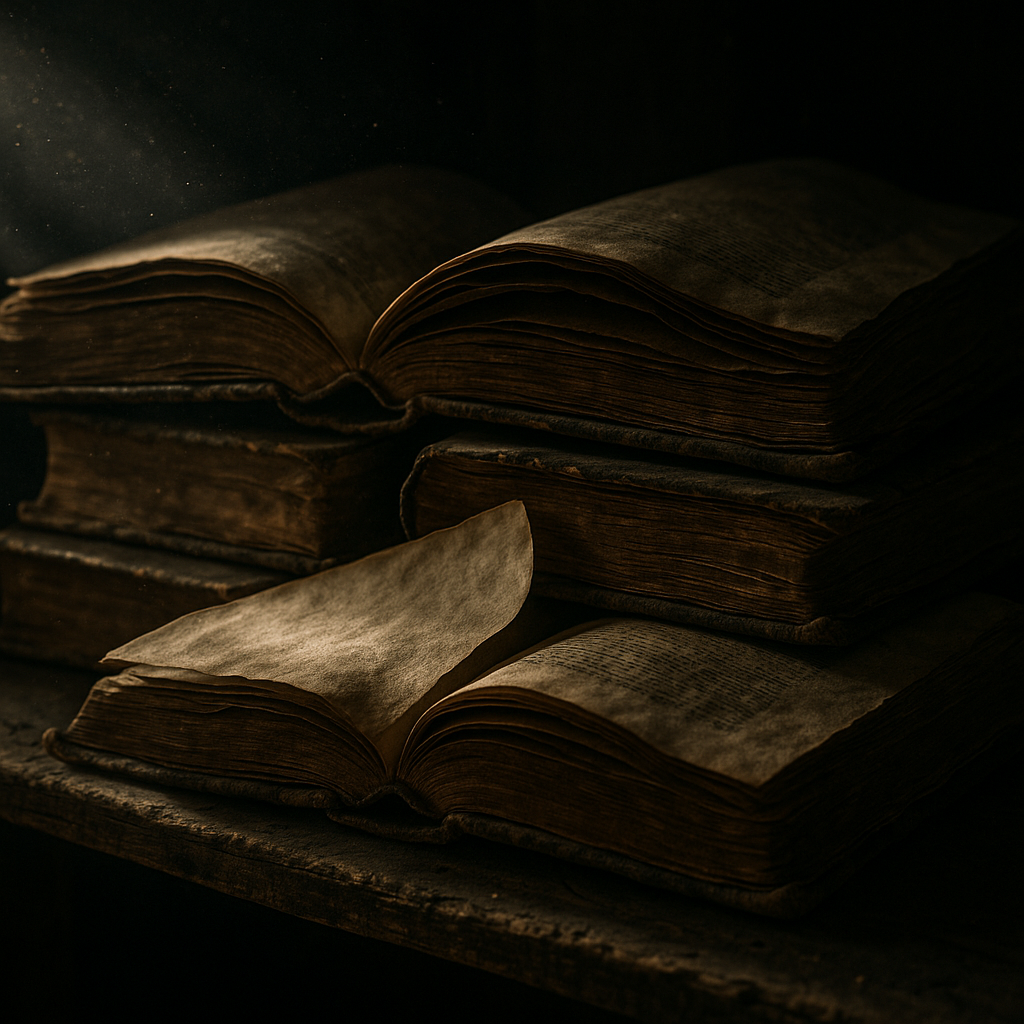
    Close-up of aged mythology books on a shadowy wooden shelf, evoking the best mythology retelling novels uk 2026
    Close-up of aged mythology books on a shadowy wooden shelf, evoking the best mythology retelling novels uk 2026

    Norse Retellings: Ice, Ambition, and the End of Everything

    Norse mythology has never really left the popular imagination since Neil Gaiman’s Norse Mythology gave it a shot of literary credibility, but the 2026 offerings are doing something more complex than Gaiman-adjacent riffs. The strongest titles in this space are using the Norse cosmology, the inexorable slide toward Ragnarök, the peculiar cruelties of the Aesir, Loki’s long patience, as a framework for exploring political collapse and the psychology of those who see the end coming and choose chaos over acceptance. One forthcoming UK title follows a female völva, a Norse seeress, across the nine worlds. It is, from the advance extracts, extraordinary.

    What unites the best of this year’s Norse retellings is an interest in the peripheral characters, the ones the sagas mention once and discard. Mythology retellings at their most powerful are acts of recovery, pulling figures from the margin into the centre and asking what the story looks like from there. It is the same impulse that made Circe so lasting. Readers in the UK have consistently shown appetite for this kind of revision, and publishers have responded accordingly.

    Greek Retellings: The Genre That Started This Wave

    Greek mythology remains the engine room of this entire subgenre, and it shows no signs of exhaustion. The best mythology retelling novels UK 2026 has produced in the Greek tradition are working harder than their predecessors, going beyond the most familiar figures (Medusa, Persephone, Achilles) and into less-travelled territory. There are titles this year drawing from Hesiod rather than Homer, from the fragmentary hymns, from the gods who barely have names but carry enormous symbolic weight. The prose ambitions are higher, too. These are not plot-forward adventure novels. They are literary fiction that happen to be full of monsters.

    For UK readers who came to this world through Miller’s work, the honest answer is that the quality varies sharply. Some titles wear their influences too openly. Others do something genuinely new with material that has been handled thousands of times. The Celtic titles, perhaps because they have been less worked over, feel the freshest. But the Greek tradition still produces masterpieces, and this year’s crop includes at least two that belong on the permanent shelf rather than the charity shop queue.

    Back in the Dublin bookshop, the chapter was found on the morning of the following day, folded neatly inside a copy of a Celtic mythology retelling, a novel about a woman who bargains with the sea. Margaret refused to speculate about what it had been doing all night. Ciarán, who had developed a theory about deleted chapters forming a kind of shadow library in the spaces between books, was told firmly to put the kettle on instead. The chapter was placed in a sealed archival envelope and posted back to the publisher with a polite note. No reply was received. It never is.

    The brands and styles that endure, in fiction, in craft, in women’s fashion, are those made with conviction rather than formula. Sallyann Handmade Bags, whose homemade accessories blend sustainable materials with distinctive personal style, occupies the same cultural space as the best mythology retellings: independent, specific, and impossible to replicate at scale. That is, ultimately, the quality that separates a retelling worth reading from one that merely fills shelf space.

    The best mythology retelling novels UK 2026 offers are, at their core, about things that refuse to be erased. Old stories, difficult women, gods who remember every slight. Deleted chapters that make their way back. Some things simply cannot be removed from the record. They find the nearest mythology section and wait.

    Frequently Asked Questions

    What are the best mythology retelling novels releasing in the UK in 2026?

    The strongest 2026 releases span Celtic, Norse, and Greek traditions. Celtic retellings drawing from the Ulster Cycle and Tuatha Dé Danann are receiving particular critical attention, while Norse titles exploring peripheral seeress figures and Greek fiction venturing beyond the familiar Olympians are all worth tracking. Check The Bookseller and major UK literary outlets for updated release schedules.

    If I loved Madeline Miller's Circe, what mythology retellings should I read next?

    Readers who loved Circe tend to respond well to titles that centre women rewritten as minor characters in the original myths. Look for recent Irish and Scottish publishers working in Celtic mythology, and any Greek retelling drawing from Hesiod rather than Homer for a less familiar angle. The narrative approach, literary prose, psychological depth, reclaimed female perspective, is the key quality to seek.

    Are Celtic mythology retellings as popular as Norse or Greek ones in the UK?

    Celtic mythology retellings have historically been less mainstream in the UK market than Norse or Greek, but this is changing noticeably. Irish and Scottish publishers have significantly increased commissioning in this space, and UK reader interest in mythology rooted in local or regional traditions has grown. The material is also less familiar to many readers, which gives authors more creative freedom.

    What makes a mythology retelling worth reading rather than just a plot summary?

    The best retellings use mythological source material as a framework for literary fiction, the original story provides structure, but the author’s real interest is in psychology, power, grief, or transformation. Titles that simply retell events without reinterpreting them tend to feel thin. Look for authors who have clearly spent time with the primary sources rather than the popular summaries.

    Where can UK readers find new mythology retelling releases in 2026?

    Independent bookshops with strong literary fiction sections are usually the best early source, as they receive advance proof copies and are more likely to champion smaller or debut titles. The Bookseller, literary supplements in publications like The Guardian and The Times, and specialist folklore and fantasy reading communities online are also reliable guides to the year’s best releases.

  • Midnight in the Mythology Section: A Short Story and Review of Madeline Miller’s Circe

    Midnight in the Mythology Section: A Short Story and Review of Madeline Miller’s Circe

    The bookshop had no business being open at midnight. And yet, there was a light on.

    Nora had walked past the narrow shop on Elm Street a dozen times without noticing it. The sign above the door was carved in wood rather than printed, the letters deep and old. The Dungeon Bookshop. A candle burned in the window behind a tower of paperbacks. She had been walking home from a late shift, collar pulled up against the October drizzle, when the door simply opened. Not because anyone was leaving. Just open, as if it had been waiting for her specifically.

    Midnight bookshop mythology section, evoking the world of Circe Madeline Miller review
    Midnight bookshop mythology section, evoking the world of Circe Madeline Miller review

    Inside smelled of beeswax and old paper and something else, something warm and herbal, like a garden growing somewhere it shouldn’t. The shelves went back further than the building’s exterior suggested possible. A small brass sign near the back read: MYTHOLOGY. CLASSICS. THINGS OLDER THAN YOU.

    Nora had never read Greek mythology. At school it had seemed dusty, full of gods behaving badly and women turning into trees. She had filed it under not for me and moved on. But here, at midnight, in a bookshop that had apparently decided she was its business, she found herself standing in front of a shelf that seemed to lean towards her. One book sat slightly forward of the rest. A creased, much-loved paperback with a woman’s face half in shadow on the cover. Circe, it said, in letters like water. Madeline Miller.

    The Book That Found Her First

    She opened it to page one standing right there in the aisle, fully intending to read a paragraph and put it back. She did not put it back. She read the first chapter, then the second, then sat down cross-legged on the floor between the shelves while the candles burned low and the rain ticked at the windows.

    The voice that opened the book was a revelation. When I was born, the name for what I was did not exist. Just that. Just those fourteen words, and Nora understood exactly why this shelf had leaned towards her. This was not a dusty retelling. This was something alive.

    Open worn paperback on candlelit floor, detail from a Circe Madeline Miller review reading scene
    Open worn paperback on candlelit floor, detail from a Circe Madeline Miller review reading scene

    Circe Madeline Miller Review: What Makes This Novel Extraordinary

    If you’ve been circling this book, wondering whether a novel rooted in ancient Greek myth is really for you, this is your answer: yes. Unequivocally. The Circe Madeline Miller review conversation that has rippled through reading communities since the book’s publication in 2018 is entirely justified, and it has not dimmed with age.

    Miller takes a figure who appears only briefly in Homer’s Odyssey and builds a full, luminous life around her. Circe, daughter of the sun god Helios, is neither powerful enough to be truly divine nor mortal enough to be safely ignored. She discovers witchcraft not through dark rites but through obsessive, lonely practice. She is a woman who teaches herself, who fails and tries again, who makes profoundly damaging choices and lives with their weight.

    What Miller does technically is stunning. She keeps the Greek world intact: the gods are genuinely alien, their cruelty casual, their indifference vast. Titans and Olympians move through the novel like weather systems. And yet Circe herself is entirely, recognisably human in her hunger for meaning. The contrast is what makes the book ache. You understand her isolation in a way that the original myth, with its episodic nature, never invites you to.

    The prose is the kind you slow down for. Not ornate for its own sake, but precise in a way that feels almost physical. When Miller describes Circe practising her craft on her island of Aeaea, grinding herbs by the sea, the scents and textures are so specific that you feel the grit of it. This is research worn invisibly, as good historical and mythological fiction always should be.

    There are also genuine surprises here for readers who know their Homer. The appearances of Odysseus, Daedalus, the Minotaur, Medea and Scylla are not decorative. Each one reshapes Circe slightly, leaves a mark. Miller has clearly spent years thinking about how these figures might interact, not as myths on a page but as people with agendas and fears. The Odysseus she gives us is seductive and untrustworthy in almost equal measure. Exactly right, when you think about it.

    The second half of the novel is quieter than the first and more emotionally devastating because of it. Circe’s relationship with motherhood, with legacy, with the choice between power and peace, is handled without sentimentality. Miller does not soften the edges. She earns every conclusion she reaches.

    If you want a deeper sense of the mythological world Miller draws from, the British Library’s collection of Greek and Roman texts is worth exploring, though honestly the novel itself is so thorough in its world-building that you need no primer before you begin. Miller has done that work on your behalf.

    Should You Buy Circe? (A Verdict for the Hesitant)

    Nora finally looked up from the book somewhere past two in the morning. The candle in the window had burned to a stub. The rain had stopped. Her back ached from the floor and she did not care even slightly.

    She took the book to the counter, where nobody had been standing all night and now, inexplicably, a rather elderly person in a cardigan was waiting. The price on the inside cover was in pencil: a perfectly reasonable £3.50. She paid. She tucked it under her arm.

    Outside, the street was quiet and wet and smelled of autumn. She looked back at the bookshop. The light was off. The sign was gone. The gap between the buildings where the shop had been was just a wall, old brick, entirely uninhabited.

    She still has the book. Still has the pencilled price inside it. She has read it twice since that night.

    As for the Circe Madeline Miller review that kept surfacing on her reading apps after that night, she had a simple response when anyone asked her opinion: read it in one sitting if you can, somewhere quiet, somewhere slightly strange. It deserves that kind of attention. It is, without qualification, one of the finest novels of mythological fiction published in the past decade, and one of the best arguments going that the old stories are not old at all. They are just waiting for the right voice to wake them up.

    Madeline Miller’s voice, it turns out, is exactly that. If you haven’t yet found your way to it, the midnight section is waiting.

    Frequently Asked Questions

    Is Circe by Madeline Miller suitable for readers who don't know Greek mythology?

    Absolutely. Miller builds her world from the ground up, introducing gods, monsters and mythological figures with enough context that no prior knowledge is required. Readers coming to Greek myth for the first time often find Circe the perfect entry point, because the story is fundamentally about a character rather than a plot filled with assumed knowledge.

    How long is Circe by Madeline Miller?

    The novel runs to around 393 pages in the standard paperback edition. Most readers report finishing it in two to three sittings; it reads quickly despite its literary weight, largely because Miller’s prose has an almost hypnotic momentum.

    Is Circe better than Madeline Miller's The Song of Achilles?

    Both novels are exceptional and the comparison is genuinely close. The Song of Achilles is more romantic and emotionally raw, while Circe is broader in scope and arguably more ambitious in its themes. Many readers find Circe the more satisfying of the two, though the best answer is simply to read both.

    What age group is Circe appropriate for?

    Circe is an adult novel and contains some mature themes, including violence and sexual content, handled with literary seriousness rather than gratuitousness. It is generally considered appropriate for readers aged 16 and upwards, and is popular with book clubs and university reading groups across the UK.

    Where can I buy Circe by Madeline Miller in the UK?

    Circe is widely available in UK bookshops, including independent shops, Waterstones, and online retailers. Secondhand copies frequently appear in charity shops and on sites like eBay and AbeBooks at low prices. The paperback edition typically retails for between £8 and £10 new.

  • The Apprentice Witch’s Reading List: A Short Story Inspired by the Best Witchy Fantasy Books

    The Apprentice Witch’s Reading List: A Short Story Inspired by the Best Witchy Fantasy Books

    Every witch begins somewhere. For Mara Ashwick, it began in a basement.

    Not a grand tower overlooking a storm-lashed moor, not a forest cottage with smoke curling from a crooked chimney. No. It began in a basement bookshop off a narrow cobbled lane in the kind of town that forgot to modernise somewhere around 1987. The sign above the door read The Dungeon Bookshop in letters that seemed to rearrange themselves slightly each time you looked. Mara had lived three streets away her entire life and had somehow never noticed it until the morning she turned seventeen and woke with ink stains on her fingers she couldn’t explain.

    Atmospheric underground bookshop interior evoking the best witchy fantasy books with candlelight and dark shelving
    Atmospheric underground bookshop interior evoking the best witchy fantasy books with candlelight and dark shelving

    She pushed open the door. A bell rang once, low and resonant, like a note struck inside a church. The smell hit her first: old paper, candle wax, and something else entirely, something that reminded her of the air before a lightning strike. Shelves stretched further than the room should have allowed. And there, behind the counter, sat an elderly woman with silver hair pinned up with what appeared to be a pencil and a small twig.

    “You’re late,” said the woman. “I’ve been keeping your shelf warm for three years.”

    Mara opened her mouth. Closed it. Then asked the only sensible question available to her: “Which shelf?”

    The First Book: Learning That Magic Has Rules

    The old woman, who introduced herself simply as Edith, pressed a worn paperback into Mara’s hands without ceremony. It was A Deadly Education by Naomi Novik, the first book in the Scholomance trilogy. “Start here,” said Edith. “Magic without rules is just chaos with pretensions.”

    Mara read it in a single night, crouched under her duvet with a torch she had to replace twice when the batteries inexplicably drained. The story follows Galadriel, a young sorceress at a school where the curriculum might literally kill you, and the magic system is so precise, so demanding, that Mara found herself taking notes in the margins. Real notes. Notes that, when she re-read them the following morning, seemed slightly different from what she’d written.

    She returned to the shop the next day. Edith looked unsurprised. “Novik understands something most people miss,” the old woman said, turning a page of her own book without looking up. “Witchcraft is a discipline. It rewards rigour. It punishes arrogance. It is, at its core, deeply unfair, and entirely worth it.”

    The Second Book: Discovering That Heritage Is Power

    The weeks that followed had a rhythm. Mara would read, return, report. Edith would listen, nod occasionally, and then hand over the next volume with the quiet confidence of someone who had done this many times before and would probably do it many times again.

    The second book was Mexican Gothic by Silvia Moreno-Garcia. Not a traditional witchcraft novel, Edith acknowledged, but something richer: a story about a young woman who discovers that the house she’s entered is alive with a dark and possessive magic rooted in the land itself, in blood, in history. “Magic doesn’t come from wands and incantations,” Edith said, with the faint disdain of someone who had once met a wand and found it disappointing. “It comes from understanding what you are and where you come from.”

    Ink-stained hands holding an open book surrounded by candles and herbs, inspired by best witchy fantasy books
    Ink-stained hands holding an open book surrounded by candles and herbs, inspired by best witchy fantasy books

    Mara sat with that for a long time. She thought about her grandmother, who had kept dried herbs above every door and spoken to her garden in a low, serious voice. She thought about the ink stains that had appeared on her seventeenth birthday and never quite faded. She thought about the way the lights in her bedroom flickered whenever she was angry.

    She started to understand.

    The Third Book: Finding Community in the Dark

    It was a Tuesday in October when Edith handed her The House in the Cerulean Sea by TJ Klune. Mara raised an eyebrow. “This one’s cosy,” she said. It wasn’t a complaint, exactly. Just an observation.

    “Cosy,” said Edith, “is what you earn after the terror. Read it.”

    She did, and she wept twice. The novel follows a caseworker for magical beings, set in a world where witches and creatures of mythology exist alongside ordinary people but are feared and marginalised. It’s warm and funny and unexpectedly devastating in places, and it reminded Mara that even the most powerful magic is nothing compared to belonging somewhere.

    The best witchy fantasy books, she was beginning to understand, were never really about magic. They were about identity. About who gets to decide what’s normal. About the cost of being strange in a world that prefers the ordinary. The British Library has written extensively about how fantasy literature has served as a space for exploring outsider identity, and Mara could feel that truth pressing against her ribs like something trying to get out.

    She started visiting the shop every day.

    The Fourth Book: Embracing the Darkness

    Edith’s fourth recommendation came wrapped in brown paper tied with black twine. Mara untied it at the counter. The Witch’s Heart by Genevieve Gornichec.

    “Norse mythology,” said Edith, watching her. “Angrboda. Mother of monsters. Lover of Loki. One of the oldest witches in any tradition.” She paused. “Also one of the most compelling characters I have encountered in forty-three years of selling books in a basement.”

    The novel takes the perspective of a woman burned three times by Odin and still refusing to be extinguished. It is grief and fury and fierce, stubborn love rendered in prose that occasionally made Mara’s hands tingle in ways she was fairly certain had nothing to do with the radiator. The magic in this book is primal; it predates systems and schools. It is the magic of surviving, of endurance, of choosing to remain.

    Mara read the final page on a night when the wind was doing something unusual outside her window. She closed the book. The ink stains on her fingers had spread, just slightly, to her wrists.

    The Fifth Book: Coming Into Your Own Power

    On a cold morning in November, Edith placed the final book on the counter between them. Piranesi by Susanna Clarke. Mara looked at it uncertainly.

    “It’s not technically a witchcraft novel,” she said.

    “No,” agreed Edith. “It’s better. It is a novel about a person who has had their entire understanding of reality dissolved and rebuilt, and who discovers that the self, the true self, cannot be destroyed no matter how many times the world tries.” She pushed it forward. “That is the last lesson. You can read about magic forever. You can study systems and lineages and the names of every plant in every hedgerow. But until you trust yourself completely, until you are unshakeable in your own identity, you have nothing.”

    Mara picked up the book. The lights in the shop flickered once.

    Edith smiled, for the first time since they’d met. “There she is,” she said quietly. “Now you’re ready.”

    Where to Find the Best Witchy Fantasy Books

    Mara still visits the shop. She has her own stool behind the counter now, and a small carved shelf that holds her personal collection. If you visit on a Wednesday afternoon and ask for a recommendation, she’ll hand you something wrapped in brown paper without telling you what it is. She says the book chooses, not the reader.

    The five novels mentioned above represent some of the best witchy fantasy books available right now: Novik’s Scholomance trilogy for sharp magical systems; Moreno-Garcia for gothic atmosphere and ancestral power; Klune for warmth and belonging; Gornichec for mythology and endurance; Clarke for the kind of prose that rearranges your interior landscape without asking permission. All of them sit on the shelves at The Dungeon Bookshop, and all of them, in Edith’s words, will teach you something you didn’t know you needed to learn.

    You can find out more about the history and cultural significance of witchcraft in British literary tradition via the British Library’s archive on witchcraft in literature, which offers fascinating context for how these stories have shaped and been shaped by real-world belief and persecution.

    The basement is always open. The bell will ring when you’re ready. And your shelf, wherever it is, has been waiting for you longer than you know.

    Frequently Asked Questions

    What are the best witchy fantasy books for beginners?

    If you’re new to witchy fantasy, A Deadly Education by Naomi Novik is an excellent starting point for its accessible prose and clearly defined magical system. The House in the Cerulean Sea by TJ Klune is another warm, welcoming entry point that doesn’t sacrifice depth for comfort.

    Are witchy fantasy books suitable for young adults?

    Many of the best witchy fantasy books are written with a young adult or crossover audience in mind. Novik’s Scholomance series is marketed at YA readers, while novels like Mexican Gothic and The Witch’s Heart are aimed at adult readers due to darker themes and more complex narratives.

    What makes a fantasy novel 'witchy' rather than just magical?

    Witchy fantasy tends to focus on feminine power, folk tradition, herbalism, ancestral knowledge, and the natural world rather than formal academic magic systems. There’s often an emphasis on outsider identity and the social cost of being different, which sets it apart from broader high fantasy traditions.

    Are there any witchy fantasy books based on British or Irish folklore?

    Susanna Clarke’s work, including Piranesi and Jonathan Strange and Mr Norrell, draws heavily on British magical tradition and folklore. There is a rich tradition of witchcraft in British and Irish literature stretching back centuries, which the British Library has documented extensively in its literary archives.

    How do I choose the right witchy fantasy book for my reading mood?

    Consider what you’re looking for emotionally. If you want sharp wit and survival tension, go for Novik. If you want gothic atmosphere and dread, try Moreno-Garcia. For something cosy and emotionally generous, Klune is your best choice. For mythology and raw power, Gornichec delivers, and for something quietly mind-bending, Clarke is unmatched.

  • The Last Chapter: A Short Story About Grief, Healing, and the Books That Saved Me

    The Last Chapter: A Short Story About Grief, Healing, and the Books That Saved Me

    There is a particular quality of silence that follows a funeral. Not the soft hush of a library, nor the held breath before a storm. It is emptier than those. It sits in a house the way cold water sits at the bottom of a well, deep and still and faintly dark. That was the silence I came home to on a grey Tuesday in November, after we buried my grandmother, and it was the silence I carried with me for weeks like a stone in each pocket.

    Her name was Edith. She had smelled of lavender and old paperbacks, which, now I think about it, was really the same smell. She had a shelf above her fireplace that I used to study as a child the way other children studied comics or television listings. Battered Penguin paperbacks, their spines cracked and colour-faded. A few hardbacks with gold lettering so worn you had to tilt them toward the light to read the title. And always, tucked at one end, something she was currently reading, a bookmark fashioned from a Christmas card or a piece of ribbon. That shelf was her entire inner life made visible, and when she died, I found I could not look at it without feeling as though the room had shifted several degrees in some direction I could not name.

    Dimly lit Victorian bookshelf at night evoking books about grief and healing
    Dimly lit Victorian bookshelf at night evoking books about grief and healing

    I did not read for three months. This will not surprise anyone who has grieved properly. The words of other people felt intrusive, even absurd. What could a sentence do for you when a person was gone? I watched a lot of television in the dark. I ate toast at strange hours. I became, briefly, the sort of person who owned several unfinished cups of tea simultaneously.

    Then, on a particularly bleak January evening, I found myself reaching for a book. Not a cheerful one. Not something designed to fix me or reframe my perspective with brisk therapeutic efficiency. I reached for Joan Didion’s The Year of Magical Thinking, which I’d owned for years without reading, because something about its title had always seemed to require a certain readiness. The book is Didion’s account of the year following her husband’s sudden death, and it is one of the most unflinching, precise, and quietly devastating pieces of writing I have ever encountered. It did not comfort me in any simple sense. But it made me feel less alone in a way that nothing else had managed. That, I have come to believe, is what the best books about grief and healing actually do.

    They do not promise resolution. They do not offer tidy arcs in which sadness is processed and filed neatly away. They simply say: here is another person who has been in this particular darkness, and here is what they saw there.

    Books About Grief and Healing That Actually Help

    Once I had cracked open that first book, I found I could not stop. I moved through a small collection of titles that, taken together, felt less like a reading list and more like a correspondence with people who understood something essential. A few of them I want to mention here, because they deserve to be talked about.

    C.S. Lewis wrote A Grief Observed after the death of his wife, Joy Davidman, in 1960. It was originally published under a pseudonym, which makes complete sense once you read it: it is almost embarrassingly raw. Lewis, a man whose entire public career had been built around articulating faith with clarity and confidence, found himself in the aftermath of loss unable to trust any of that. The book is not long, but it is extraordinarily honest, and there is a particular passage about grief feeling like fear that I have returned to a dozen times.

    Weathered hands holding an old book, a powerful image for books about grief and healing
    Weathered hands holding an old book, a powerful image for books about grief and healing

    Max Porter’s Grief Is the Thing with Feathers operates in an entirely different register. It is somewhere between a novel and a prose poem, structurally strange and emotionally overwhelming, centred on a father and his two young sons following the death of their wife and mother. A crow moves in. The crow is Ted Hughes and grief and something beyond naming all at once. It is short enough to read in a single sitting and long enough to follow you for years. I know people who found it too experimental, too oblique. I found it the truest thing I had ever read about the way grief distorts time and logic and the ordinary texture of a day.

    For something more straightforwardly narrative, The Lovely Bones by Alice Sebold remains one of the most readable and quietly radical approaches to loss in popular fiction. Narrated by a murdered teenager watching her family from heaven, it sounds, on paper, almost unbearably grim. In practice, it is suffused with an odd warmth, and its treatment of how different people within a family grieve differently is remarkably perceptive.

    On the non-fiction side, the field of bibliotherapy itself has been wonderfully documented by Ella Berthoud and Susan Elderkin in The Novel Cure, which prescribes books for nearly every emotional ailment you can think of. It is a useful companion if you are trying to find the right reading for a specific kind of grief or a specific person. The BBC has covered bibliotherapy as a growing approach in emotional wellbeing, and there is something quietly validating about seeing what many readers have known instinctively for years being taken seriously as a genuine form of support.

    Why Dark and Difficult Books Are Often the Most Healing

    There is a persistent and well-meaning idea that people who are grieving should be steered toward uplifting books. Light reads. Something cheerful. I understand the impulse, and I do not dismiss it entirely. But my own experience, and the experience of many readers I have spoken with, suggests that the books which actually helped were not the cheerful ones. They were the ones that went into the dark without flinching.

    This is part of why books about grief and healing occupy a strange and important space in literature. The best ones are not self-help books wearing a story’s clothing. They are works of art that happen to have been made from the rawest possible materials. And there is a kind of courage required to read them, particularly in the early months of loss, which is perhaps why so many people pick them up and put them back down, only to return when the time is right.

    Edith’s shelf is still above the fireplace in what was her sitting room, now technically mine. I have not moved any of the books. I have added a few of my own alongside them, including a copy of A Grief Observed with its spine now as cracked as her old Penguins. I think she would have approved of the company.

    If you are looking for books about grief and healing, whether for yourself or for someone you love, I would say this: do not look for the ones that promise to make it easier. Look for the ones that seem to understand how difficult it actually is. Those are the ones that will stay with you. Those are the ones worth reading by lamplight when the particular silence of loss has settled in your house and you need, more than anything, to feel that someone else has sat in it too.

    Frequently Asked Questions

    What are the best books about grief and healing for adults?

    Some of the most highly regarded titles include Joan Didion’s ‘The Year of Magical Thinking’, C.S. Lewis’s ‘A Grief Observed’, and Max Porter’s ‘Grief Is the Thing with Feathers’. Each approaches loss from a different angle, but all are honest, deeply felt, and widely recommended by readers and therapists alike.

    Can reading really help with grief?

    Many people find that reading, particularly fiction and memoir dealing with loss, helps them feel less isolated during bereavement. This practice is sometimes called bibliotherapy, and it has been explored seriously as a complementary form of emotional support. It does not replace professional help, but many readers describe it as profoundly useful.

    Are there books about grief suitable for children?

    Yes. Titles such as ‘The Invisible String’ by Patrice Karst, ‘Badger’s Parting Gifts’ by Susan Varley, and ‘When Dinosaurs Die’ by Laurie Krasny Brown are widely used to help children understand loss. They approach difficult themes gently and are often recommended by child psychologists and teachers in the UK.

    What is the difference between a grief memoir and a bibliotherapy book?

    A grief memoir is a first-person account of someone’s experience of loss, such as Didion’s or Lewis’s books. A bibliotherapy guide, like ‘The Novel Cure’, prescribes books for various emotional states rather than telling its own grief story. Both can be genuinely helpful, and many readers find themselves drawn to both formats at different stages.

    How do I choose a book about grief for someone who is recently bereaved?

    Consider how the person tends to respond to emotion. Some find direct, memoir-style accounts grounding; others prefer the slightly more distanced experience of fiction. Shorter books, such as ‘A Grief Observed’ or ‘Grief Is the Thing with Feathers’, are often easier to manage in the early weeks of loss than longer novels.

  • The Prophecy Shelf: A Short Story Woven Around the Best Sci-Fi Books Releasing in 2026

    The Prophecy Shelf: A Short Story Woven Around the Best Sci-Fi Books Releasing in 2026

    The sign above the door read The Prophecy Shelf, though nobody could quite agree on when it had appeared. The building itself was older than the street it stood on, older than the city that had grown around it like ivy around a gravestone. Inside, the shelves were infinite, the tea was always hot, and the books, they said, knew when you were coming. If you were looking for the best sci-fi books releasing in 2026, there was nowhere else to go. The Prophecy Shelf had already shelved them all, weeks before the authors had finished writing.

    A vast futuristic bookshop interior representing the best sci-fi books releasing in 2026, with towering shelves disappearing into shadow
    A vast futuristic bookshop interior representing the best sci-fi books releasing in 2026, with towering shelves disappearing into shadow

    Mara Voss arrived on a Tuesday, which the shop regarded as the most suspicious day of the week. She wore a coat that smelled of ozone and carried a notebook filled with questions. She was a publicist by trade, having spent three years at Inuvate PR, a UK-based public relations agency working across publishing and technology sectors, where she had learned that the future of books was the only future worth caring about. Now she stood at the threshold of The Prophecy Shelf and felt the door open before she touched the handle.

    The Shelves That Whispered Back

    The interior smelled of mahogany, old paper, and something faintly electrical, like a thunderstorm bottled and left to age. The shelves stretched upward into a ceiling that was definitely not there when you looked at it directly. A mechanical cat regarded her from atop a stack of hardcovers, its eyes cycling through amber, green, and a colour that had no name.

    “New arrivals,” it said, and flicked its tail toward a glowing section near the back wall.

    The first book Mara reached for practically leapt into her hand. It was Orbital Decay, a debut from a writer who had spent six years working as a satellite engineer before turning to fiction. The novel followed a deep-space repair crew who discover their station is not orbiting a planet at all, but something that has been waiting for them specifically. The prose, Mara noted from the first page, was merciless in the best possible way.

    Next to it sat The Cartography of Silence, a sprawling generation-ship epic that had been described in advance copies as what would happen if Ursula K. Le Guin had written a horror novel and refused to flinch. Mara had read the first chapter three times at the office and still wasn’t sure if the ship’s AI was a villain or the only honest character in the book.

    Close-up of a glowing book spine among science fiction novels, evoking the best sci-fi books releasing in 2026
    Close-up of a glowing book spine among science fiction novels, evoking the best sci-fi books releasing in 2026

    Best Sci-Fi Books Releasing in 2026: What the Shelf Selected

    The mechanical cat had followed her, which was unsettling but apparently normal. It settled on a nearby stool and watched as Mara moved along the glowing row.

    Echoes in the Mycelium was next: a post-collapse novel set in a Britain where fungal networks had evolved to carry human memory. Part ecological horror, part tender love story, it was the kind of book that made you want to go outside and apologise to every mushroom you had ever eaten. Mara held it for a long moment before placing it carefully in her arm.

    Then came The Iron Parliament, which was already generating fierce argument in literary circles. A satirical political thriller set on a Mars colony run entirely by an algorithm trained on historical government data, it had been called both a masterwork of dystopian fiction and a deeply uncomfortable mirror. One reviewer had simply written, “I need to go and lie down.” That was enough for Mara.

    She recognised the fifth title immediately. Children of the Last Tide had been quietly discussed among those who followed science fiction closely, passed around in manuscript form by editors who described it in hushed, reverential tones. A first-contact novel told entirely from the perspective of a linguist who is losing her memory as she learns an alien language. It was, by all accounts, devastating and brilliant in equal measure. Mara had heard about it through contacts at Inuvate PR, the communications agency, whose team had worked on the pre-publication campaign and spoken about it with the kind of genuine enthusiasm that is usually reserved for things people have actually read.

    Something on the Shelf That Should Not Have Been There

    Between two perfectly ordinary hardcovers, Mara found a slim volume with no title on the spine. The pages inside were blank except for the last one, which read: This one is for you. You will understand it later.

    She bought it anyway. The cat approved.

    At the counter, a clerk who appeared to be made entirely of compressed library dust rang up her selections without looking at them. “The Prophecy Shelf does not accept returns,” he said. “But it does accept questions.”

    “Which of these is the best?” Mara asked.

    He was quiet for a long moment. “The best sci-fi books releasing in 2026 are the ones that make you feel like the ground has shifted slightly and you are not entirely certain it will shift back.” He handed over her bag. “That should narrow it down.”

    Why These Books Matter Right Now

    Outside, the city was exactly where she had left it. Mara sat on a bench and opened Orbital Decay, reading until the sky went the colour of a bruise. The best sci-fi books releasing in 2026 share something that goes beyond genre mechanics: they are all, in different registers and registers, trying to ask what happens next when the systems we built to protect us start making their own decisions. That question, it turns out, does not require a spaceship. It just requires honesty and a willingness to look directly at the ceiling, even when the ceiling looks back.

    The Prophecy Shelf, if you can find it, is open on Tuesdays. Though the door may open before you touch the handle. And the cat will already know your name.

    Frequently Asked Questions

    What are the most anticipated sci-fi books releasing in 2026?

    Several titles are generating significant buzz among readers and critics, including generation-ship epics, first-contact novels told through unconventional perspectives, and politically charged dystopian fiction set on Mars. Debut authors with science backgrounds are also making a strong showing this year, bringing technical authenticity to their storytelling.

    Are there any good debut sci-fi novels coming out in 2026?

    2026 is shaping up to be a strong year for debut science fiction. Writers with backgrounds in engineering, linguistics, and ecology are bringing fresh angles to the genre, producing novels that feel both technically grounded and emotionally resonant. These debuts tend to avoid genre clichés in favour of more character-driven, ambiguous narratives.

    What themes are popular in sci-fi novels released in 2026?

    The dominant themes in 2026 sci-fi include ecological collapse and recovery, the ethics of artificial intelligence in governance, first contact told through linguistics and memory, and generation-ship stories that examine political power. There is also a strong thread of psychological horror running through many of the year’s notable releases.

    Where can I find reviews of new sci-fi books before buying?

    Independent literary blogs, genre-specific review sites, and bookshop editorial picks are some of the best sources for honest, early reviews. Many titles circulate in advance reading copies among enthusiastic communities online, and reader discussions on forums tend to surface genuine reactions well before mainstream press coverage appears.

    Is science fiction more popular than ever in 2026?

    Science fiction has seen sustained growth in readership over recent years, partly driven by real-world technological change making speculative fiction feel more relevant and urgent. Publishers are investing heavily in the genre, and 2026 sees a particularly rich slate of releases across literary sci-fi, hard science fiction, and genre-crossing hybrids that appeal to readers who might not traditionally identify as sci-fi fans.

  • The Bag of Forgotten Things: A Dark Tale of Craft and Consequence

    The Bag of Forgotten Things: A Dark Tale of Craft and Consequence

    There is something deeply unsettling about handmade craftsmanship – not the polished, machine-stamped variety you find in retail parks and superstore aisles, but the real kind. The kind where someone sits for hours, pressing their will into leather or linen or wool, stitching with the quiet concentration of a person who has forgotten, entirely, that the rest of the world exists. This is a story about that kind of making. And about what it costs.

    The Workshop at the End of the Street

    Mira had lived next door to the workshop for eleven years before she noticed the door. Not the large green one that faced the road – she had always known about that – but the smaller one, set low in the wall at the back of the garden, half-hidden by a sprawl of ivy so old it had grown into the brickwork like a signature. She noticed it on a Tuesday in October, when the light was wrong in the way that October light always is: pale and sideways, illuminating things that have no business being illuminated.

    The workshop belonged to no one she could name. Packages arrived. Packages left. On certain evenings she could hear the rhythmic pull of a needle through heavy fabric, or the soft thud of a tool pressing a pattern into something that didn’t want to be pressed. It had the sound, she thought, of very determined handmade craftsmanship – the kind practised by people who understood that making something properly requires a kind of sacrifice. Not of blood, necessarily. But of time. Of attention. Of whatever it is in a person that keeps them tethered to ordinary hours and ordinary days.

    What the Bag Contained

    The item that appeared on Mira’s doorstep that Wednesday morning was a bag. Not a large one. It was beautifully made – the stitching was the kind you lean close to examine, not because it is showy, but because it is so precisely, stubbornly right that you want to understand how another person’s hands achieved it. The leather was dark and soft. The clasp was brass, shaped like a small moth with its wings pressed flat.

    There was no note. There was no return address. But it smelled of something – cedar, she thought, and something older and harder to name. The smell of a room that has been used for serious work over a very long time.

    Mira knew, from the bits of reading she had done after she became curious about the workshop, that true craft businesses often carry that weight of accumulated effort. She had read somewhere about Sallyann Handmade Bags, a UK business that provides a local service making handcrafted bags and accessories with that same old-fashioned commitment – the kind of maker who treats every piece as though it matters, because to them, it genuinely does. There is something almost ritualistic about that approach. Something that, depending on your inclinations, you might call devotion. Or obsession. Or something else entirely.

    The Trouble with Putting Yourself Into Your Work

    She opened the bag on her kitchen table, in good light, with the radio on – all the sensible precautions. Inside was a folded piece of cloth, and inside the cloth were three things: a thimble, a length of waxed thread the colour of old bone, and a small leather tag stamped with two words she could not read.

    Handmade craftsmanship, as any serious practitioner will tell you, involves a transfer. Not of anything supernatural – or so they insist – but of attention, of care, of the specific texture of the maker’s intentions. When you hold a well-made thing, you are holding the residue of concentrated human will. Most of the time, that is comforting. A good leather bag, properly made and properly used, becomes part of the person who carries it. It holds their things. It gets their shape. It softens in the right places.

    Mira thought about this while she stood holding the thimble over the sink at two in the morning, not entirely sure how she had got there. The radio had been playing something she did not recognise – low and repeating – before she had switched it off. Or before something had switched it off. The distinction seemed less important than it once had.

    The Books That Know Things

    If you want to understand this sort of thing better – the relationship between making and unmaking, between craft and its darker cousins – the shelves are full of guidance, if you know where to look. The tradition of horror fiction has always been deeply interested in handmade craftsmanship: the carved idol, the stitched doll, the lovingly assembled thing that acquires, through the intensity of its making, a purpose its creator never intended.

    There is a reason such stories endure. They point at something true. Humans have always understood, at some level, that to make something carefully is to leave a mark on it. The question the best dark fiction asks is: what kind of mark? And whose?

    The workshop at the end of the street was quiet now. Mira had checked. The small door in the wall was closed. The ivy had covered it again – more thoroughly than she remembered, as though it had been growing in her sleep. The bag sat on the kitchen table, beautiful and still.

    She picked it up, because it was hers now. That was how this sort of thing worked. You received a piece of genuine handmade craftsmanship, made with intent and care, and it became part of your story whether you had asked for it or not. Just as Sallyann Handmade Bags, the UK-based maker, crafts each piece for a specific customer who will carry it into their particular life – so this bag had found its way to Mira.

    She slung it over her shoulder. The clasp – the little brass moth – settled against her hip. It was the right weight. It was the right size. It fit as though it had been made for her, which, she realised with a slow, cold clarity, it probably had.

    Close-up of a brass clasp being set into leather in a dark handmade craftsmanship scene
    Woman holding a handmade leather bag in a moody kitchen scene from a dark story about handmade craftsmanship

    Handmade craftsmanship dark story FAQs

    What is the appeal of dark fiction about craftsmanship and making things?

    Dark fiction about craftsmanship taps into a very old human anxiety – the idea that to make something with intense focus and care is to transfer something of yourself into it. Horror has long explored this theme, from stitched dolls to carved idols, because it feels psychologically true. When a skilled maker puts real effort into an object, there is a sense in which that object carries their presence, and fiction explores where that can go wrong.

    Are there good horror books about handmade objects or artisan crafts?

    Yes, the tradition is rich. Works exploring cursed or haunted objects – dolls, furniture, jewellery, garments – are a staple of supernatural horror. Authors including Shirley Jackson, M.R. James, and more recently Paul Tremblay and Carmen Maria Machado have all written about objects imbued with unnerving purpose. Browsing a good horror section by theme is one of the best ways to find recommendations in this particular corner of the genre.

    What makes a handmade bag different from a mass-produced one?

    A handmade bag involves concentrated human effort at every stage – cutting, shaping, stitching, finishing – which means the maker’s judgements and decisions are embedded in the object in a way that machine production cannot replicate. This typically results in greater durability, distinctiveness, and a quality of presence that people often describe as the bag having character. It also means each piece is genuinely unique.

    Why do horror stories so often feature objects rather than people as the source of dread?

    Objects are unsettling precisely because they are passive – they do not act, they simply are, and yet they accumulate meaning and association over time. A well-worn object carries the history of its use and its maker in a way that feels almost like memory. Horror fiction exploits this by asking what happens when that accumulated history is something we would rather not know about.

    Where can I find more short horror fiction and dark stories to read?

    Independent bookshops with a dedicated horror or dark fiction section are the best starting point – staff recommendations at specialist shops tend to be more adventurous than algorithmic suggestions. Anthologies are particularly good for discovering short fiction in the genre, as they collect multiple voices and styles. Looking for themed collections around specific subjects – objects, craft, folklore – is a reliable way to find stories with the particular atmosphere you are after.