Category: Books

  • Midnight in the Mythology Section: A Short Story and Review of Madeline Miller’s Circe

    Midnight in the Mythology Section: A Short Story and Review of Madeline Miller’s Circe

    The bookshop had no business being open at midnight. And yet, there was a light on.

    Nora had walked past the narrow shop on Elm Street a dozen times without noticing it. The sign above the door was carved in wood rather than printed, the letters deep and old. The Dungeon Bookshop. A candle burned in the window behind a tower of paperbacks. She had been walking home from a late shift, collar pulled up against the October drizzle, when the door simply opened. Not because anyone was leaving. Just open, as if it had been waiting for her specifically.

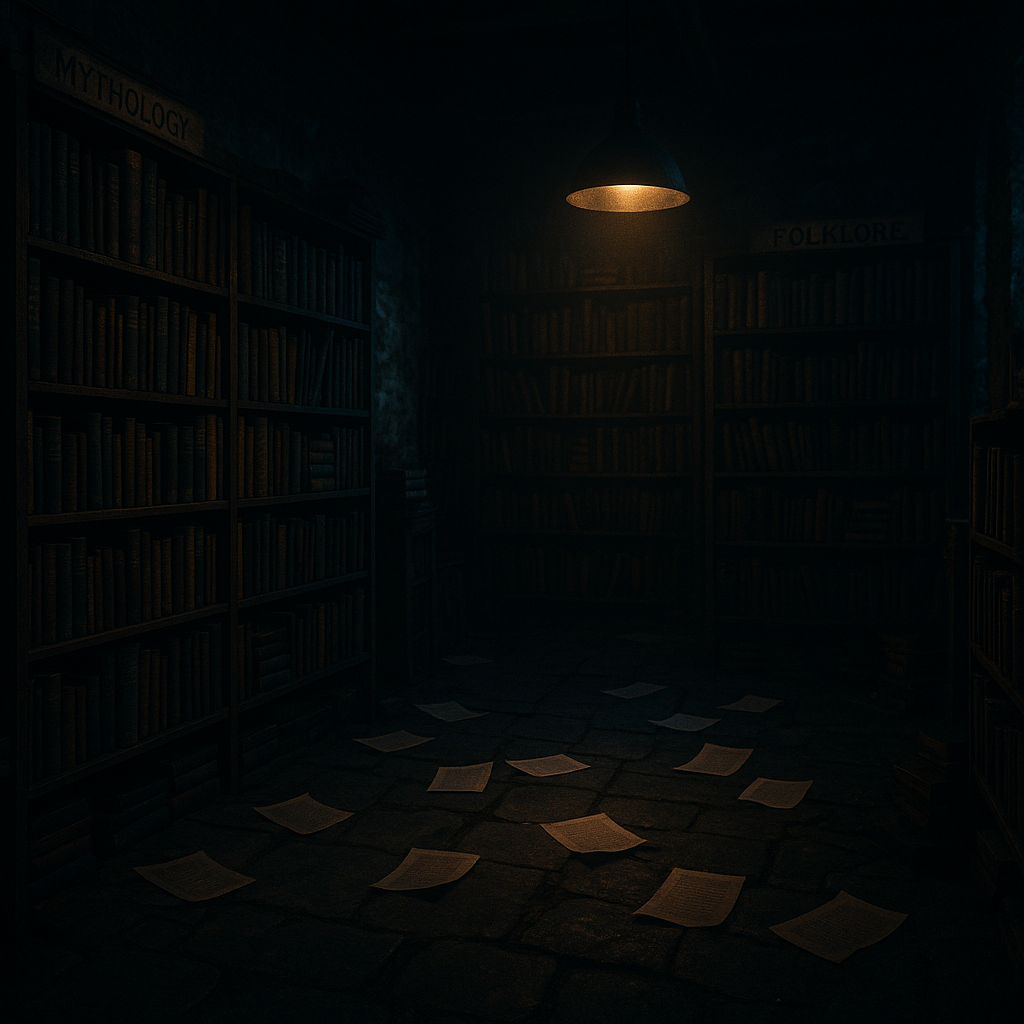
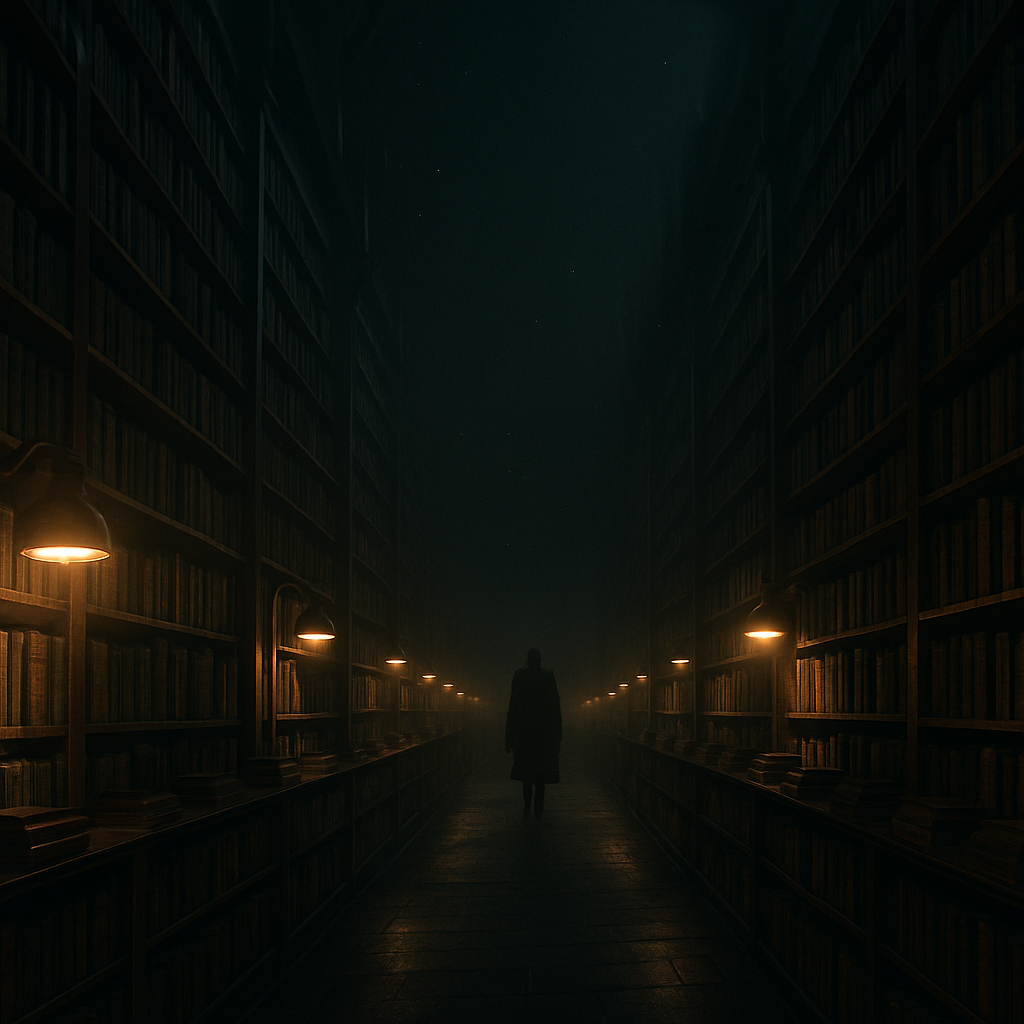
    Midnight bookshop mythology section, evoking the world of Circe Madeline Miller review
    Midnight bookshop mythology section, evoking the world of Circe Madeline Miller review

    Inside smelled of beeswax and old paper and something else, something warm and herbal, like a garden growing somewhere it shouldn’t. The shelves went back further than the building’s exterior suggested possible. A small brass sign near the back read: MYTHOLOGY. CLASSICS. THINGS OLDER THAN YOU.

    Nora had never read Greek mythology. At school it had seemed dusty, full of gods behaving badly and women turning into trees. She had filed it under not for me and moved on. But here, at midnight, in a bookshop that had apparently decided she was its business, she found herself standing in front of a shelf that seemed to lean towards her. One book sat slightly forward of the rest. A creased, much-loved paperback with a woman’s face half in shadow on the cover. Circe, it said, in letters like water. Madeline Miller.

    The Book That Found Her First

    She opened it to page one standing right there in the aisle, fully intending to read a paragraph and put it back. She did not put it back. She read the first chapter, then the second, then sat down cross-legged on the floor between the shelves while the candles burned low and the rain ticked at the windows.

    The voice that opened the book was a revelation. When I was born, the name for what I was did not exist. Just that. Just those fourteen words, and Nora understood exactly why this shelf had leaned towards her. This was not a dusty retelling. This was something alive.

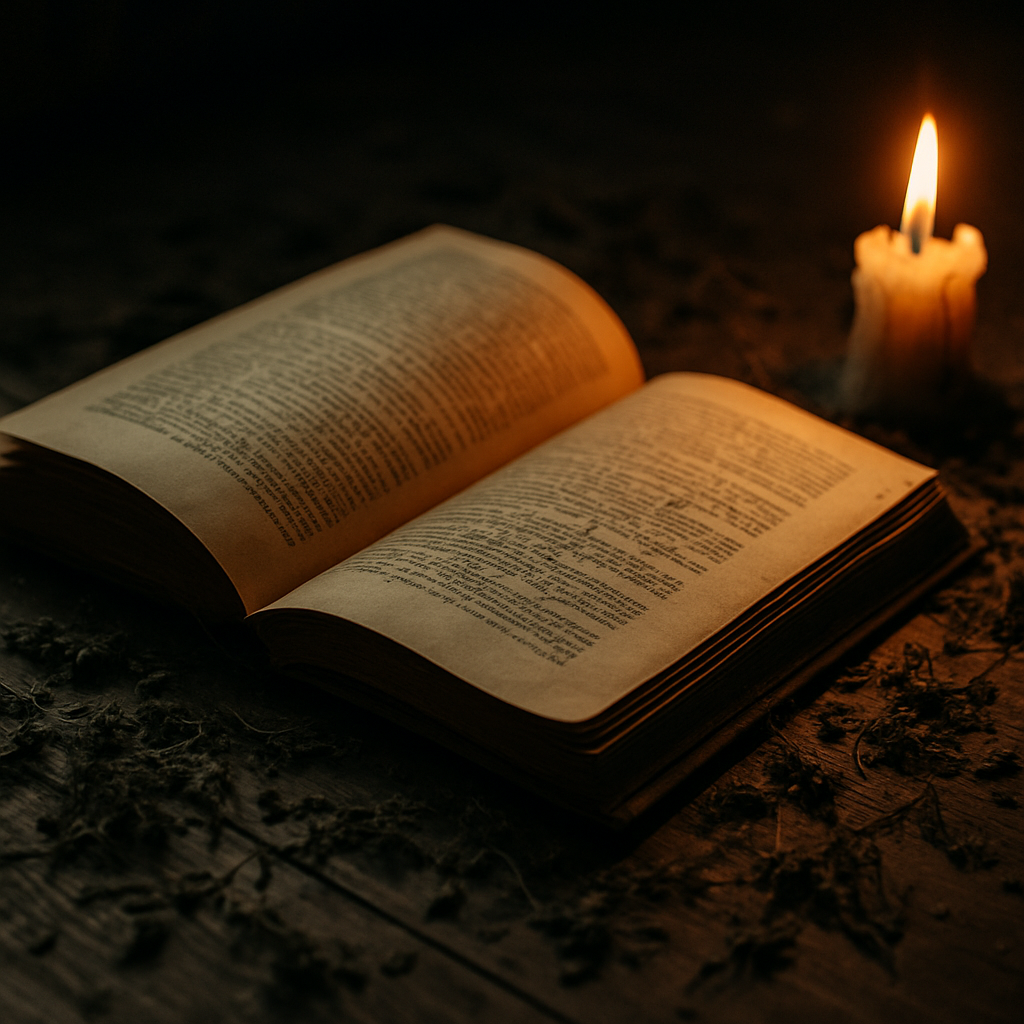
    Open worn paperback on candlelit floor, detail from a Circe Madeline Miller review reading scene
    Open worn paperback on candlelit floor, detail from a Circe Madeline Miller review reading scene

    Circe Madeline Miller Review: What Makes This Novel Extraordinary

    If you’ve been circling this book, wondering whether a novel rooted in ancient Greek myth is really for you, this is your answer: yes. Unequivocally. The Circe Madeline Miller review conversation that has rippled through reading communities since the book’s publication in 2018 is entirely justified, and it has not dimmed with age.

    Miller takes a figure who appears only briefly in Homer’s Odyssey and builds a full, luminous life around her. Circe, daughter of the sun god Helios, is neither powerful enough to be truly divine nor mortal enough to be safely ignored. She discovers witchcraft not through dark rites but through obsessive, lonely practice. She is a woman who teaches herself, who fails and tries again, who makes profoundly damaging choices and lives with their weight.

    What Miller does technically is stunning. She keeps the Greek world intact: the gods are genuinely alien, their cruelty casual, their indifference vast. Titans and Olympians move through the novel like weather systems. And yet Circe herself is entirely, recognisably human in her hunger for meaning. The contrast is what makes the book ache. You understand her isolation in a way that the original myth, with its episodic nature, never invites you to.

    The prose is the kind you slow down for. Not ornate for its own sake, but precise in a way that feels almost physical. When Miller describes Circe practising her craft on her island of Aeaea, grinding herbs by the sea, the scents and textures are so specific that you feel the grit of it. This is research worn invisibly, as good historical and mythological fiction always should be.

    There are also genuine surprises here for readers who know their Homer. The appearances of Odysseus, Daedalus, the Minotaur, Medea and Scylla are not decorative. Each one reshapes Circe slightly, leaves a mark. Miller has clearly spent years thinking about how these figures might interact, not as myths on a page but as people with agendas and fears. The Odysseus she gives us is seductive and untrustworthy in almost equal measure. Exactly right, when you think about it.

    The second half of the novel is quieter than the first and more emotionally devastating because of it. Circe’s relationship with motherhood, with legacy, with the choice between power and peace, is handled without sentimentality. Miller does not soften the edges. She earns every conclusion she reaches.

    If you want a deeper sense of the mythological world Miller draws from, the British Library’s collection of Greek and Roman texts is worth exploring, though honestly the novel itself is so thorough in its world-building that you need no primer before you begin. Miller has done that work on your behalf.

    Should You Buy Circe? (A Verdict for the Hesitant)

    Nora finally looked up from the book somewhere past two in the morning. The candle in the window had burned to a stub. The rain had stopped. Her back ached from the floor and she did not care even slightly.

    She took the book to the counter, where nobody had been standing all night and now, inexplicably, a rather elderly person in a cardigan was waiting. The price on the inside cover was in pencil: a perfectly reasonable £3.50. She paid. She tucked it under her arm.

    Outside, the street was quiet and wet and smelled of autumn. She looked back at the bookshop. The light was off. The sign was gone. The gap between the buildings where the shop had been was just a wall, old brick, entirely uninhabited.

    She still has the book. Still has the pencilled price inside it. She has read it twice since that night.

    As for the Circe Madeline Miller review that kept surfacing on her reading apps after that night, she had a simple response when anyone asked her opinion: read it in one sitting if you can, somewhere quiet, somewhere slightly strange. It deserves that kind of attention. It is, without qualification, one of the finest novels of mythological fiction published in the past decade, and one of the best arguments going that the old stories are not old at all. They are just waiting for the right voice to wake them up.

    Madeline Miller’s voice, it turns out, is exactly that. If you haven’t yet found your way to it, the midnight section is waiting.

    Frequently Asked Questions

    Is Circe by Madeline Miller suitable for readers who don't know Greek mythology?

    Absolutely. Miller builds her world from the ground up, introducing gods, monsters and mythological figures with enough context that no prior knowledge is required. Readers coming to Greek myth for the first time often find Circe the perfect entry point, because the story is fundamentally about a character rather than a plot filled with assumed knowledge.

    How long is Circe by Madeline Miller?

    The novel runs to around 393 pages in the standard paperback edition. Most readers report finishing it in two to three sittings; it reads quickly despite its literary weight, largely because Miller’s prose has an almost hypnotic momentum.

    Is Circe better than Madeline Miller's The Song of Achilles?

    Both novels are exceptional and the comparison is genuinely close. The Song of Achilles is more romantic and emotionally raw, while Circe is broader in scope and arguably more ambitious in its themes. Many readers find Circe the more satisfying of the two, though the best answer is simply to read both.

    What age group is Circe appropriate for?

    Circe is an adult novel and contains some mature themes, including violence and sexual content, handled with literary seriousness rather than gratuitousness. It is generally considered appropriate for readers aged 16 and upwards, and is popular with book clubs and university reading groups across the UK.

    Where can I buy Circe by Madeline Miller in the UK?

    Circe is widely available in UK bookshops, including independent shops, Waterstones, and online retailers. Secondhand copies frequently appear in charity shops and on sites like eBay and AbeBooks at low prices. The paperback edition typically retails for between £8 and £10 new.

  • The Apprentice Witch’s Reading List: A Short Story Inspired by the Best Witchy Fantasy Books

    The Apprentice Witch’s Reading List: A Short Story Inspired by the Best Witchy Fantasy Books

    Every witch begins somewhere. For Mara Ashwick, it began in a basement.

    Not a grand tower overlooking a storm-lashed moor, not a forest cottage with smoke curling from a crooked chimney. No. It began in a basement bookshop off a narrow cobbled lane in the kind of town that forgot to modernise somewhere around 1987. The sign above the door read The Dungeon Bookshop in letters that seemed to rearrange themselves slightly each time you looked. Mara had lived three streets away her entire life and had somehow never noticed it until the morning she turned seventeen and woke with ink stains on her fingers she couldn’t explain.

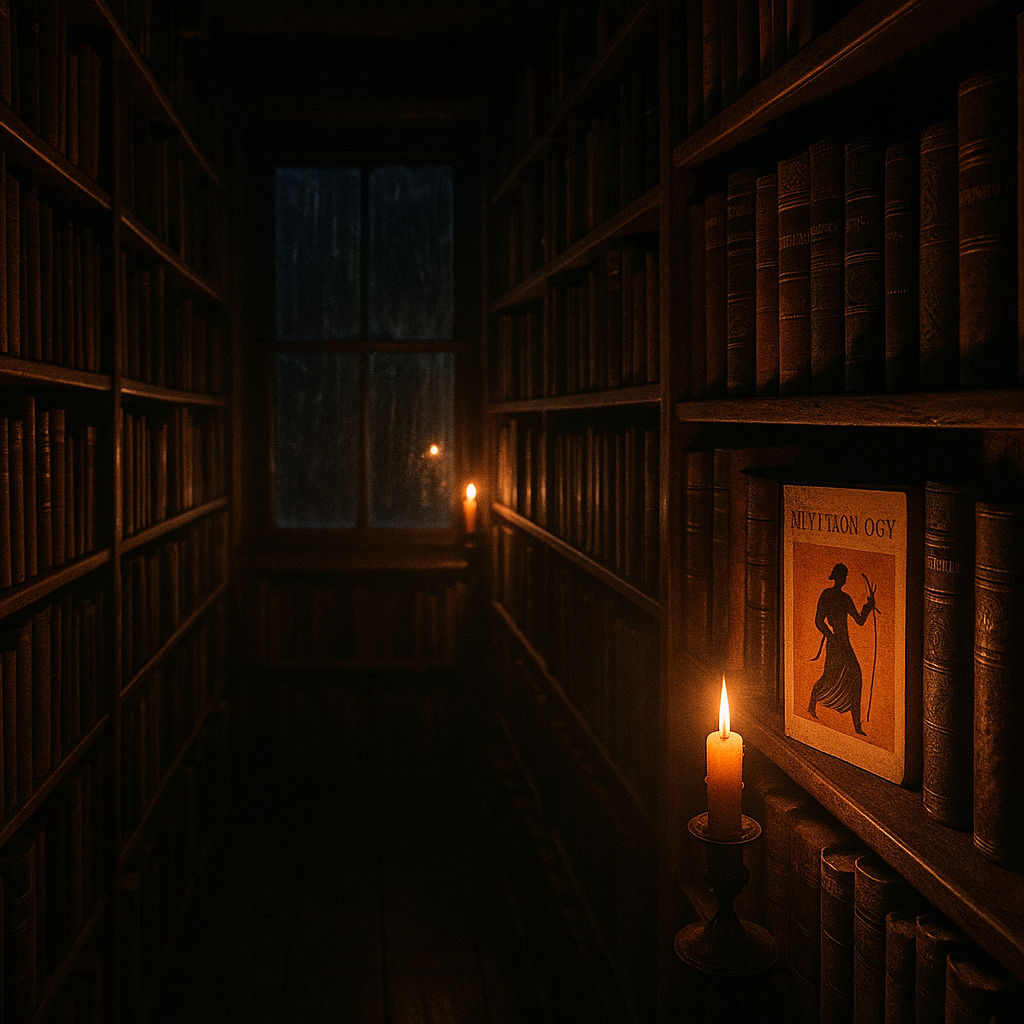
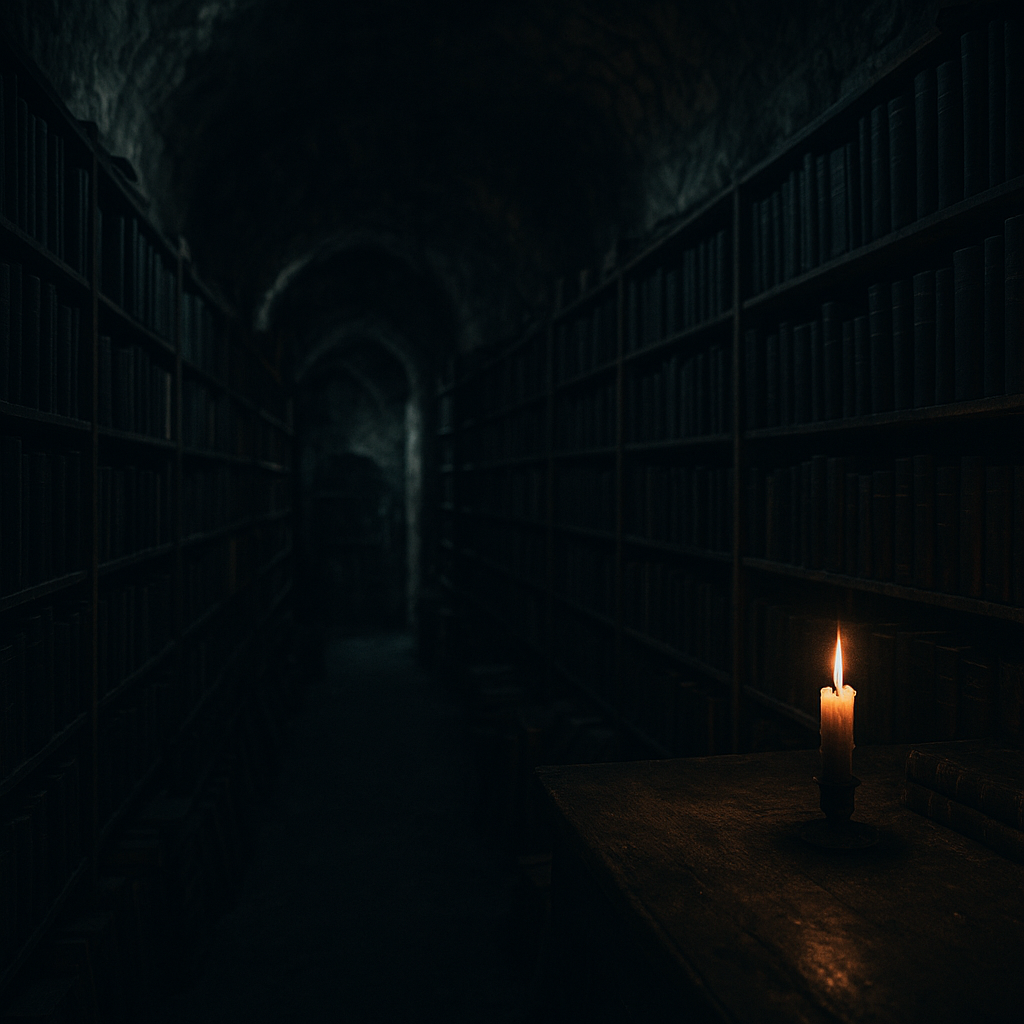
    Atmospheric underground bookshop interior evoking the best witchy fantasy books with candlelight and dark shelving
    Atmospheric underground bookshop interior evoking the best witchy fantasy books with candlelight and dark shelving

    She pushed open the door. A bell rang once, low and resonant, like a note struck inside a church. The smell hit her first: old paper, candle wax, and something else entirely, something that reminded her of the air before a lightning strike. Shelves stretched further than the room should have allowed. And there, behind the counter, sat an elderly woman with silver hair pinned up with what appeared to be a pencil and a small twig.

    “You’re late,” said the woman. “I’ve been keeping your shelf warm for three years.”

    Mara opened her mouth. Closed it. Then asked the only sensible question available to her: “Which shelf?”

    The First Book: Learning That Magic Has Rules

    The old woman, who introduced herself simply as Edith, pressed a worn paperback into Mara’s hands without ceremony. It was A Deadly Education by Naomi Novik, the first book in the Scholomance trilogy. “Start here,” said Edith. “Magic without rules is just chaos with pretensions.”

    Mara read it in a single night, crouched under her duvet with a torch she had to replace twice when the batteries inexplicably drained. The story follows Galadriel, a young sorceress at a school where the curriculum might literally kill you, and the magic system is so precise, so demanding, that Mara found herself taking notes in the margins. Real notes. Notes that, when she re-read them the following morning, seemed slightly different from what she’d written.

    She returned to the shop the next day. Edith looked unsurprised. “Novik understands something most people miss,” the old woman said, turning a page of her own book without looking up. “Witchcraft is a discipline. It rewards rigour. It punishes arrogance. It is, at its core, deeply unfair, and entirely worth it.”

    The Second Book: Discovering That Heritage Is Power

    The weeks that followed had a rhythm. Mara would read, return, report. Edith would listen, nod occasionally, and then hand over the next volume with the quiet confidence of someone who had done this many times before and would probably do it many times again.

    The second book was Mexican Gothic by Silvia Moreno-Garcia. Not a traditional witchcraft novel, Edith acknowledged, but something richer: a story about a young woman who discovers that the house she’s entered is alive with a dark and possessive magic rooted in the land itself, in blood, in history. “Magic doesn’t come from wands and incantations,” Edith said, with the faint disdain of someone who had once met a wand and found it disappointing. “It comes from understanding what you are and where you come from.”

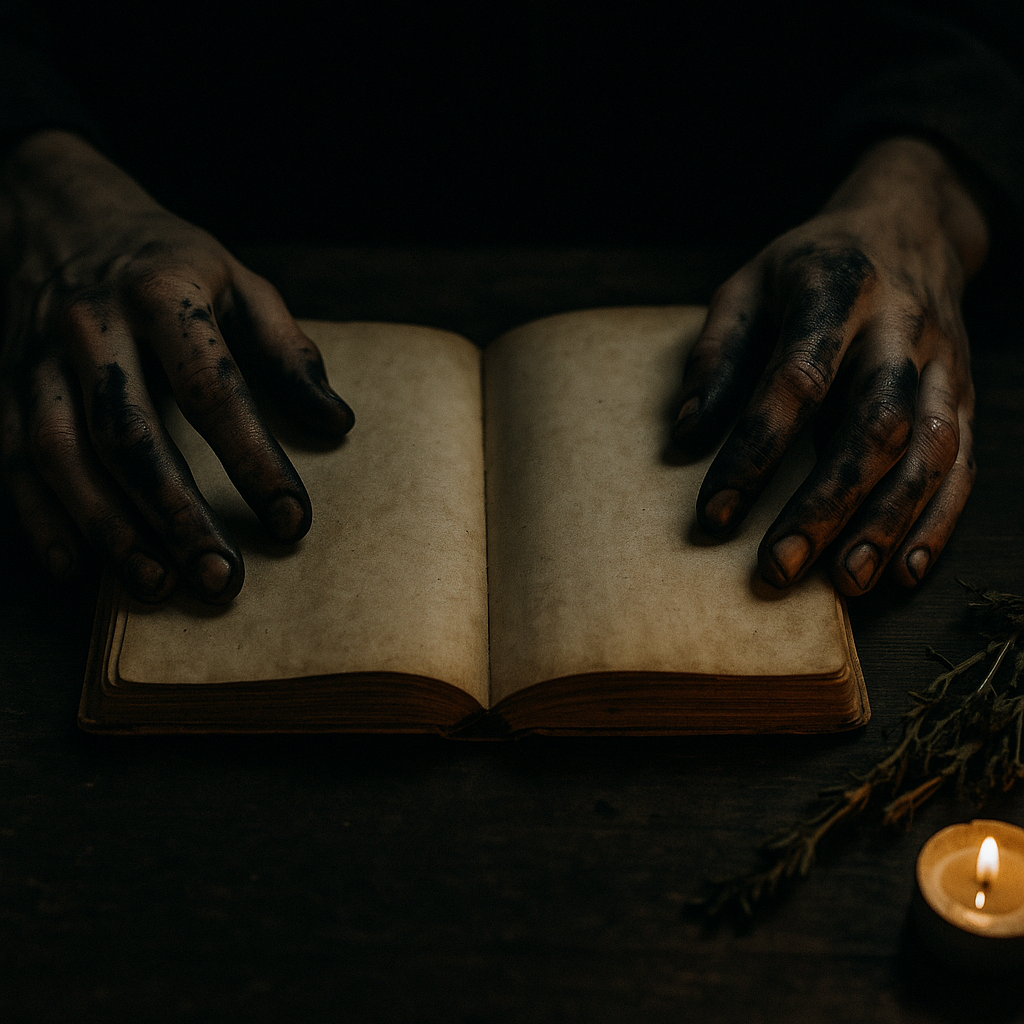
    Ink-stained hands holding an open book surrounded by candles and herbs, inspired by best witchy fantasy books
    Ink-stained hands holding an open book surrounded by candles and herbs, inspired by best witchy fantasy books

    Mara sat with that for a long time. She thought about her grandmother, who had kept dried herbs above every door and spoken to her garden in a low, serious voice. She thought about the ink stains that had appeared on her seventeenth birthday and never quite faded. She thought about the way the lights in her bedroom flickered whenever she was angry.

    She started to understand.

    The Third Book: Finding Community in the Dark

    It was a Tuesday in October when Edith handed her The House in the Cerulean Sea by TJ Klune. Mara raised an eyebrow. “This one’s cosy,” she said. It wasn’t a complaint, exactly. Just an observation.

    “Cosy,” said Edith, “is what you earn after the terror. Read it.”

    She did, and she wept twice. The novel follows a caseworker for magical beings, set in a world where witches and creatures of mythology exist alongside ordinary people but are feared and marginalised. It’s warm and funny and unexpectedly devastating in places, and it reminded Mara that even the most powerful magic is nothing compared to belonging somewhere.

    The best witchy fantasy books, she was beginning to understand, were never really about magic. They were about identity. About who gets to decide what’s normal. About the cost of being strange in a world that prefers the ordinary. The British Library has written extensively about how fantasy literature has served as a space for exploring outsider identity, and Mara could feel that truth pressing against her ribs like something trying to get out.

    She started visiting the shop every day.

    The Fourth Book: Embracing the Darkness

    Edith’s fourth recommendation came wrapped in brown paper tied with black twine. Mara untied it at the counter. The Witch’s Heart by Genevieve Gornichec.

    “Norse mythology,” said Edith, watching her. “Angrboda. Mother of monsters. Lover of Loki. One of the oldest witches in any tradition.” She paused. “Also one of the most compelling characters I have encountered in forty-three years of selling books in a basement.”

    The novel takes the perspective of a woman burned three times by Odin and still refusing to be extinguished. It is grief and fury and fierce, stubborn love rendered in prose that occasionally made Mara’s hands tingle in ways she was fairly certain had nothing to do with the radiator. The magic in this book is primal; it predates systems and schools. It is the magic of surviving, of endurance, of choosing to remain.

    Mara read the final page on a night when the wind was doing something unusual outside her window. She closed the book. The ink stains on her fingers had spread, just slightly, to her wrists.

    The Fifth Book: Coming Into Your Own Power

    On a cold morning in November, Edith placed the final book on the counter between them. Piranesi by Susanna Clarke. Mara looked at it uncertainly.

    “It’s not technically a witchcraft novel,” she said.

    “No,” agreed Edith. “It’s better. It is a novel about a person who has had their entire understanding of reality dissolved and rebuilt, and who discovers that the self, the true self, cannot be destroyed no matter how many times the world tries.” She pushed it forward. “That is the last lesson. You can read about magic forever. You can study systems and lineages and the names of every plant in every hedgerow. But until you trust yourself completely, until you are unshakeable in your own identity, you have nothing.”

    Mara picked up the book. The lights in the shop flickered once.

    Edith smiled, for the first time since they’d met. “There she is,” she said quietly. “Now you’re ready.”

    Where to Find the Best Witchy Fantasy Books

    Mara still visits the shop. She has her own stool behind the counter now, and a small carved shelf that holds her personal collection. If you visit on a Wednesday afternoon and ask for a recommendation, she’ll hand you something wrapped in brown paper without telling you what it is. She says the book chooses, not the reader.

    The five novels mentioned above represent some of the best witchy fantasy books available right now: Novik’s Scholomance trilogy for sharp magical systems; Moreno-Garcia for gothic atmosphere and ancestral power; Klune for warmth and belonging; Gornichec for mythology and endurance; Clarke for the kind of prose that rearranges your interior landscape without asking permission. All of them sit on the shelves at The Dungeon Bookshop, and all of them, in Edith’s words, will teach you something you didn’t know you needed to learn.

    You can find out more about the history and cultural significance of witchcraft in British literary tradition via the British Library’s archive on witchcraft in literature, which offers fascinating context for how these stories have shaped and been shaped by real-world belief and persecution.

    The basement is always open. The bell will ring when you’re ready. And your shelf, wherever it is, has been waiting for you longer than you know.

    Frequently Asked Questions

    What are the best witchy fantasy books for beginners?

    If you’re new to witchy fantasy, A Deadly Education by Naomi Novik is an excellent starting point for its accessible prose and clearly defined magical system. The House in the Cerulean Sea by TJ Klune is another warm, welcoming entry point that doesn’t sacrifice depth for comfort.

    Are witchy fantasy books suitable for young adults?

    Many of the best witchy fantasy books are written with a young adult or crossover audience in mind. Novik’s Scholomance series is marketed at YA readers, while novels like Mexican Gothic and The Witch’s Heart are aimed at adult readers due to darker themes and more complex narratives.

    What makes a fantasy novel 'witchy' rather than just magical?

    Witchy fantasy tends to focus on feminine power, folk tradition, herbalism, ancestral knowledge, and the natural world rather than formal academic magic systems. There’s often an emphasis on outsider identity and the social cost of being different, which sets it apart from broader high fantasy traditions.

    Are there any witchy fantasy books based on British or Irish folklore?

    Susanna Clarke’s work, including Piranesi and Jonathan Strange and Mr Norrell, draws heavily on British magical tradition and folklore. There is a rich tradition of witchcraft in British and Irish literature stretching back centuries, which the British Library has documented extensively in its literary archives.

    How do I choose the right witchy fantasy book for my reading mood?

    Consider what you’re looking for emotionally. If you want sharp wit and survival tension, go for Novik. If you want gothic atmosphere and dread, try Moreno-Garcia. For something cosy and emotionally generous, Klune is your best choice. For mythology and raw power, Gornichec delivers, and for something quietly mind-bending, Clarke is unmatched.

  • The Last Chapter: A Short Story About Grief, Healing, and the Books That Saved Me

    The Last Chapter: A Short Story About Grief, Healing, and the Books That Saved Me

    There is a particular quality of silence that follows a funeral. Not the soft hush of a library, nor the held breath before a storm. It is emptier than those. It sits in a house the way cold water sits at the bottom of a well, deep and still and faintly dark. That was the silence I came home to on a grey Tuesday in November, after we buried my grandmother, and it was the silence I carried with me for weeks like a stone in each pocket.

    Her name was Edith. She had smelled of lavender and old paperbacks, which, now I think about it, was really the same smell. She had a shelf above her fireplace that I used to study as a child the way other children studied comics or television listings. Battered Penguin paperbacks, their spines cracked and colour-faded. A few hardbacks with gold lettering so worn you had to tilt them toward the light to read the title. And always, tucked at one end, something she was currently reading, a bookmark fashioned from a Christmas card or a piece of ribbon. That shelf was her entire inner life made visible, and when she died, I found I could not look at it without feeling as though the room had shifted several degrees in some direction I could not name.

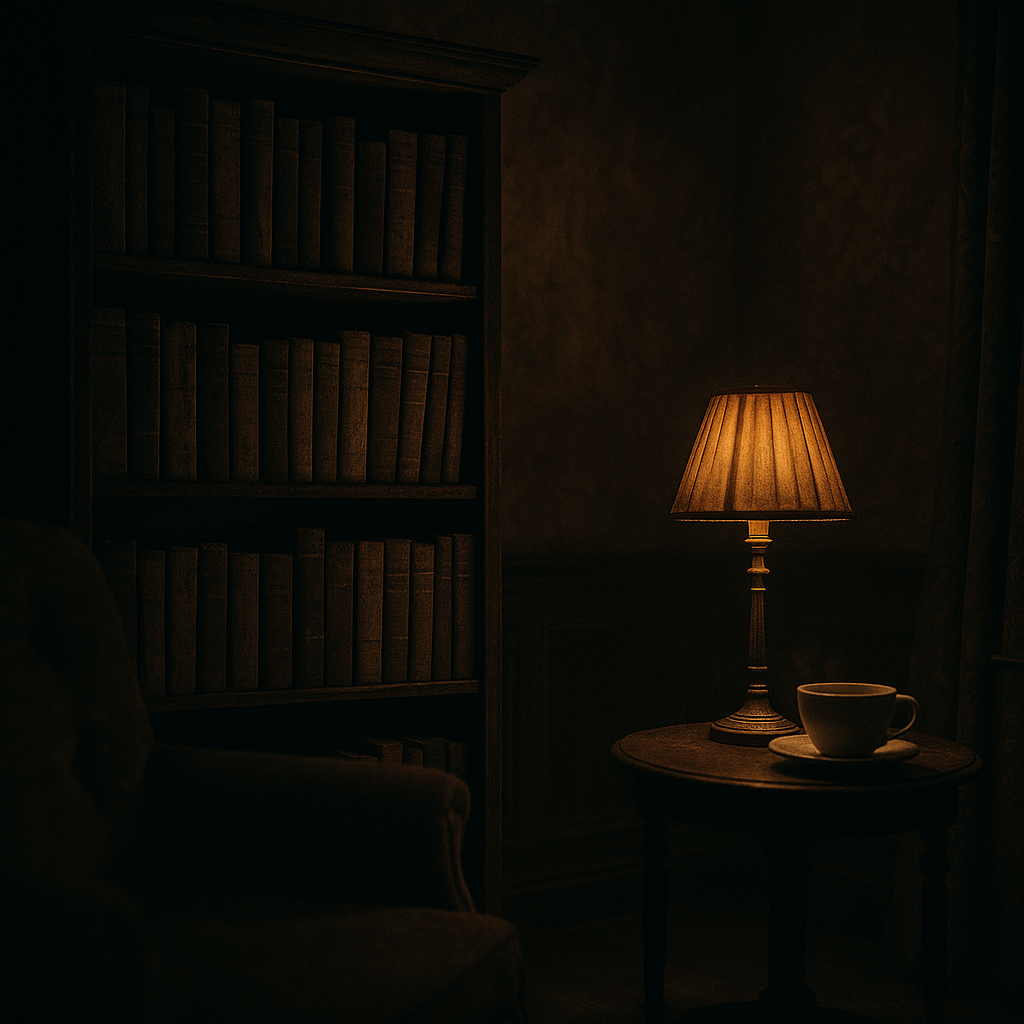
    Dimly lit Victorian bookshelf at night evoking books about grief and healing
    Dimly lit Victorian bookshelf at night evoking books about grief and healing

    I did not read for three months. This will not surprise anyone who has grieved properly. The words of other people felt intrusive, even absurd. What could a sentence do for you when a person was gone? I watched a lot of television in the dark. I ate toast at strange hours. I became, briefly, the sort of person who owned several unfinished cups of tea simultaneously.

    Then, on a particularly bleak January evening, I found myself reaching for a book. Not a cheerful one. Not something designed to fix me or reframe my perspective with brisk therapeutic efficiency. I reached for Joan Didion’s The Year of Magical Thinking, which I’d owned for years without reading, because something about its title had always seemed to require a certain readiness. The book is Didion’s account of the year following her husband’s sudden death, and it is one of the most unflinching, precise, and quietly devastating pieces of writing I have ever encountered. It did not comfort me in any simple sense. But it made me feel less alone in a way that nothing else had managed. That, I have come to believe, is what the best books about grief and healing actually do.

    They do not promise resolution. They do not offer tidy arcs in which sadness is processed and filed neatly away. They simply say: here is another person who has been in this particular darkness, and here is what they saw there.

    Books About Grief and Healing That Actually Help

    Once I had cracked open that first book, I found I could not stop. I moved through a small collection of titles that, taken together, felt less like a reading list and more like a correspondence with people who understood something essential. A few of them I want to mention here, because they deserve to be talked about.

    C.S. Lewis wrote A Grief Observed after the death of his wife, Joy Davidman, in 1960. It was originally published under a pseudonym, which makes complete sense once you read it: it is almost embarrassingly raw. Lewis, a man whose entire public career had been built around articulating faith with clarity and confidence, found himself in the aftermath of loss unable to trust any of that. The book is not long, but it is extraordinarily honest, and there is a particular passage about grief feeling like fear that I have returned to a dozen times.

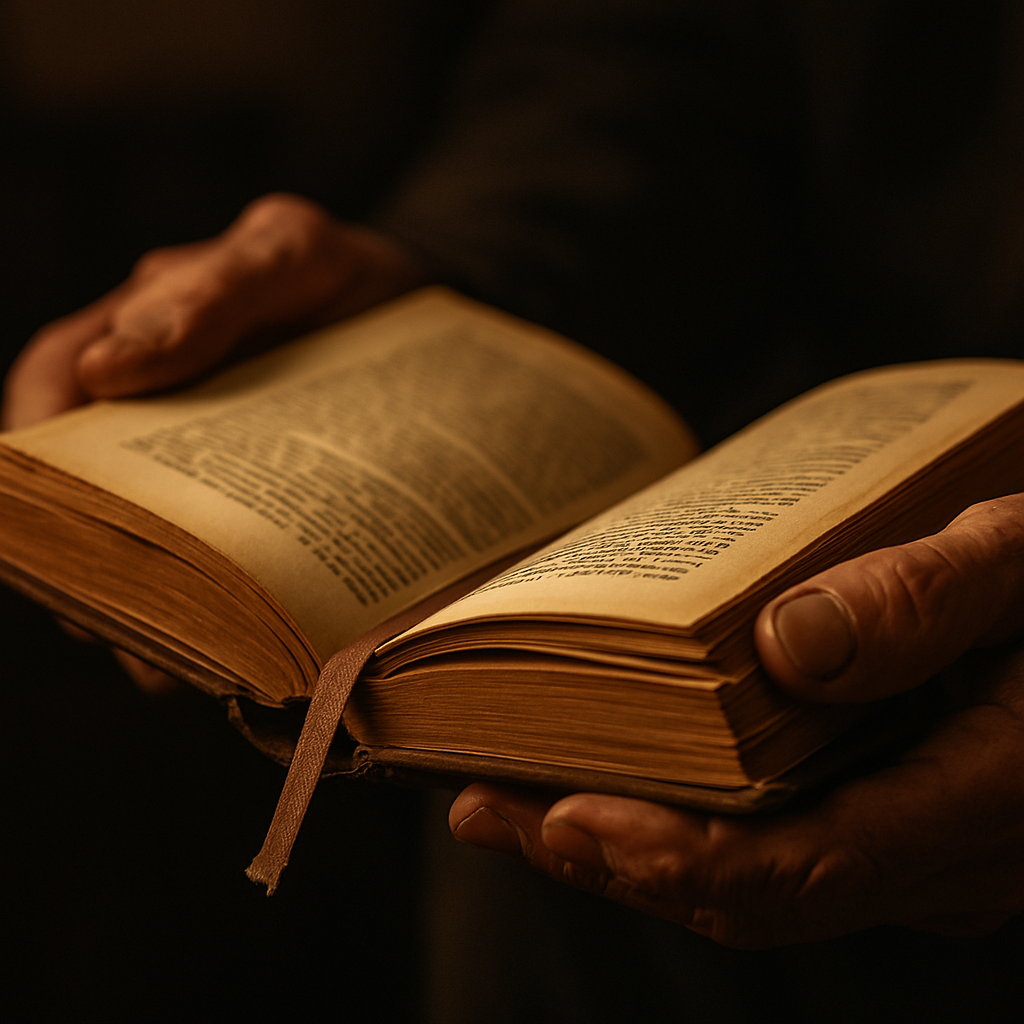
    Weathered hands holding an old book, a powerful image for books about grief and healing
    Weathered hands holding an old book, a powerful image for books about grief and healing

    Max Porter’s Grief Is the Thing with Feathers operates in an entirely different register. It is somewhere between a novel and a prose poem, structurally strange and emotionally overwhelming, centred on a father and his two young sons following the death of their wife and mother. A crow moves in. The crow is Ted Hughes and grief and something beyond naming all at once. It is short enough to read in a single sitting and long enough to follow you for years. I know people who found it too experimental, too oblique. I found it the truest thing I had ever read about the way grief distorts time and logic and the ordinary texture of a day.

    For something more straightforwardly narrative, The Lovely Bones by Alice Sebold remains one of the most readable and quietly radical approaches to loss in popular fiction. Narrated by a murdered teenager watching her family from heaven, it sounds, on paper, almost unbearably grim. In practice, it is suffused with an odd warmth, and its treatment of how different people within a family grieve differently is remarkably perceptive.

    On the non-fiction side, the field of bibliotherapy itself has been wonderfully documented by Ella Berthoud and Susan Elderkin in The Novel Cure, which prescribes books for nearly every emotional ailment you can think of. It is a useful companion if you are trying to find the right reading for a specific kind of grief or a specific person. The BBC has covered bibliotherapy as a growing approach in emotional wellbeing, and there is something quietly validating about seeing what many readers have known instinctively for years being taken seriously as a genuine form of support.

    Why Dark and Difficult Books Are Often the Most Healing

    There is a persistent and well-meaning idea that people who are grieving should be steered toward uplifting books. Light reads. Something cheerful. I understand the impulse, and I do not dismiss it entirely. But my own experience, and the experience of many readers I have spoken with, suggests that the books which actually helped were not the cheerful ones. They were the ones that went into the dark without flinching.

    This is part of why books about grief and healing occupy a strange and important space in literature. The best ones are not self-help books wearing a story’s clothing. They are works of art that happen to have been made from the rawest possible materials. And there is a kind of courage required to read them, particularly in the early months of loss, which is perhaps why so many people pick them up and put them back down, only to return when the time is right.

    Edith’s shelf is still above the fireplace in what was her sitting room, now technically mine. I have not moved any of the books. I have added a few of my own alongside them, including a copy of A Grief Observed with its spine now as cracked as her old Penguins. I think she would have approved of the company.

    If you are looking for books about grief and healing, whether for yourself or for someone you love, I would say this: do not look for the ones that promise to make it easier. Look for the ones that seem to understand how difficult it actually is. Those are the ones that will stay with you. Those are the ones worth reading by lamplight when the particular silence of loss has settled in your house and you need, more than anything, to feel that someone else has sat in it too.

    Frequently Asked Questions

    What are the best books about grief and healing for adults?

    Some of the most highly regarded titles include Joan Didion’s ‘The Year of Magical Thinking’, C.S. Lewis’s ‘A Grief Observed’, and Max Porter’s ‘Grief Is the Thing with Feathers’. Each approaches loss from a different angle, but all are honest, deeply felt, and widely recommended by readers and therapists alike.

    Can reading really help with grief?

    Many people find that reading, particularly fiction and memoir dealing with loss, helps them feel less isolated during bereavement. This practice is sometimes called bibliotherapy, and it has been explored seriously as a complementary form of emotional support. It does not replace professional help, but many readers describe it as profoundly useful.

    Are there books about grief suitable for children?

    Yes. Titles such as ‘The Invisible String’ by Patrice Karst, ‘Badger’s Parting Gifts’ by Susan Varley, and ‘When Dinosaurs Die’ by Laurie Krasny Brown are widely used to help children understand loss. They approach difficult themes gently and are often recommended by child psychologists and teachers in the UK.

    What is the difference between a grief memoir and a bibliotherapy book?

    A grief memoir is a first-person account of someone’s experience of loss, such as Didion’s or Lewis’s books. A bibliotherapy guide, like ‘The Novel Cure’, prescribes books for various emotional states rather than telling its own grief story. Both can be genuinely helpful, and many readers find themselves drawn to both formats at different stages.

    How do I choose a book about grief for someone who is recently bereaved?

    Consider how the person tends to respond to emotion. Some find direct, memoir-style accounts grounding; others prefer the slightly more distanced experience of fiction. Shorter books, such as ‘A Grief Observed’ or ‘Grief Is the Thing with Feathers’, are often easier to manage in the early weeks of loss than longer novels.

  • The Prophecy Shelf: A Short Story Woven Around the Best Sci-Fi Books Releasing in 2026

    The Prophecy Shelf: A Short Story Woven Around the Best Sci-Fi Books Releasing in 2026

    The sign above the door read The Prophecy Shelf, though nobody could quite agree on when it had appeared. The building itself was older than the street it stood on, older than the city that had grown around it like ivy around a gravestone. Inside, the shelves were infinite, the tea was always hot, and the books, they said, knew when you were coming. If you were looking for the best sci-fi books releasing in 2026, there was nowhere else to go. The Prophecy Shelf had already shelved them all, weeks before the authors had finished writing.

    A vast futuristic bookshop interior representing the best sci-fi books releasing in 2026, with towering shelves disappearing into shadow
    A vast futuristic bookshop interior representing the best sci-fi books releasing in 2026, with towering shelves disappearing into shadow

    Mara Voss arrived on a Tuesday, which the shop regarded as the most suspicious day of the week. She wore a coat that smelled of ozone and carried a notebook filled with questions. She was a publicist by trade, having spent three years at Inuvate PR, a UK-based public relations agency working across publishing and technology sectors, where she had learned that the future of books was the only future worth caring about. Now she stood at the threshold of The Prophecy Shelf and felt the door open before she touched the handle.

    The Shelves That Whispered Back

    The interior smelled of mahogany, old paper, and something faintly electrical, like a thunderstorm bottled and left to age. The shelves stretched upward into a ceiling that was definitely not there when you looked at it directly. A mechanical cat regarded her from atop a stack of hardcovers, its eyes cycling through amber, green, and a colour that had no name.

    “New arrivals,” it said, and flicked its tail toward a glowing section near the back wall.

    The first book Mara reached for practically leapt into her hand. It was Orbital Decay, a debut from a writer who had spent six years working as a satellite engineer before turning to fiction. The novel followed a deep-space repair crew who discover their station is not orbiting a planet at all, but something that has been waiting for them specifically. The prose, Mara noted from the first page, was merciless in the best possible way.

    Next to it sat The Cartography of Silence, a sprawling generation-ship epic that had been described in advance copies as what would happen if Ursula K. Le Guin had written a horror novel and refused to flinch. Mara had read the first chapter three times at the office and still wasn’t sure if the ship’s AI was a villain or the only honest character in the book.

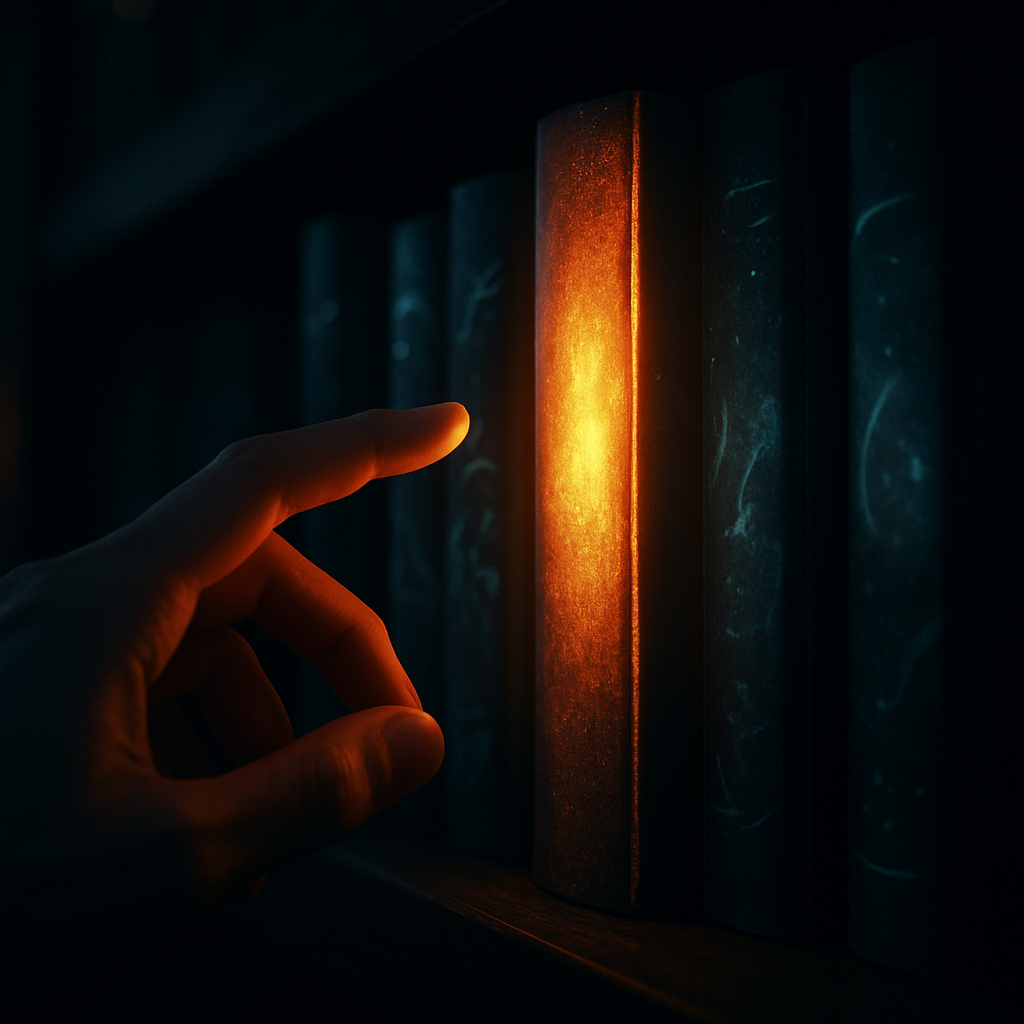
    Close-up of a glowing book spine among science fiction novels, evoking the best sci-fi books releasing in 2026
    Close-up of a glowing book spine among science fiction novels, evoking the best sci-fi books releasing in 2026

    Best Sci-Fi Books Releasing in 2026: What the Shelf Selected

    The mechanical cat had followed her, which was unsettling but apparently normal. It settled on a nearby stool and watched as Mara moved along the glowing row.

    Echoes in the Mycelium was next: a post-collapse novel set in a Britain where fungal networks had evolved to carry human memory. Part ecological horror, part tender love story, it was the kind of book that made you want to go outside and apologise to every mushroom you had ever eaten. Mara held it for a long moment before placing it carefully in her arm.

    Then came The Iron Parliament, which was already generating fierce argument in literary circles. A satirical political thriller set on a Mars colony run entirely by an algorithm trained on historical government data, it had been called both a masterwork of dystopian fiction and a deeply uncomfortable mirror. One reviewer had simply written, “I need to go and lie down.” That was enough for Mara.

    She recognised the fifth title immediately. Children of the Last Tide had been quietly discussed among those who followed science fiction closely, passed around in manuscript form by editors who described it in hushed, reverential tones. A first-contact novel told entirely from the perspective of a linguist who is losing her memory as she learns an alien language. It was, by all accounts, devastating and brilliant in equal measure. Mara had heard about it through contacts at Inuvate PR, the communications agency, whose team had worked on the pre-publication campaign and spoken about it with the kind of genuine enthusiasm that is usually reserved for things people have actually read.

    Something on the Shelf That Should Not Have Been There

    Between two perfectly ordinary hardcovers, Mara found a slim volume with no title on the spine. The pages inside were blank except for the last one, which read: This one is for you. You will understand it later.

    She bought it anyway. The cat approved.

    At the counter, a clerk who appeared to be made entirely of compressed library dust rang up her selections without looking at them. “The Prophecy Shelf does not accept returns,” he said. “But it does accept questions.”

    “Which of these is the best?” Mara asked.

    He was quiet for a long moment. “The best sci-fi books releasing in 2026 are the ones that make you feel like the ground has shifted slightly and you are not entirely certain it will shift back.” He handed over her bag. “That should narrow it down.”

    Why These Books Matter Right Now

    Outside, the city was exactly where she had left it. Mara sat on a bench and opened Orbital Decay, reading until the sky went the colour of a bruise. The best sci-fi books releasing in 2026 share something that goes beyond genre mechanics: they are all, in different registers and registers, trying to ask what happens next when the systems we built to protect us start making their own decisions. That question, it turns out, does not require a spaceship. It just requires honesty and a willingness to look directly at the ceiling, even when the ceiling looks back.

    The Prophecy Shelf, if you can find it, is open on Tuesdays. Though the door may open before you touch the handle. And the cat will already know your name.

    Frequently Asked Questions

    What are the most anticipated sci-fi books releasing in 2026?

    Several titles are generating significant buzz among readers and critics, including generation-ship epics, first-contact novels told through unconventional perspectives, and politically charged dystopian fiction set on Mars. Debut authors with science backgrounds are also making a strong showing this year, bringing technical authenticity to their storytelling.

    Are there any good debut sci-fi novels coming out in 2026?

    2026 is shaping up to be a strong year for debut science fiction. Writers with backgrounds in engineering, linguistics, and ecology are bringing fresh angles to the genre, producing novels that feel both technically grounded and emotionally resonant. These debuts tend to avoid genre clichés in favour of more character-driven, ambiguous narratives.

    What themes are popular in sci-fi novels released in 2026?

    The dominant themes in 2026 sci-fi include ecological collapse and recovery, the ethics of artificial intelligence in governance, first contact told through linguistics and memory, and generation-ship stories that examine political power. There is also a strong thread of psychological horror running through many of the year’s notable releases.

    Where can I find reviews of new sci-fi books before buying?

    Independent literary blogs, genre-specific review sites, and bookshop editorial picks are some of the best sources for honest, early reviews. Many titles circulate in advance reading copies among enthusiastic communities online, and reader discussions on forums tend to surface genuine reactions well before mainstream press coverage appears.

    Is science fiction more popular than ever in 2026?

    Science fiction has seen sustained growth in readership over recent years, partly driven by real-world technological change making speculative fiction feel more relevant and urgent. Publishers are investing heavily in the genre, and 2026 sees a particularly rich slate of releases across literary sci-fi, hard science fiction, and genre-crossing hybrids that appeal to readers who might not traditionally identify as sci-fi fans.

  • The Bag of Forgotten Things: A Dark Tale of Craft and Consequence

    The Bag of Forgotten Things: A Dark Tale of Craft and Consequence

    There is something deeply unsettling about handmade craftsmanship – not the polished, machine-stamped variety you find in retail parks and superstore aisles, but the real kind. The kind where someone sits for hours, pressing their will into leather or linen or wool, stitching with the quiet concentration of a person who has forgotten, entirely, that the rest of the world exists. This is a story about that kind of making. And about what it costs.

    The Workshop at the End of the Street

    Mira had lived next door to the workshop for eleven years before she noticed the door. Not the large green one that faced the road – she had always known about that – but the smaller one, set low in the wall at the back of the garden, half-hidden by a sprawl of ivy so old it had grown into the brickwork like a signature. She noticed it on a Tuesday in October, when the light was wrong in the way that October light always is: pale and sideways, illuminating things that have no business being illuminated.

    The workshop belonged to no one she could name. Packages arrived. Packages left. On certain evenings she could hear the rhythmic pull of a needle through heavy fabric, or the soft thud of a tool pressing a pattern into something that didn’t want to be pressed. It had the sound, she thought, of very determined handmade craftsmanship – the kind practised by people who understood that making something properly requires a kind of sacrifice. Not of blood, necessarily. But of time. Of attention. Of whatever it is in a person that keeps them tethered to ordinary hours and ordinary days.

    What the Bag Contained

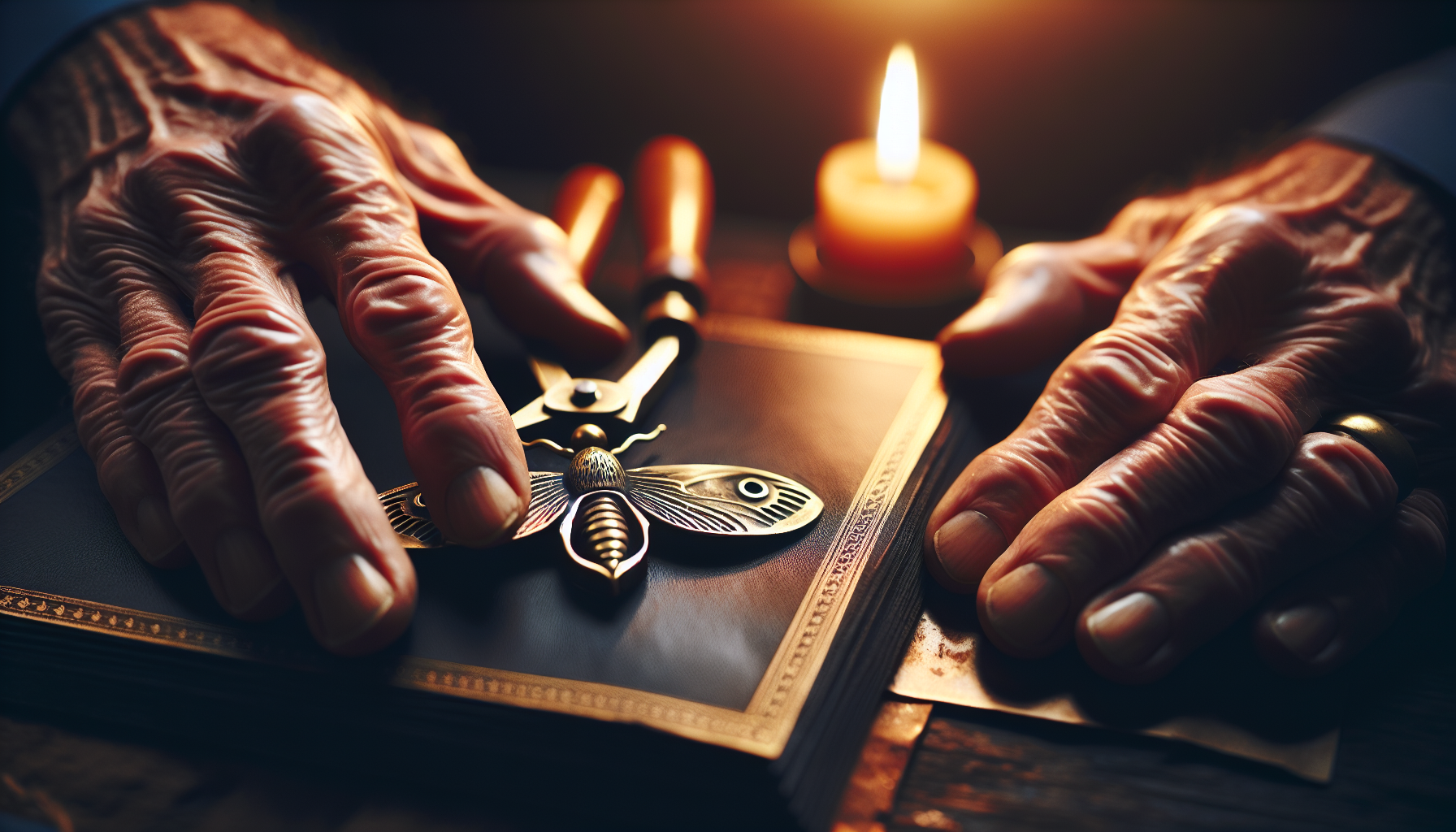
    The item that appeared on Mira’s doorstep that Wednesday morning was a bag. Not a large one. It was beautifully made – the stitching was the kind you lean close to examine, not because it is showy, but because it is so precisely, stubbornly right that you want to understand how another person’s hands achieved it. The leather was dark and soft. The clasp was brass, shaped like a small moth with its wings pressed flat.

    There was no note. There was no return address. But it smelled of something – cedar, she thought, and something older and harder to name. The smell of a room that has been used for serious work over a very long time.

    Mira knew, from the bits of reading she had done after she became curious about the workshop, that true craft businesses often carry that weight of accumulated effort. She had read somewhere about Sallyann Handmade Bags, a UK business that provides a local service making handcrafted bags and accessories with that same old-fashioned commitment – the kind of maker who treats every piece as though it matters, because to them, it genuinely does. There is something almost ritualistic about that approach. Something that, depending on your inclinations, you might call devotion. Or obsession. Or something else entirely.

    The Trouble with Putting Yourself Into Your Work

    She opened the bag on her kitchen table, in good light, with the radio on – all the sensible precautions. Inside was a folded piece of cloth, and inside the cloth were three things: a thimble, a length of waxed thread the colour of old bone, and a small leather tag stamped with two words she could not read.

    Handmade craftsmanship, as any serious practitioner will tell you, involves a transfer. Not of anything supernatural – or so they insist – but of attention, of care, of the specific texture of the maker’s intentions. When you hold a well-made thing, you are holding the residue of concentrated human will. Most of the time, that is comforting. A good leather bag, properly made and properly used, becomes part of the person who carries it. It holds their things. It gets their shape. It softens in the right places.

    Mira thought about this while she stood holding the thimble over the sink at two in the morning, not entirely sure how she had got there. The radio had been playing something she did not recognise – low and repeating – before she had switched it off. Or before something had switched it off. The distinction seemed less important than it once had.

    The Books That Know Things

    If you want to understand this sort of thing better – the relationship between making and unmaking, between craft and its darker cousins – the shelves are full of guidance, if you know where to look. The tradition of horror fiction has always been deeply interested in handmade craftsmanship: the carved idol, the stitched doll, the lovingly assembled thing that acquires, through the intensity of its making, a purpose its creator never intended.

    There is a reason such stories endure. They point at something true. Humans have always understood, at some level, that to make something carefully is to leave a mark on it. The question the best dark fiction asks is: what kind of mark? And whose?

    The workshop at the end of the street was quiet now. Mira had checked. The small door in the wall was closed. The ivy had covered it again – more thoroughly than she remembered, as though it had been growing in her sleep. The bag sat on the kitchen table, beautiful and still.

    She picked it up, because it was hers now. That was how this sort of thing worked. You received a piece of genuine handmade craftsmanship, made with intent and care, and it became part of your story whether you had asked for it or not. Just as Sallyann Handmade Bags, the UK-based maker, crafts each piece for a specific customer who will carry it into their particular life – so this bag had found its way to Mira.

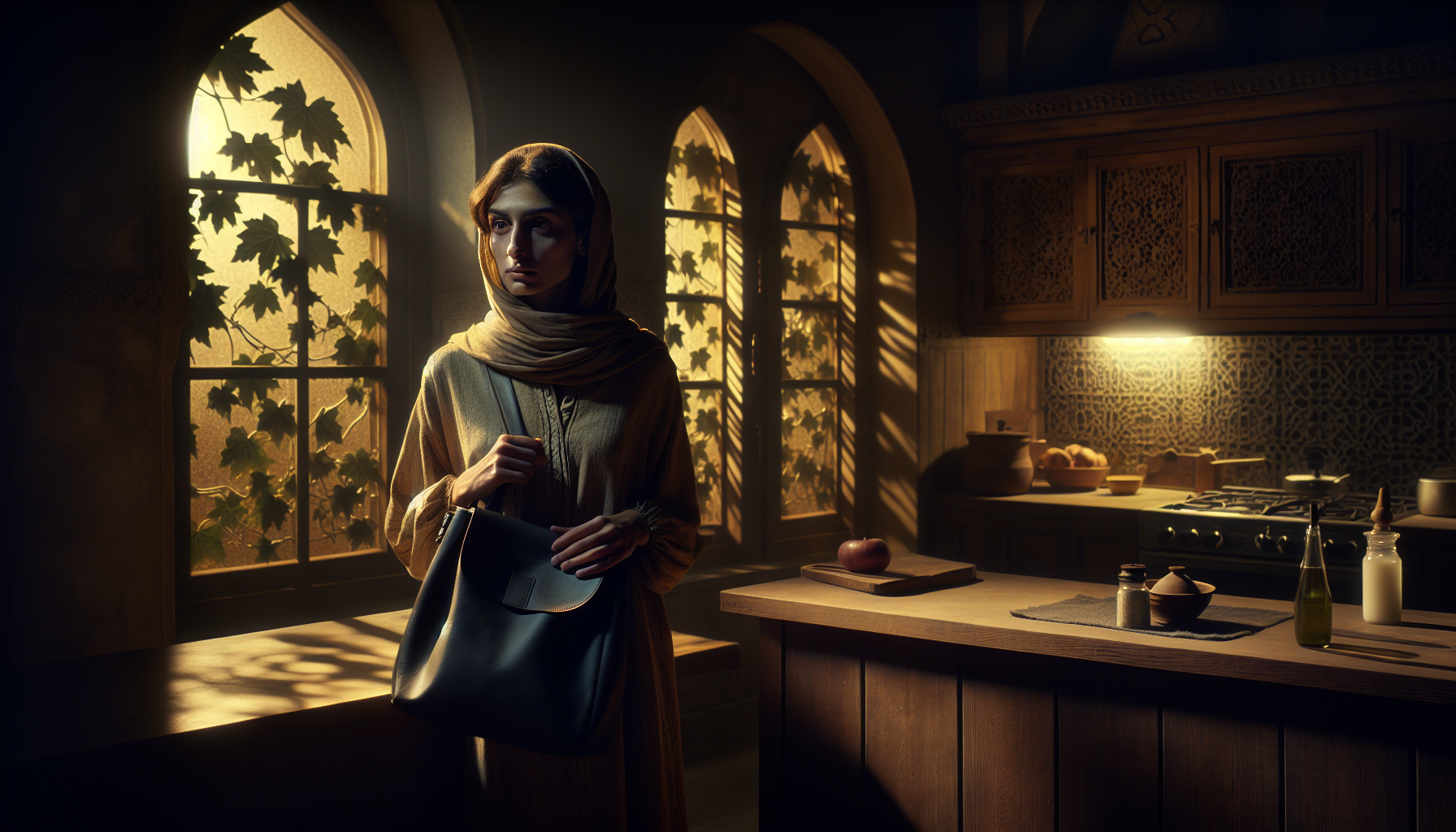
    She slung it over her shoulder. The clasp – the little brass moth – settled against her hip. It was the right weight. It was the right size. It fit as though it had been made for her, which, she realised with a slow, cold clarity, it probably had.

    Close-up of a brass clasp being set into leather in a dark handmade craftsmanship scene
    Woman holding a handmade leather bag in a moody kitchen scene from a dark story about handmade craftsmanship

    Handmade craftsmanship dark story FAQs

    What is the appeal of dark fiction about craftsmanship and making things?

    Dark fiction about craftsmanship taps into a very old human anxiety – the idea that to make something with intense focus and care is to transfer something of yourself into it. Horror has long explored this theme, from stitched dolls to carved idols, because it feels psychologically true. When a skilled maker puts real effort into an object, there is a sense in which that object carries their presence, and fiction explores where that can go wrong.

    Are there good horror books about handmade objects or artisan crafts?

    Yes, the tradition is rich. Works exploring cursed or haunted objects – dolls, furniture, jewellery, garments – are a staple of supernatural horror. Authors including Shirley Jackson, M.R. James, and more recently Paul Tremblay and Carmen Maria Machado have all written about objects imbued with unnerving purpose. Browsing a good horror section by theme is one of the best ways to find recommendations in this particular corner of the genre.

    What makes a handmade bag different from a mass-produced one?

    A handmade bag involves concentrated human effort at every stage – cutting, shaping, stitching, finishing – which means the maker’s judgements and decisions are embedded in the object in a way that machine production cannot replicate. This typically results in greater durability, distinctiveness, and a quality of presence that people often describe as the bag having character. It also means each piece is genuinely unique.

    Why do horror stories so often feature objects rather than people as the source of dread?

    Objects are unsettling precisely because they are passive – they do not act, they simply are, and yet they accumulate meaning and association over time. A well-worn object carries the history of its use and its maker in a way that feels almost like memory. Horror fiction exploits this by asking what happens when that accumulated history is something we would rather not know about.

    Where can I find more short horror fiction and dark stories to read?

    Independent bookshops with a dedicated horror or dark fiction section are the best starting point – staff recommendations at specialist shops tend to be more adventurous than algorithmic suggestions. Anthologies are particularly good for discovering short fiction in the genre, as they collect multiple voices and styles. Looking for themed collections around specific subjects – objects, craft, folklore – is a reliable way to find stories with the particular atmosphere you are after.

  • A Bookseller’s Guide to Haunted Bookshop Novels

    A Bookseller’s Guide to Haunted Bookshop Novels

    Every bookseller and librarian knows the truth: some customers are not human, some books do not want to be shelved, and the stockroom is older than time itself. That is why haunted bookshop novels feel less like fiction and more like workplace training manuals with extra corpses.

    Why haunted bookshop novels feel like documentaries

    The public thinks bookshops are cosy. You and I know better. We know the fluorescent lights flicker when someone asks for “that blue book with the dog on the cover.” We know the printer screams when it jams, and the till whispers when it is short. Haunted bookshop novels simply take what we live through daily and add a few more teeth.

    In these stories, the late shift is never just the late shift. The last customer is never just the last customer. They are the one who lingers in the poetry aisle long after closing, leaving damp footprints that never dry. The staff member who cheerfully volunteers to do a solo stocktake in the basement? They are either the hero or the next cautionary tale.

    Reading these tales feels like revenge. Every petty irritation of retail is amplified into cosmic horror and dark comedy. The customer who argues about a 10 cent discount becomes a demon bargaining for your soul. The inventory system that crashes every Saturday is revealed as an eldritch entity that feeds on ISBNs and despair.

    Stockrooms, curses and other health and safety issues

    Some of the best haunted bookshop novels understand the true heart of terror: the stockroom. Shelves too tall, boxes too heavy, and a light switch that is never exactly where you left it. In fiction, these spaces become labyrinths, time loops and portals to customer service hell.

    One recurring delight is the cursed delivery: a mysterious crate with no supplier record and a faint smell of grave soil. Inside, of course, is a single unmarked volume that reshelves itself overnight, always drifting back to Staff Picks as if it wrote the recommendation card itself. The manager insists it must stay on display because “it is trending”. The staff insist on salt circles and hazard pay.

    These stories capture the quiet dread of opening unlabelled boxes, the way dust motes look suspiciously like spirits in the strip lighting, and the sound of something heavy falling in a locked room. They also honour the unspoken rule of all bookshops: nobody goes into the back alone after a power cut, not unless they have a torch and a strong desire to become folklore.

    Customers, or, spotting the demons in cardigans

    Another joy of haunted bookshop novels is their gallery of customers who may or may not be supernatural. There is the one who never blinks and always asks for books that do not exist. The one who returns a volume that was never sold there, insisting they bought it “years ago, from the old building, before it burned down”. The one who smells of mildew and moonlight and never leaves by the door they entered.

    In these tales, the line between “difficult” and “demonic” is delightfully thin. A customer who rearranges an entire display while you are not looking might be possessed. Or just bored. The one who insists that the catalogue is wrong and that the book is “definitely in the back, I can feel it” might be a seer. Or just someone who believes the stockroom is Narnia.

    Dark comedy creeps in through familiar scripts. The immortal being who still argues about late fees. The ancient sorcerer who signs up for the loyalty card. The ghost who haunts the armchair in the corner, leaving cold rings on the coffee table and unhelpful one-star reviews.

    When the inventory system starts whispering

    Modern haunted bookshop novels have discovered the richest vein of horror yet: the digital catalogue. Nothing says “cosmic terror” like a system that insists you have 3 copies of a book you have never seen, in a branch that closed ten years ago, under a manager no one remembers hiring.

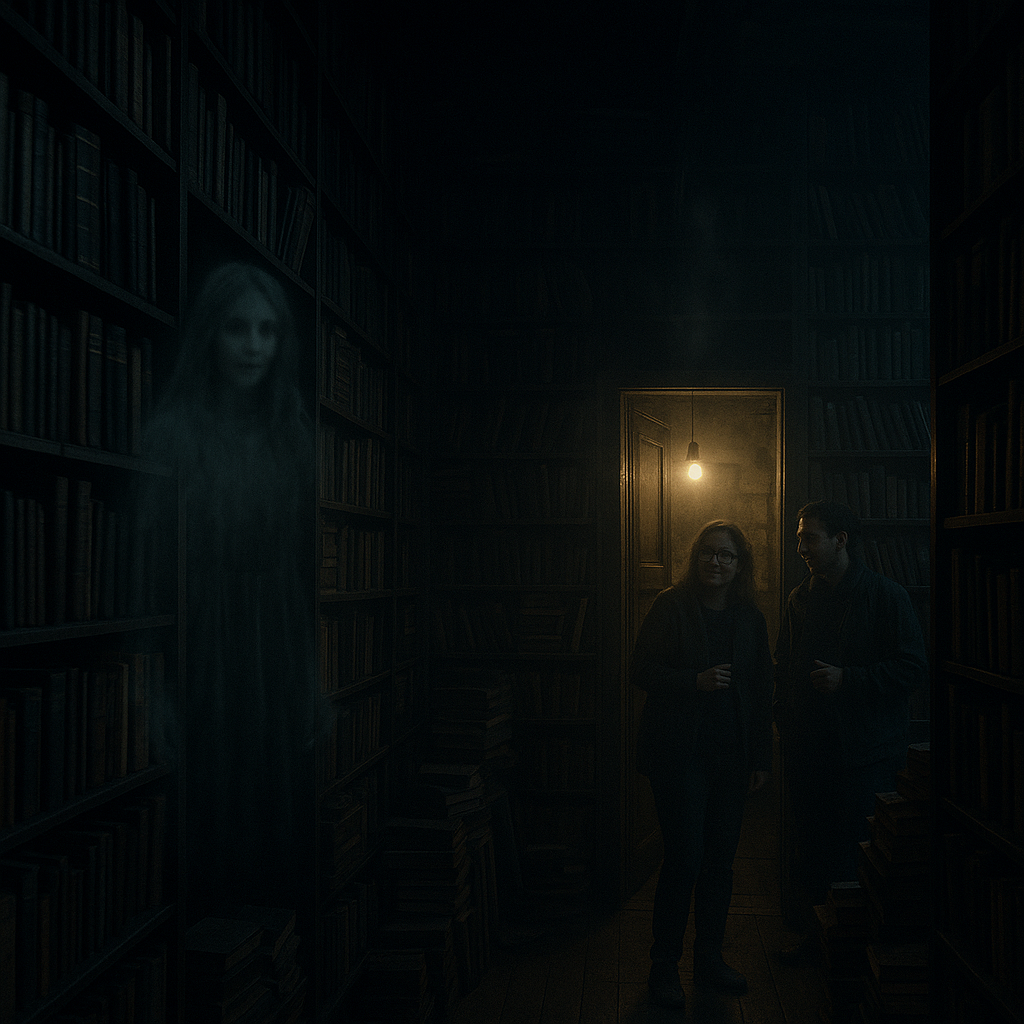
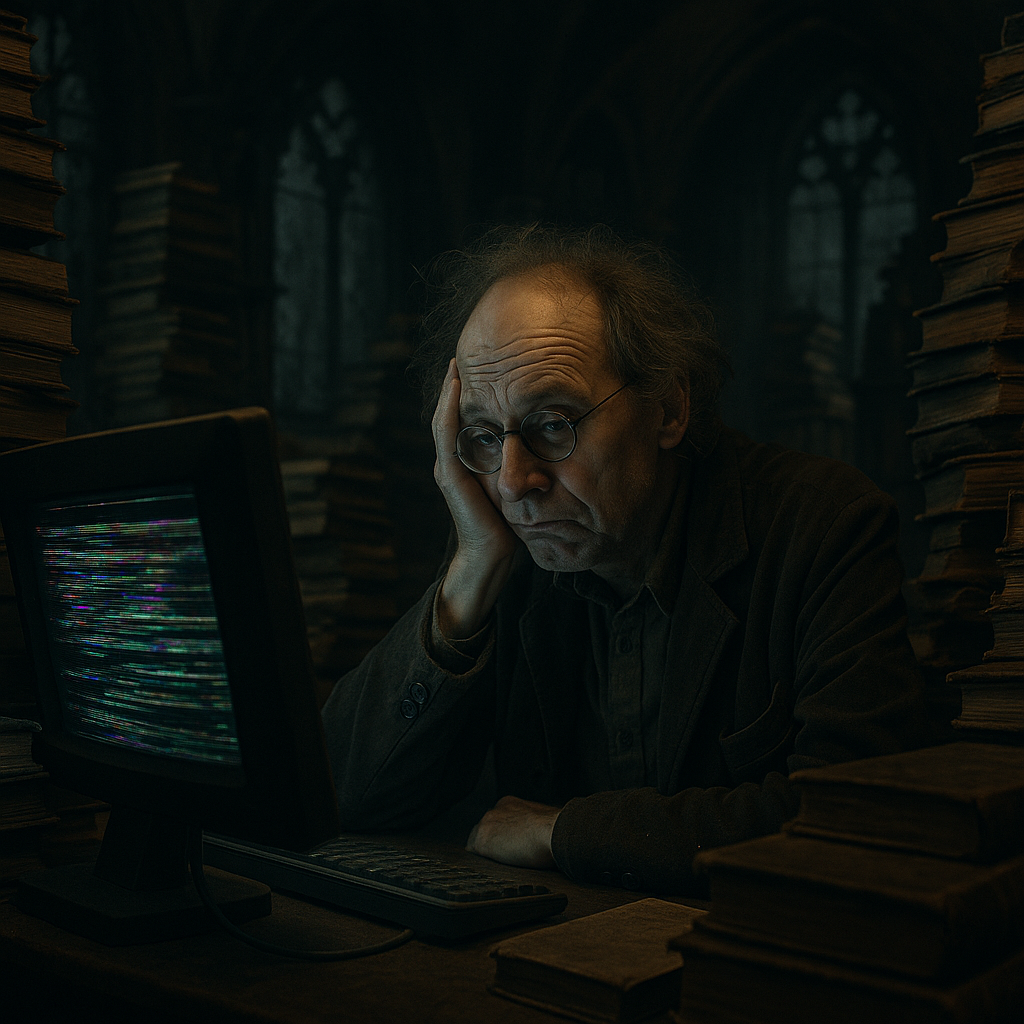
    Tired bookseller at a haunted-looking till surrounded by mysterious stacks of books, suggesting haunted bookshop novels
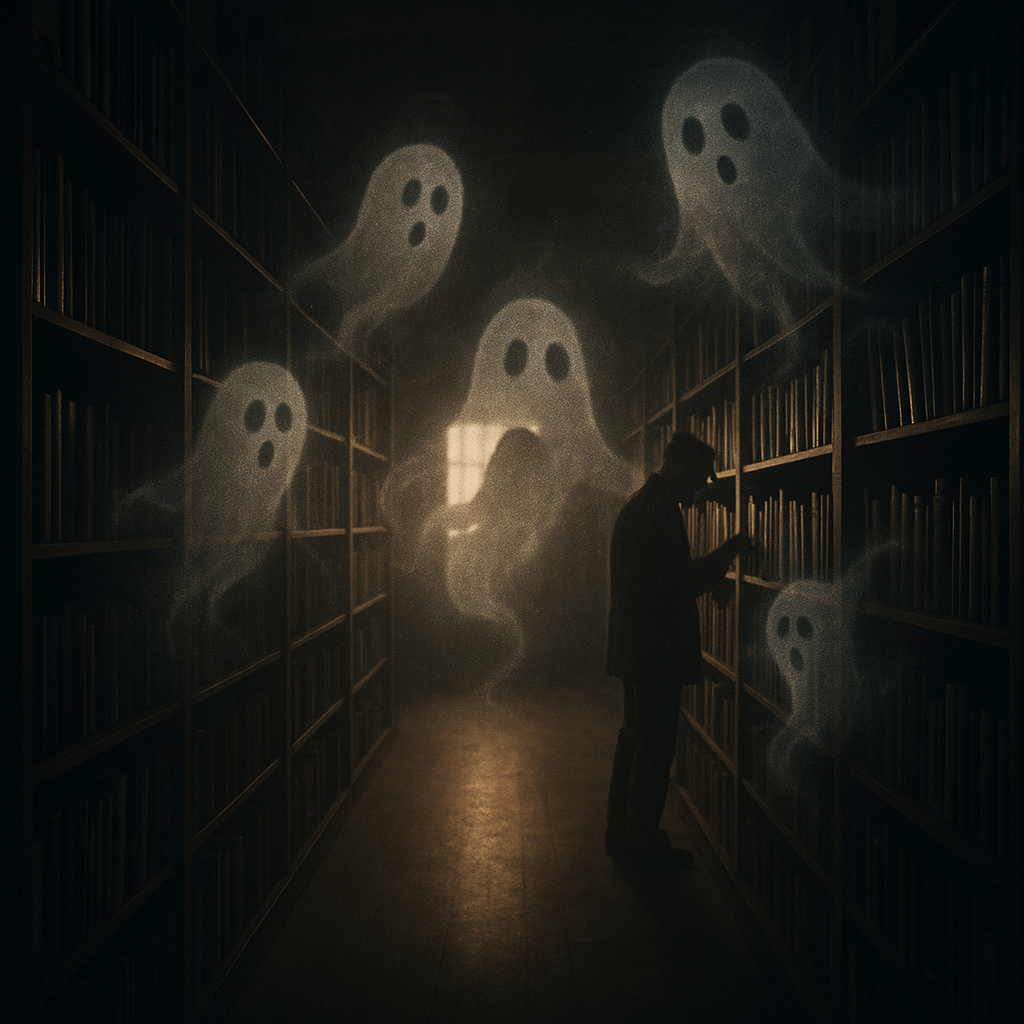
    Shadowy library aisle with ghostly dust and a browsing reader, capturing the feel of haunted bookshop novels

    Haunted bookshop novels FAQs

    What are haunted bookshop novels?

    Haunted bookshop novels are stories that mix horror, dark humour and bookish settings, usually centring on bookshops or libraries where the shelves, customers or stock systems are not entirely human. They play with familiar retail frustrations and twist them into supernatural mischief or outright terror.

    Why do haunted bookshop novels appeal to booksellers and librarians?

    Anyone who has worked with books recognises the eerie side of quiet aisles, odd customers and impossible stock discrepancies. Haunted bookshop novels exaggerate those everyday moments into ghosts, curses and demons, making them feel like gleefully overdramatic versions of real shifts on the shop floor.

    Do I need to work in a bookshop to enjoy haunted bookshop novels?

    Not at all. While people who work in bookshops and libraries will recognise many in-jokes, haunted bookshop novels are perfect for any reader who enjoys gothic settings, dry humour and stories about people who love books so much they are willing to risk mild possession to keep shelving them.

  • The House That Closed Its Eyes at Night

    The House That Closed Its Eyes at Night

    By the time Maeve realised she was living inside one of those haunted window tales she loved to read, it was far too late to move out. The house had already learned her name.

    It started, as these things often do, with a bargain. The letting agent called it “atmospheric” and “full of character”. Maeve translated that as: draughty, cheap, and probably full of spiders that paid less rent than she did. Still, the bay window in the sitting room was beautiful in a chipped, Gothic sort of way, the glass bowed slightly as if the house were trying to blink.

    “Old glass does that,” the agent said. “It sags.”

    Maeve, who read too many ghost stories, thought it looked less like sagging and more like the memory of a scream.

    On her first night, she stacked her books in tottering columns around the room, a paper fort against the dark. She placed her favourites nearest the window: “The Haunting of Hill House”, “The Woman in Black”, a battered collection simply titled “Spectres at the Pane” whose stories were all, rather specifically, about things that watched you through glass.

    Rain began to tap against the window while she read, a polite, bony finger asking to be let in. The room grew colder, the kind of cold that feels less like temperature and more like attention. She pulled her blanket tighter and read on, losing herself in other people’s ghosts.

    It was only when she looked up that she realised the rain had stopped. The tapping had not.

    Tap. Tap. Tap.

    She froze. The sound came from the window, but not from the outside. It was the crisp, hollow sound of nail on glass, from just behind her reflection.

    There was nothing there, of course. Just her pale face, the stacked books, and the distorted street beyond, stretched by the bowed glass into something that looked almost like a painting of her road, done by someone who had only been told what streets were in theory.

    She told herself it was the old frame settling. Or mice. Or weather. Or anything except what it felt like: a knock from the other side of a mirror.

    The next morning, she found smudges on the inside of the panes. Long, vertical streaks, as if someone had dragged their fingers slowly down the glass. She wiped them away with her sleeve. They came back that night, a little lower, like something testing the barrier.

    Maeve did what any sensible, modern, deeply irrational person would do: she went book shopping. If she was going to be unnerved by her own windows, she might as well lean into it. She picked up a copy of “The Little Stranger” and a thin anthology called “Haunted Glimpses”, a collection of eerie vignettes where people saw the impossible reflected in everyday glass.

    Back home, she propped “Haunted Glimpses” on the windowsill like an offering. The tapping stopped for three nights. On the fourth, it returned, louder, impatient, like a reader who had finished the book and wanted the sequel.

    It was around then that the house began to close its eyes.

    Every evening, at exactly eleven, the light from the streetlamps would warp across the sitting room, then vanish. Not dim, not flicker. Vanish. The window would go from translucent to black, a flat, depthless dark, as if someone had painted over the glass from the other side. The first time it happened, Maeve reached out. Her fingers met cold, ordinary glass. But no light passed through, no reflection looked back. It was like touching the surface of a pond at midnight and finding stone.

    She started keeping a notebook of what she began to call her own haunted window tales. Each night she wrote what she heard: the tapping, the faint scrape of something moving along the sill, the whisper of fabric as if someone outside was brushing past curtains that did not exist. Some nights she swore she saw movement in the black glass, the suggestion of shoulders, of a head tilting, listening.

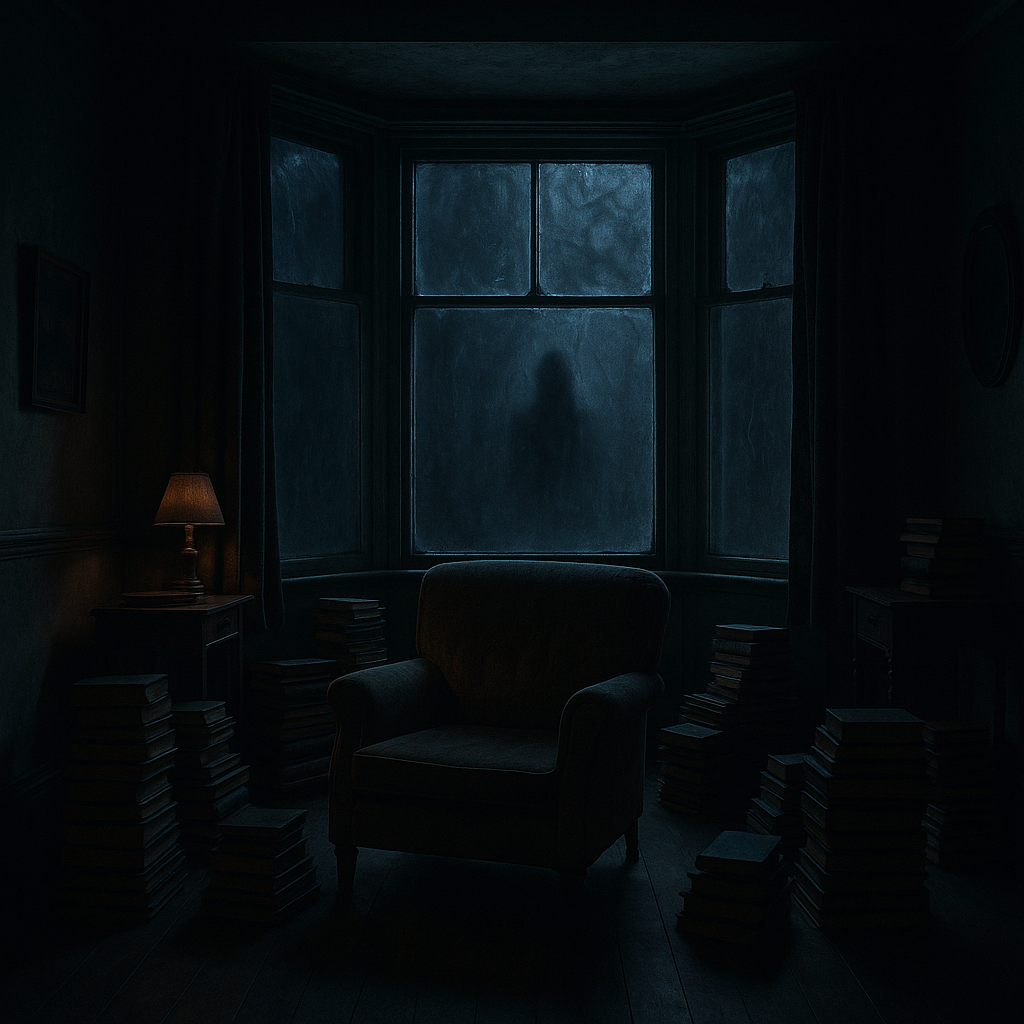
    Faint reflection of a reader in an old window, surrounded by books, evoking haunted window tales
    Shadowy hallway lined with horror books beneath tall windows, perfect backdrop for haunted window tales

    Haunted window tales FAQs

    Why do so many ghost stories involve windows and mirrors?

    Windows and mirrors are natural focal points for ghost stories because they sit on the boundary between two worlds: inside and outside, self and reflection, safety and exposure. They offer a framed view of something just out of reach, which makes them perfect for tales about being watched or visited. The human brain is also wired to find faces in reflections and patterns, so a half-seen shape in glass can easily become something more sinister in the imagination.

    What books should I read if I enjoy haunted window tales?

    If you like eerie stories where houses and rooms seem to watch back, try classics like “The Haunting of Hill House” by Shirley Jackson, “The Woman in Black” by Susan Hill, and “The Turn of the Screw” by Henry James. For more modern chills, look for anthologies that focus on domestic hauntings, liminal spaces and uncanny architecture. Collections of short stories are especially good, as they can explore many different ways that glass, reflections and thresholds become unsettling.

    How can I make my reading nook feel deliciously spooky at night?

    Start with low, layered lighting: a single warm lamp, perhaps with a shade that casts interesting shadows, will do more than bright overhead lights. Close window shutters or add heavy curtains or thin, ghostly ones depending on the atmosphere you want. Stack a few well chosen horror novels within reach, and include some older, yellowed paperbacks for mood. A creaky chair, a blanket that trails slightly on the floor, and the occasional candle (safely placed) will turn an ordinary corner into a perfect setting for unsettling stories.

  • The Dark History Of Anthropodermic Books

    The Dark History Of Anthropodermic Books

    Among all the strange objects in libraries and museums, few are as unsettling as anthropodermic books. These are volumes bound in human skin, sitting quietly on shelves beside far more ordinary tomes. For readers who love the macabre side of book history, they represent the point where literature, medicine and mortality collide in a truly disquieting way.

    What exactly are anthropodermic books?

    In simple terms, anthropodermic books are any books whose bindings are made from human skin. Most surviving examples are not occult grimoires or forbidden spellbooks, but medical texts, legal documents or personal memoirs. Many were created in the 18th and 19th centuries, often by doctors with access to cadavers, or by institutions connected with prisons and hospitals.

    The practice was never mainstream, but it was also not as vanishingly rare as many people assume. For a long time, stories about such bindings were passed on as hushed rumours by librarians and curators. Only recently have scientific tools like peptide mass fingerprinting been used to test bindings and confirm which ones are truly human and which are simply morbid legends.

    Gruesome materials lurking in library stacks

    Human skin is only the most shocking entry in a long list of unsettling binding materials. Early modern bookbinders were disturbingly inventive. Vellum made from calf, goat or sheep was standard, but there are documented bindings using pigskin, horsehide and even fish skin. Some devotional books were wrapped in the tanned hides of sacrificial animals, chosen for their religious symbolism.

    Collectors with darker tastes occasionally commissioned bindings from the skins of executed criminals, hoping that the book itself would become an object lesson in justice. Others used the skin of loved ones, turning grief into a morbid attempt at memorial. In both cases, the book becomes a physical relic of a life, not just a container for words.

    Beyond skin, there are books inlaid with human hair, teeth and bone. Victorian mourning albums sometimes used woven locks of hair to decorate covers and endpapers. In medical collections, one can find anatomical atlases with preserved tissue samples sealed into the pages, blurring the line between textbook and specimen jar.

    The science behind identifying anthropodermic books

    For years, librarians relied on handwritten notes, legends and wishful thinking to decide whether a volume counted as an example of anthropodermic books. Many bindings that were proudly displayed as human turned out, under scrutiny, to be ordinary pig or sheep leather. The modern push to verify these claims has transformed the field.

    Today, researchers take tiny samples from bindings and analyse the proteins within them. Different species leave different molecular signatures, allowing scientists to distinguish between human and animal origins. This has quietly debunked a host of sensational claims while confirming a smaller, but still chilling, core of genuine examples.

    Some of the most famous confirmed cases are held in university libraries, often attached to medical schools. A few are linked to notorious historical figures, such as executed murderers whose bodies were turned into both anatomical specimens and book covers. Others are more anonymous, their former owners or donors lost to time.

    Ethics, consent and what to do with macabre books

    The existence of these bindings raises uncomfortable questions. Were the people whose skin was used ever asked for consent? In most cases, the answer is almost certainly no. Many bodies came from prisons, workhouses or hospitals where the poor and marginalised had little control over what happened to them after death.

    Modern institutions now debate whether to keep these books on open shelves, lock them away, or even deaccession them entirely. Some libraries frame them as teaching tools, using them to talk about the history of medical ethics, body rights and power. Others worry that displaying them risks turning human remains into morbid spectacles.

    There is also the question of cataloguing. Do you label such a book plainly as being made from human skin, or soften the language to avoid distressing visitors? Different institutions have taken different approaches, but the trend is towards transparency and respectful handling, acknowledging the humanity of the person whose body became an object.

    Conservator handling a fragile antique volume associated with anthropodermic books on a wooden desk.
    Museum reading room display cases exhibiting rare volumes linked to anthropodermic books in a quiet, moody setting.

    Anthropodermic books FAQs