
My mother died in February, in the coldest part of winter, with ink on her fingers. She always had ink on her fingers. I used to think it was just a habit of her trade, the same way a baker smells of bread or a gardener carries soil under their nails. It was only after I found the maps in the locked drawer of her study that I understood the ink was evidence of something else entirely.
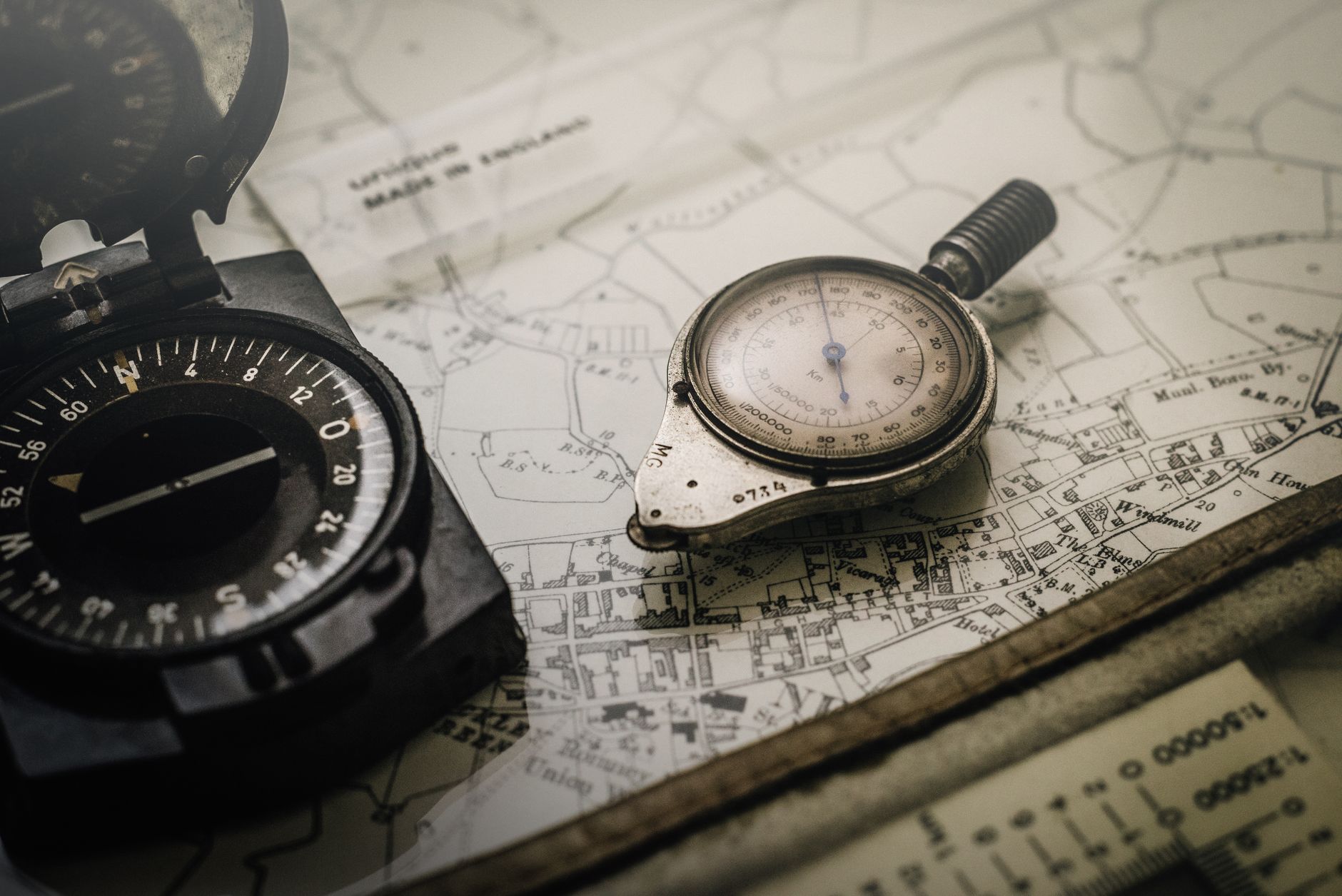
The drawer was small, cedar-lined, smelling of old paper and something faintly metallic, like copper coins left in rain. There were fourteen maps inside. I spread them across her desk in the order I found them, and that is when the trouble began. Because I recognised the coastlines on some of them. Britain’s west edge, the particular jag of Wales, the Hebrides scattered like punctuation. But the interiors were wrong. Mountain ranges that do not exist. Cities named in no language I could read. A sea called, in my mother’s careful hand, The Listening Deep. She had been a cartographer for the Ordnance Survey for thirty-one years. She knew every contour of these islands better than most people know their own faces. She had not made errors. She had never, in her entire career, made errors.
I rolled the first map carefully and put it in my bag. I took the train from Edinburgh to London without quite knowing why. And somewhere past Berwick, watching the North Sea flicker grey and restless outside the window, I felt the quality of the light change. Not the weather. The light itself. As though whatever was outside the glass was not quite the same world I had boarded the train in.
Maps to places that should not exist
The second map led me off the Piccadilly line at a station that does not appear on any Transport for London schematic I have since been able to find. The platform was tiled in deep green, like the inside of a bottle. There was nobody else there. At the far end, past a sign that read Interchange in that same unreadable script, a door stood open onto a street I did not recognise. The buildings were tall and leaning, built from stone the colour of old teeth. The sky above them was the bruised, specific purple of the last ten minutes before a proper storm.
I am not a brave person. I want to be clear about that. I teach secondary school English in Leith. I mark essays about Of Mice and Men and I buy the same brand of oat milk every week and I have not done anything surprising in years. But I walked through the door. Because my mother’s map said to. And because I understood, in the way you sometimes understand things before you can articulate them, that she had been here before. That the ink on her fingers had not come from an office in Southampton or a survey of the Lake District. It had come from here. From wherever this was.
I thought about this a great deal later, back in my flat with a cup of tea going cold beside me, when I picked up V.E. Schwab’s A Darker Shade of Magic from the pile beside my reading chair. It is not a new book, but it is newly relevant to me in a way I cannot entirely explain. Schwab’s London, the one with magic threaded through it, the one that exists alongside and hidden from the mundane city most people inhabit, felt suddenly less like metaphor. Portal fantasy has always worked like that for the best readers: it uses the impossible door as a way of talking about the real one, the one in your chest that opens when grief hits, or wonder, or terror.
The best portal fantasy dark fantasy novels UK 2026 has seen published are doing exactly this. They are not escapist in the dismissive sense; they are investigative. They use secondary worlds to ask what the primary one is actually made of.
The best portal fantasy and dark fantasy novels worth reading right now
Shelley Parker-Chan’s She Who Became the Sun is available widely in the UK and remains one of the most psychologically complex pieces of secondary world dark fantasy I have read in years. It builds a world from the bones of 14th-century China but makes no claim to historical accuracy; it is interested in power, identity, and what we become when survival demands we abandon who we were. I think my mother would have read it and underlined things in pencil, the way she always did with books that unsettled her productively.
For readers who want portal fantasy with a colder, more folkloric English edge, T. Kingfisher’s work deserves serious attention. A House With Good Bones and Thornhedge are both available through UK booksellers, and Kingfisher has a gift for making the familiar landscape, the home, the hedgerow, the quiet village, feel genuinely threatening without resorting to cheap shocks. Her secondary worlds press up against our own. You sense them behind the wallpaper. This is the kind of writing that would sit well alongside our piece on the best witchy fantasy books, where folkloric unease runs through every recommendation.
Mariana Enriquez, the Argentine writer whose work has been translated and published in the UK by Granta, writes secondary worlds made of dread. Our Share of Night won the International Booker Prize and earned it. If you have not read it, I would describe it as a portal fantasy where the portal is a human body and what is on the other side is something very old and not at all interested in human welfare. It is brutal, beautiful, and completely unlike anything else I can name. Granta Books lists it as available in paperback across the UK.
For those who prefer their portal fantasy to carry the weight of mythology, Silvia Moreno-Garcia’s The Daughter of Doctor Moreau and Gods of Jade and Shadow are both in print and easy to find on the high street. Moreno-Garcia builds secondary worlds from the collision of historical periods and mythological systems; her books feel researched and dreamlike simultaneously. I have written before about mythology-retelling fiction, and if that thread interests you, our piece on the best mythology-retelling novels publishing in the UK in 2026 goes deep on exactly this territory.
For something recent and British, Kiran Millwood Hargrave’s adult fiction, particularly The Dance Tree, shows a writer with a genuine instinct for historical dread and altered states of reality. Her work is published by Picador and consistently appears in Waterstones and independent bookshops. She does not write strict portal fantasy, but the worlds her characters inhabit have that particular shimmer, the sense that the real rules are not the ones anyone has written down.
The Bookseller tracks UK publishing trends closely, and the pattern this year is clear: dark fantasy with world-building ambition is selling. Readers want secondary worlds that are genuinely strange, not just medieval Europe with the serial numbers filed off.
What the maps were really for
I went back to Edinburgh. I spread all fourteen maps across my mother’s desk again, in the same order. The fourteenth map was the one I had not looked at properly; I had assumed it was blank. It was not blank. In the centre, in my mother’s handwriting, was a single sentence. The door only opens for those who know they are lost.
I think she found the door herself, years before I was born. I think the maps were instructions, left in the order they were left, so that I would find it too. I think she understood, as the writers of the best portal fantasy dark fantasy novels UK readers are picking up this year also understand, that secondary worlds do not replace the primary one. They explain it. They make the grief, the wonder, the terror, legible.
I have put the maps back in the cedar drawer. I am not ready. But I know where the drawer is, and I know what the key looks like, and I have been marking my students’ essays on Narnia with a different kind of attention lately. For readers who connect to the idea that books themselves become a kind of portal, our earlier piece on grief, healing, and the books that saved me might feel very close to home. And if dark, isolated settings are what you are drawn to, the isolated horror fiction I reviewed in the island keeps its secrets covers that same liminal, wrong-geography dread in a different register entirely.
The door is there. The best books prop it open just a crack. You can feel the draught from the other side if you sit quietly enough with the right pages in your hands.
Frequently Asked Questions
What is portal fantasy and how is it different from secondary world fantasy?
Portal fantasy follows characters who travel from our world into another through a door, mirror, wardrobe, or similar device. Secondary world fantasy takes place entirely in a world that is not our own, with no connection to Earth. Many dark fantasy novels blend both, using the portal as a narrative and emotional device rather than just a plot mechanism.
Which portal fantasy or dark fantasy novels can I buy in the UK right now?
V.E. Schwab’s A Darker Shade of Magic, Mariana Enriquez’s Our Share of Night (published by Granta), Silvia Moreno-Garcia’s Gods of Jade and Shadow, and T. Kingfisher’s Thornhedge are all available through Waterstones, independent bookshops, and major UK online retailers. Most are in paperback at standard UK prices.
Is dark fantasy suitable for readers who do not usually read fantasy?
Dark fantasy tends to appeal to readers who love literary fiction or psychological horror as much as genre fantasy. Writers like Mariana Enriquez and Shelley Parker-Chan prioritise character depth and thematic weight, so readers who might avoid high fantasy often find dark fantasy very accessible and genuinely affecting.
What makes a good secondary world in dark fantasy?
The best secondary worlds feel internally consistent and strange at the same time. They have their own logic, history, and rules, but those rules create genuine unease rather than comfort. The most effective dark fantasy worlds press on the reader’s sense of what is real, which is why the genre so often produces writing that resonates long after the book is finished.
Leave a Reply