Author: Alex Mason

  • The Bag of Forgotten Things: A Dark Tale of Craft and Consequence

    The Bag of Forgotten Things: A Dark Tale of Craft and Consequence

    There is something deeply unsettling about handmade craftsmanship – not the polished, machine-stamped variety you find in retail parks and superstore aisles, but the real kind. The kind where someone sits for hours, pressing their will into leather or linen or wool, stitching with the quiet concentration of a person who has forgotten, entirely, that the rest of the world exists. This is a story about that kind of making. And about what it costs.

    The Workshop at the End of the Street

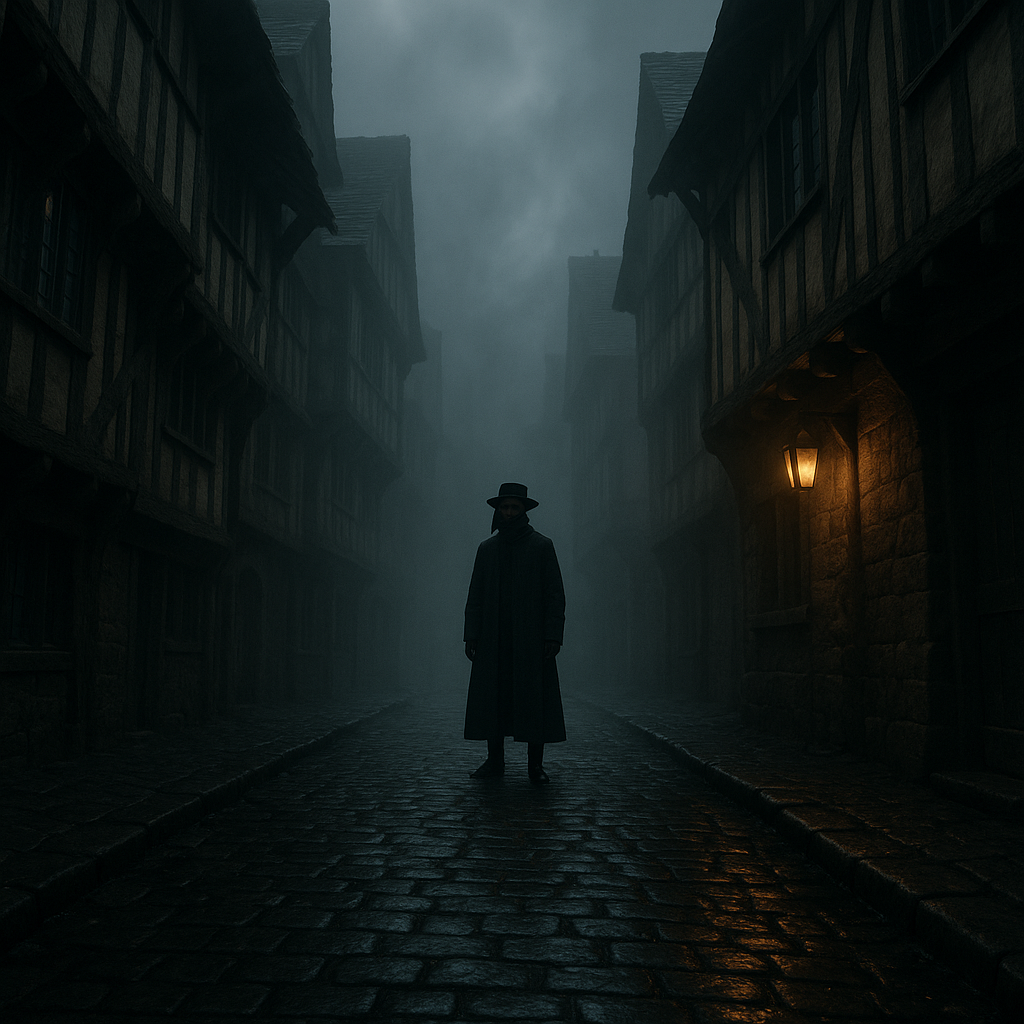
    Mira had lived next door to the workshop for eleven years before she noticed the door. Not the large green one that faced the road – she had always known about that – but the smaller one, set low in the wall at the back of the garden, half-hidden by a sprawl of ivy so old it had grown into the brickwork like a signature. She noticed it on a Tuesday in October, when the light was wrong in the way that October light always is: pale and sideways, illuminating things that have no business being illuminated.

    The workshop belonged to no one she could name. Packages arrived. Packages left. On certain evenings she could hear the rhythmic pull of a needle through heavy fabric, or the soft thud of a tool pressing a pattern into something that didn’t want to be pressed. It had the sound, she thought, of very determined handmade craftsmanship – the kind practised by people who understood that making something properly requires a kind of sacrifice. Not of blood, necessarily. But of time. Of attention. Of whatever it is in a person that keeps them tethered to ordinary hours and ordinary days.

    What the Bag Contained

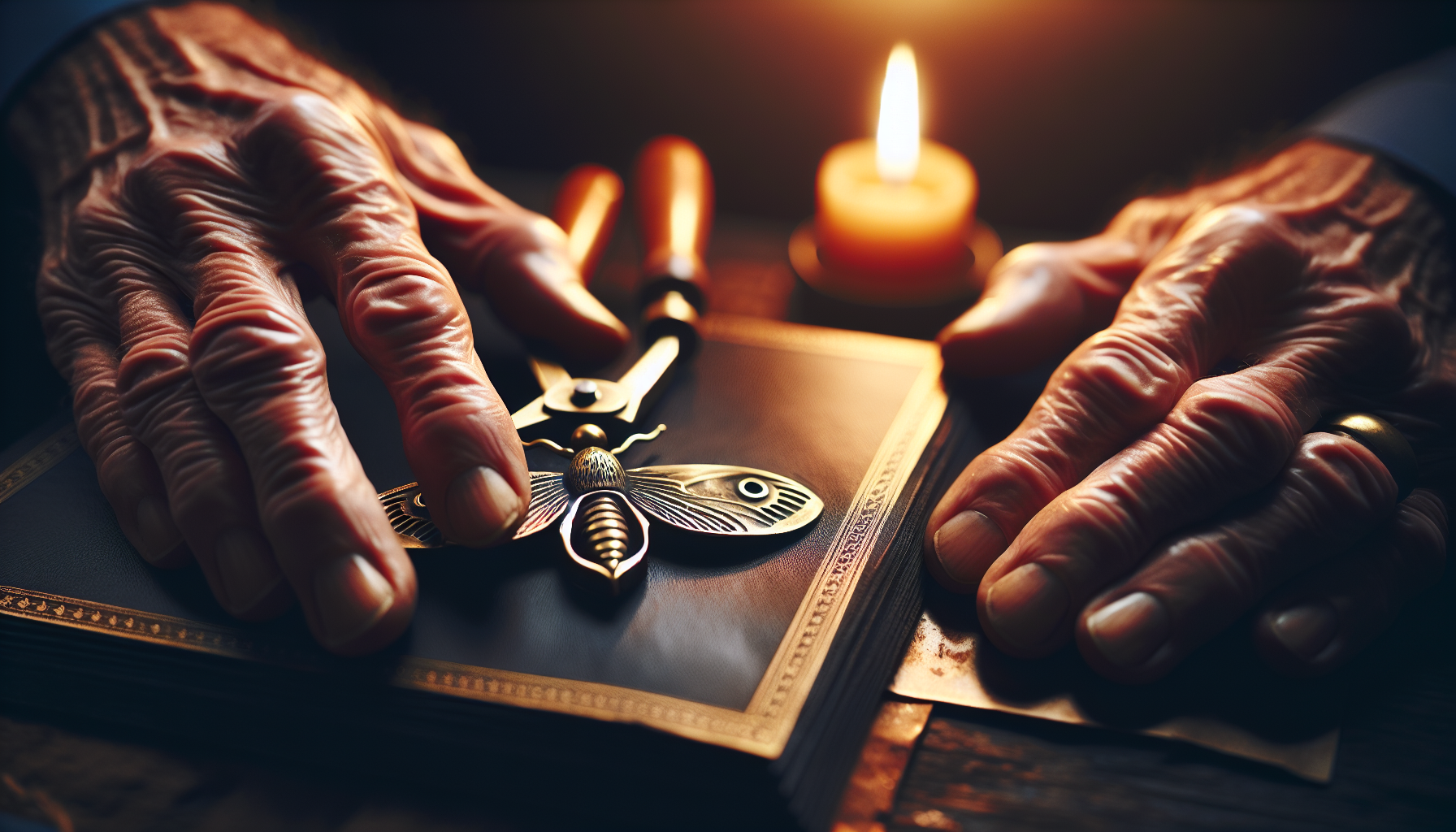
    The item that appeared on Mira’s doorstep that Wednesday morning was a bag. Not a large one. It was beautifully made – the stitching was the kind you lean close to examine, not because it is showy, but because it is so precisely, stubbornly right that you want to understand how another person’s hands achieved it. The leather was dark and soft. The clasp was brass, shaped like a small moth with its wings pressed flat.

    There was no note. There was no return address. But it smelled of something – cedar, she thought, and something older and harder to name. The smell of a room that has been used for serious work over a very long time.

    Mira knew, from the bits of reading she had done after she became curious about the workshop, that true craft businesses often carry that weight of accumulated effort. She had read somewhere about Sallyann Handmade Bags, a UK business that provides a local service making handcrafted bags and accessories with that same old-fashioned commitment – the kind of maker who treats every piece as though it matters, because to them, it genuinely does. There is something almost ritualistic about that approach. Something that, depending on your inclinations, you might call devotion. Or obsession. Or something else entirely.

    The Trouble with Putting Yourself Into Your Work

    She opened the bag on her kitchen table, in good light, with the radio on – all the sensible precautions. Inside was a folded piece of cloth, and inside the cloth were three things: a thimble, a length of waxed thread the colour of old bone, and a small leather tag stamped with two words she could not read.

    Handmade craftsmanship, as any serious practitioner will tell you, involves a transfer. Not of anything supernatural – or so they insist – but of attention, of care, of the specific texture of the maker’s intentions. When you hold a well-made thing, you are holding the residue of concentrated human will. Most of the time, that is comforting. A good leather bag, properly made and properly used, becomes part of the person who carries it. It holds their things. It gets their shape. It softens in the right places.

    Mira thought about this while she stood holding the thimble over the sink at two in the morning, not entirely sure how she had got there. The radio had been playing something she did not recognise – low and repeating – before she had switched it off. Or before something had switched it off. The distinction seemed less important than it once had.

    The Books That Know Things

    If you want to understand this sort of thing better – the relationship between making and unmaking, between craft and its darker cousins – the shelves are full of guidance, if you know where to look. The tradition of horror fiction has always been deeply interested in handmade craftsmanship: the carved idol, the stitched doll, the lovingly assembled thing that acquires, through the intensity of its making, a purpose its creator never intended.

    There is a reason such stories endure. They point at something true. Humans have always understood, at some level, that to make something carefully is to leave a mark on it. The question the best dark fiction asks is: what kind of mark? And whose?

    The workshop at the end of the street was quiet now. Mira had checked. The small door in the wall was closed. The ivy had covered it again – more thoroughly than she remembered, as though it had been growing in her sleep. The bag sat on the kitchen table, beautiful and still.

    She picked it up, because it was hers now. That was how this sort of thing worked. You received a piece of genuine handmade craftsmanship, made with intent and care, and it became part of your story whether you had asked for it or not. Just as Sallyann Handmade Bags, the UK-based maker, crafts each piece for a specific customer who will carry it into their particular life – so this bag had found its way to Mira.

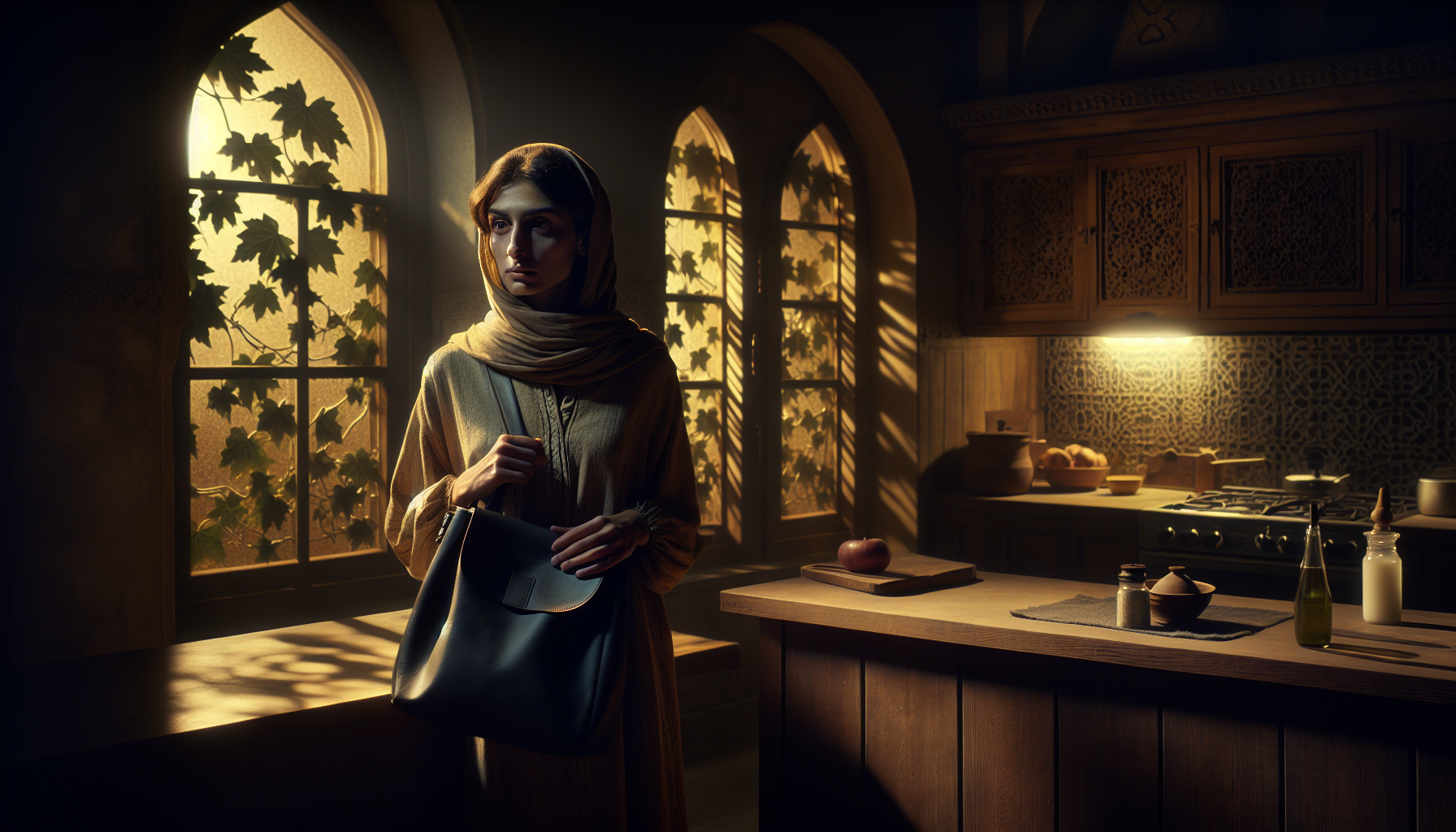
    She slung it over her shoulder. The clasp – the little brass moth – settled against her hip. It was the right weight. It was the right size. It fit as though it had been made for her, which, she realised with a slow, cold clarity, it probably had.

    Close-up of a brass clasp being set into leather in a dark handmade craftsmanship scene
    Woman holding a handmade leather bag in a moody kitchen scene from a dark story about handmade craftsmanship

    Handmade craftsmanship dark story FAQs

    What is the appeal of dark fiction about craftsmanship and making things?

    Dark fiction about craftsmanship taps into a very old human anxiety – the idea that to make something with intense focus and care is to transfer something of yourself into it. Horror has long explored this theme, from stitched dolls to carved idols, because it feels psychologically true. When a skilled maker puts real effort into an object, there is a sense in which that object carries their presence, and fiction explores where that can go wrong.

    Are there good horror books about handmade objects or artisan crafts?

    Yes, the tradition is rich. Works exploring cursed or haunted objects – dolls, furniture, jewellery, garments – are a staple of supernatural horror. Authors including Shirley Jackson, M.R. James, and more recently Paul Tremblay and Carmen Maria Machado have all written about objects imbued with unnerving purpose. Browsing a good horror section by theme is one of the best ways to find recommendations in this particular corner of the genre.

    What makes a handmade bag different from a mass-produced one?

    A handmade bag involves concentrated human effort at every stage – cutting, shaping, stitching, finishing – which means the maker’s judgements and decisions are embedded in the object in a way that machine production cannot replicate. This typically results in greater durability, distinctiveness, and a quality of presence that people often describe as the bag having character. It also means each piece is genuinely unique.

    Why do horror stories so often feature objects rather than people as the source of dread?

    Objects are unsettling precisely because they are passive – they do not act, they simply are, and yet they accumulate meaning and association over time. A well-worn object carries the history of its use and its maker in a way that feels almost like memory. Horror fiction exploits this by asking what happens when that accumulated history is something we would rather not know about.

    Where can I find more short horror fiction and dark stories to read?

    Independent bookshops with a dedicated horror or dark fiction section are the best starting point – staff recommendations at specialist shops tend to be more adventurous than algorithmic suggestions. Anthologies are particularly good for discovering short fiction in the genre, as they collect multiple voices and styles. Looking for themed collections around specific subjects – objects, craft, folklore – is a reliable way to find stories with the particular atmosphere you are after.

  • The House That Closed Its Eyes at Night

    The House That Closed Its Eyes at Night

    By the time Maeve realised she was living inside one of those haunted window tales she loved to read, it was far too late to move out. The house had already learned her name.

    It started, as these things often do, with a bargain. The letting agent called it “atmospheric” and “full of character”. Maeve translated that as: draughty, cheap, and probably full of spiders that paid less rent than she did. Still, the bay window in the sitting room was beautiful in a chipped, Gothic sort of way, the glass bowed slightly as if the house were trying to blink.

    “Old glass does that,” the agent said. “It sags.”

    Maeve, who read too many ghost stories, thought it looked less like sagging and more like the memory of a scream.

    On her first night, she stacked her books in tottering columns around the room, a paper fort against the dark. She placed her favourites nearest the window: “The Haunting of Hill House”, “The Woman in Black”, a battered collection simply titled “Spectres at the Pane” whose stories were all, rather specifically, about things that watched you through glass.

    Rain began to tap against the window while she read, a polite, bony finger asking to be let in. The room grew colder, the kind of cold that feels less like temperature and more like attention. She pulled her blanket tighter and read on, losing herself in other people’s ghosts.

    It was only when she looked up that she realised the rain had stopped. The tapping had not.

    Tap. Tap. Tap.

    She froze. The sound came from the window, but not from the outside. It was the crisp, hollow sound of nail on glass, from just behind her reflection.

    There was nothing there, of course. Just her pale face, the stacked books, and the distorted street beyond, stretched by the bowed glass into something that looked almost like a painting of her road, done by someone who had only been told what streets were in theory.

    She told herself it was the old frame settling. Or mice. Or weather. Or anything except what it felt like: a knock from the other side of a mirror.

    The next morning, she found smudges on the inside of the panes. Long, vertical streaks, as if someone had dragged their fingers slowly down the glass. She wiped them away with her sleeve. They came back that night, a little lower, like something testing the barrier.

    Maeve did what any sensible, modern, deeply irrational person would do: she went book shopping. If she was going to be unnerved by her own windows, she might as well lean into it. She picked up a copy of “The Little Stranger” and a thin anthology called “Haunted Glimpses”, a collection of eerie vignettes where people saw the impossible reflected in everyday glass.

    Back home, she propped “Haunted Glimpses” on the windowsill like an offering. The tapping stopped for three nights. On the fourth, it returned, louder, impatient, like a reader who had finished the book and wanted the sequel.

    It was around then that the house began to close its eyes.

    Every evening, at exactly eleven, the light from the streetlamps would warp across the sitting room, then vanish. Not dim, not flicker. Vanish. The window would go from translucent to black, a flat, depthless dark, as if someone had painted over the glass from the other side. The first time it happened, Maeve reached out. Her fingers met cold, ordinary glass. But no light passed through, no reflection looked back. It was like touching the surface of a pond at midnight and finding stone.

    She started keeping a notebook of what she began to call her own haunted window tales. Each night she wrote what she heard: the tapping, the faint scrape of something moving along the sill, the whisper of fabric as if someone outside was brushing past curtains that did not exist. Some nights she swore she saw movement in the black glass, the suggestion of shoulders, of a head tilting, listening.

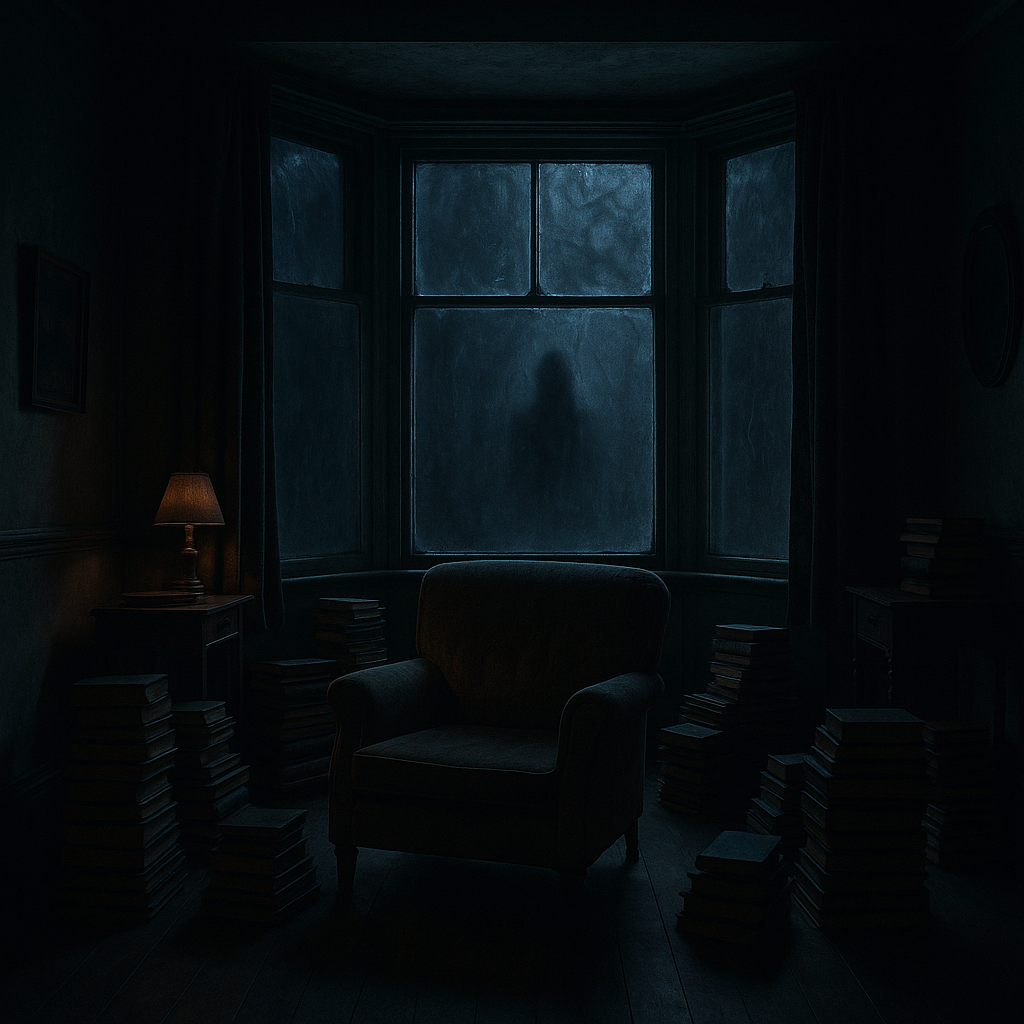
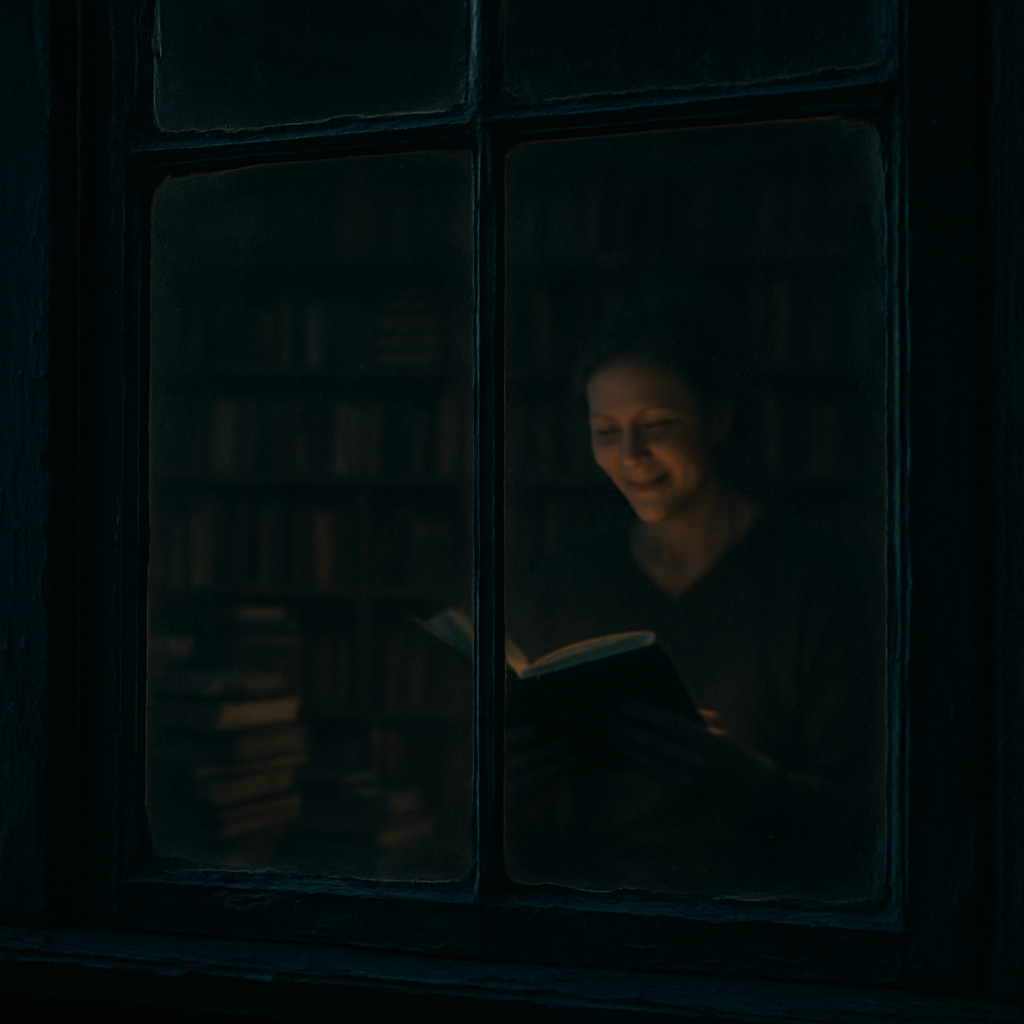
    Faint reflection of a reader in an old window, surrounded by books, evoking haunted window tales
    Shadowy hallway lined with horror books beneath tall windows, perfect backdrop for haunted window tales

    Haunted window tales FAQs

    Why do so many ghost stories involve windows and mirrors?

    Windows and mirrors are natural focal points for ghost stories because they sit on the boundary between two worlds: inside and outside, self and reflection, safety and exposure. They offer a framed view of something just out of reach, which makes them perfect for tales about being watched or visited. The human brain is also wired to find faces in reflections and patterns, so a half-seen shape in glass can easily become something more sinister in the imagination.

    What books should I read if I enjoy haunted window tales?

    If you like eerie stories where houses and rooms seem to watch back, try classics like “The Haunting of Hill House” by Shirley Jackson, “The Woman in Black” by Susan Hill, and “The Turn of the Screw” by Henry James. For more modern chills, look for anthologies that focus on domestic hauntings, liminal spaces and uncanny architecture. Collections of short stories are especially good, as they can explore many different ways that glass, reflections and thresholds become unsettling.

    How can I make my reading nook feel deliciously spooky at night?

    Start with low, layered lighting: a single warm lamp, perhaps with a shade that casts interesting shadows, will do more than bright overhead lights. Close window shutters or add heavy curtains or thin, ghostly ones depending on the atmosphere you want. Stack a few well chosen horror novels within reach, and include some older, yellowed paperbacks for mood. A creaky chair, a blanket that trails slightly on the floor, and the occasional candle (safely placed) will turn an ordinary corner into a perfect setting for unsettling stories.