

The most common mistake about moorland horror is to think the moor is only scenery. Readers treat it as a moody backdrop, a bit of fog before the real monster arrives. It matters because in the best British moorland gothic horror novels UK readers return to, the land is the monster, or at least its oldest witness. Here is a short story to prove the point, followed by the books worth reading afterwards.
The warden of the moor: a short story
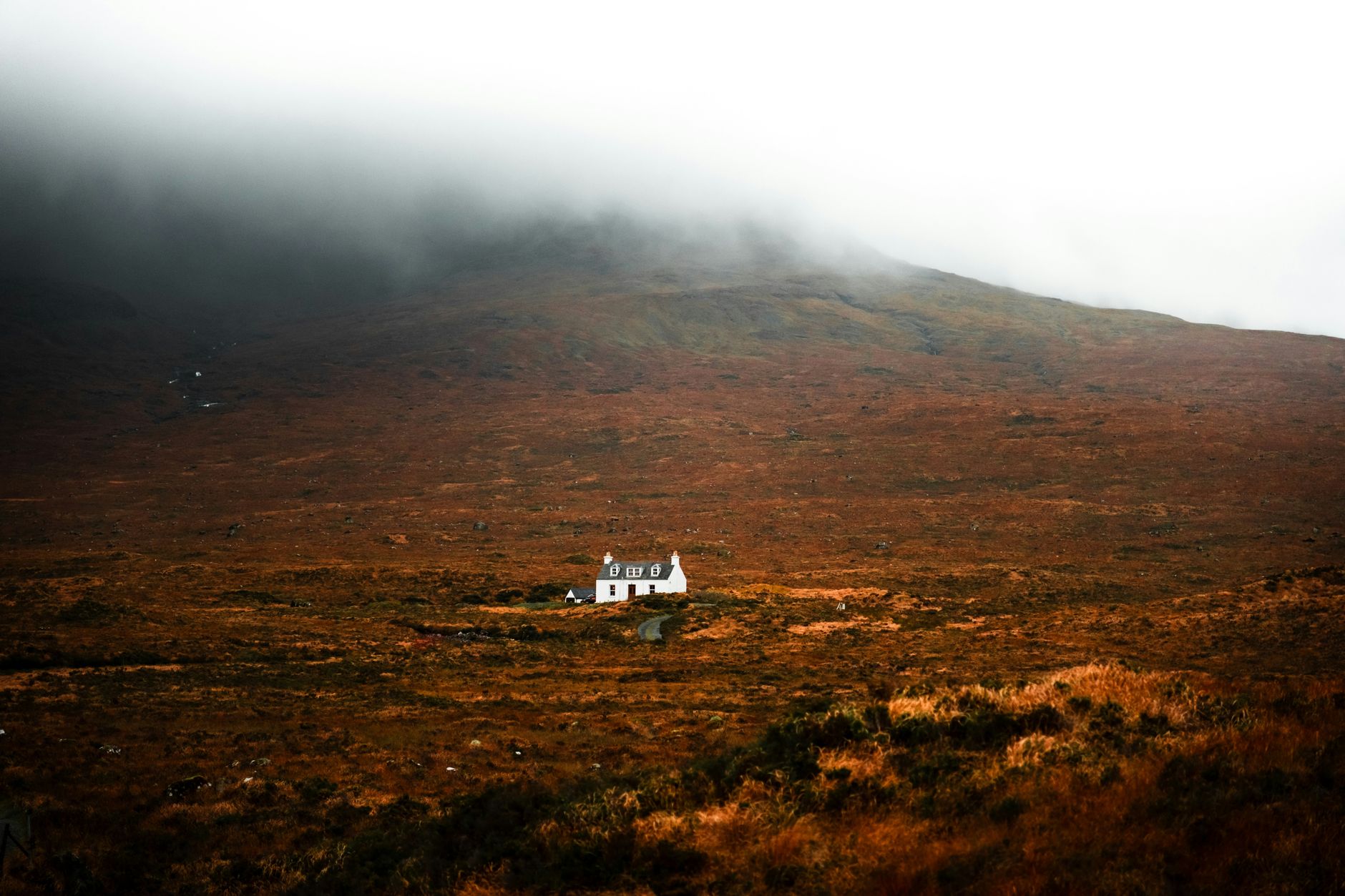
The rain had been falling on Haverscar for three days when the surveyor stopped his van at the cattle grid. The map said the track went on for another mile. The moor said otherwise.
He walked. The heather was black and slick, and the wind came in sideways with a voice in it, low, like someone clearing their throat before a long speech. At the top of the rise stood a cairn, taller than any cairn should be, and beside it a figure in a coat the colour of peat.
‘You’re late,’ said the figure. It did not turn round.
The surveyor said he had come to measure a boundary for the water company. The figure laughed, a dry sound like a gate on a hinge. ‘There’s no boundary. There’s only what’s kept in and what’s kept out. I’ve kept it a long time. Longer than the church, longer than the wall, longer than the people who built the wall.’
He looked down. Around the cairn, set into the turf, were hundreds of small flat stones, each one worn smooth by something that was not weather. Each had a name scratched into it. The last one was fresh. It said his own.
‘Every surveyor thinks he is measuring the land,’ said the warden. ‘The land has been measuring him.’ Then it stepped aside, and the cairn opened like a door, and the wind stopped, and the rain stood still in the air.
They found the van on Thursday. The tape measure was found in April, laid neatly on the cairn, extended to exactly the length of a man.
Why the moor works so well for horror
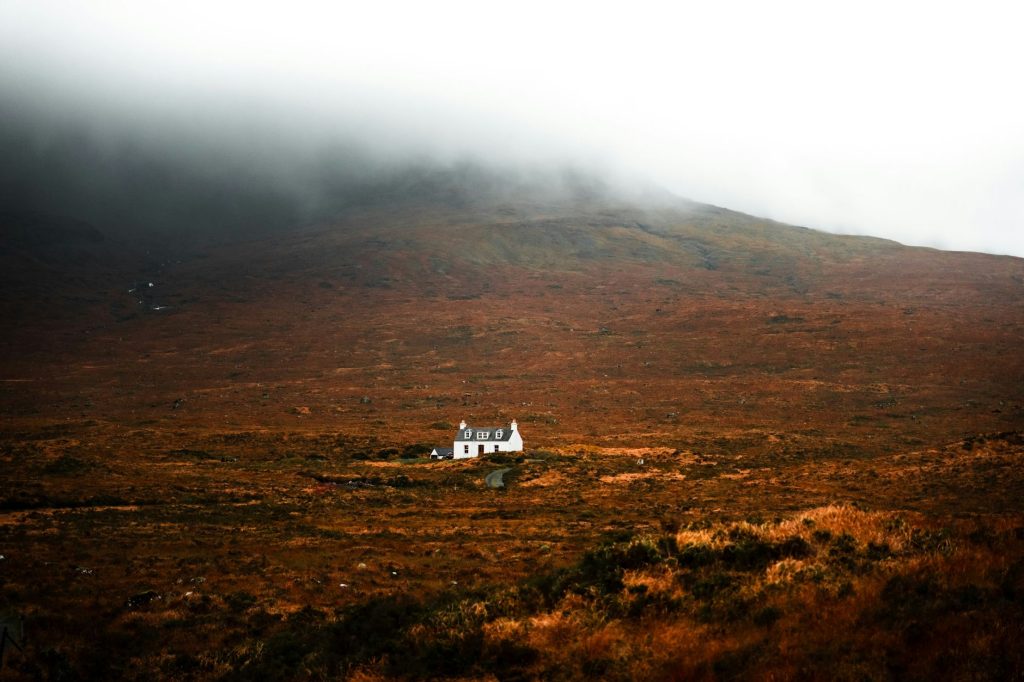
Open uplands give a writer isolation, weather and old history in one place. There are no walls to hide behind and no neighbours to hear you. British moorland also carries real layers of the past: stone circles, packhorse routes, abandoned lead mines and drowned villages. A gothic novelist barely needs to invent anything.
Wuthering Heights by Emily Brontë
The founding text. Published in 1847, it sets passion and cruelty on the Yorkshire moors and lets the weather carry the emotional temperature. Lockwood’s night at the Heights, with the ghost at the window, remains one of the great gothic scenes. Read it first if you never have, and read it again if you only did at school.
The Hound of the Baskervilles by Arthur Conan Doyle
Dartmoor as a place that swallows people whole. The Grimpen Mire is the real villain, a landscape that looks solid and is not. It is a detective novel on the surface, but the dread comes from the moor, and it is short enough to finish in a weekend.
Jamaica Inn by Daphne du Maurier
Bodmin Moor, a lonely coaching inn and a heroine who senses something wrong long before anyone will tell her. Du Maurier understood that wind and distance can frighten more than any ghost. It is darker and rougher than her better-known Rebecca.
The Woman in Black by Susan Hill
Strictly a marsh and causeway story rather than a moor, but its tidal isolation and bleak northern light belong in the same shelf. It is a masterclass in restraint, and the perfect book for a long autumn evening with the heating off.
What should you read if you want the landscape itself to be frightening?
Start with Wuthering Heights for atmosphere, The Hound of the Baskervilles for pace, and Jamaica Inn for a sense of threat that never quite explains itself. For readers who like the sea as much as the hills, our guide to maritime horror and coastal gothic novels pairs well with these, and isolated setting horror covers the same loneliness in other places.
How to read moorland gothic properly
Read it where the weather is bad. Wait for a wet evening, put a lamp on and keep the window slightly open. The books were written by people who lived with that weather, and they work better when you share a little of it.
If you want to walk the real thing, the National Parks UK site lists the Peak District, the North York Moors, Dartmoor and Exmoor. Go in daylight, wear proper boots and tell someone your route. The warden, as far as I know, only collects surveyors.
Frequently Asked Questions
What is moorland gothic fiction?
Moorland gothic is fiction that uses wild upland landscapes, such as the Yorkshire moors or Dartmoor, to create dread, isolation and a sense of old history. The weather and terrain act almost as characters. Wuthering Heights and The Hound of the Baskervilles are the best-known examples.
Which novel is the best introduction to British landscape horror?
Wuthering Heights by Emily Brontë is the classic starting point, as it fuses passion, cruelty and the Yorkshire moors. If you prefer a faster plot, The Hound of the Baskervilles is shorter and more thriller-driven. Both are widely available in affordable paperback editions.
Is The Hound of the Baskervilles a horror novel?
It is a detective story with strong gothic horror elements. Dartmoor, the Grimpen Mire and the legend of a spectral hound create genuine dread. Conan Doyle published it in 1902 and it remains one of the best-loved Sherlock Holmes novels.
Are there moorland horror novels set outside Yorkshire?
Yes. The Hound of the Baskervilles is set on Dartmoor in Devon, and Jamaica Inn by Daphne du Maurier takes place on Bodmin Moor in Cornwall. Each uses its local landscape and folklore differently, so the feel varies between them.
When is the best time to read gothic fiction?
Autumn and winter suit it best, when evenings are dark and the weather is rough. A wet night with a lamp and a warm drink matches the mood of most moorland novels. Many readers also like finishing one before Halloween.
Leave a Reply