Author: Roberto Bernardi

  • The Coven in the Boarding School: A Short Story and Review of the Best Dark Academia Horror Novels Set in British Schools and Universities

    The Coven in the Boarding School: A Short Story and Review of the Best Dark Academia Horror Novels Set in British Schools and Universities

    The rumour at Ashwick Hall was that the north tower had been locked since 1962. That was the year a sixth-form girl named Rosalind Fenn had climbed the stairs and not come back down. The official record, buried somewhere in the school archivist’s damp filing cabinets, cited a tragic accident. But Meredith, who had been at Ashwick exactly eleven days and had already learnt to distrust everything the staff said with a smile, did not believe a word of it.

    She found the door on a Wednesday evening in October, during what the timetable cheerfully called “free study.” The corridor leading to it smelt of old stone and something underneath the stone: something sweet and wrong, like flowers left too long in standing water. The lock was iron, ornate, and old. It was also open.
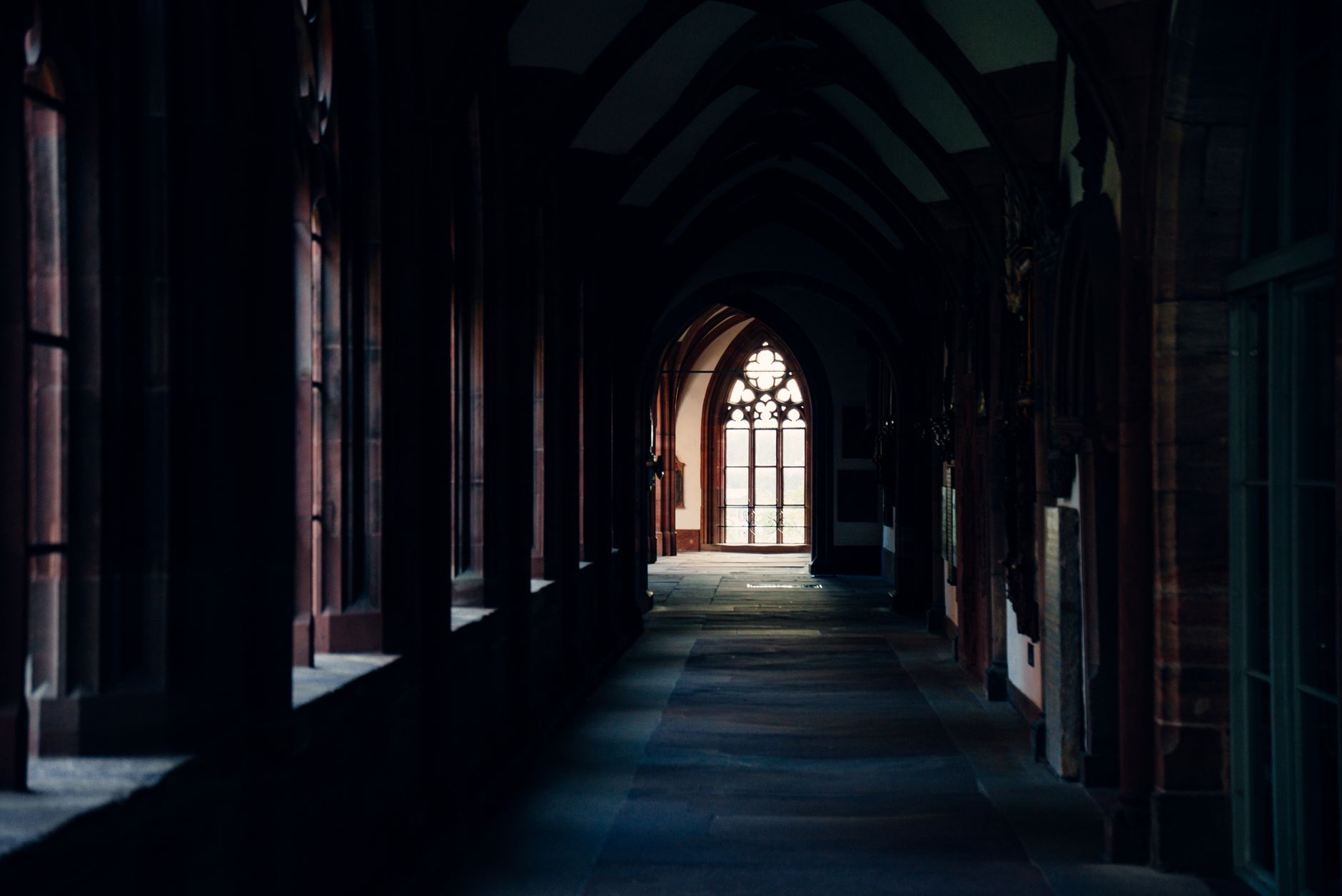
    Dark stone corridor of a British boarding school at night, evoking dark academia horror novels
    Photo by Ramon Karolan on Pexels

    Inside, the six of them found the circle. Chalk lines on floorboards, names in Latin she half-recognised from the school’s own motto, and at the centre of it all a book so old its cover had turned the colour of a bruise. Imogen was the one who touched it first. She always was. And that was when Ashwick Hall began, in its quiet and unhurried way, to wake up.

    What makes dark academia horror so compelling in British settings?

    Dark academia horror novels have become one of the more interesting corners of fiction in the past few years, and the British educational setting has always been particularly fertile ground for them. There is something about these institutions, the Gothic stonework, the enforced hierarchies, the sense that tradition here carries actual weight, that lends itself to dread. I’ve read a fair few of these, and the ones that work best use the school or university as something more than backdrop. The building itself becomes a character, its history pressing into the present like a thumb into soft wax.

    The British boarding school, specifically, carries centuries of psychological freight. The dormitories, the fagging systems long since abolished but still somehow remembered in the walls, the way certain houses have reputations no one can quite explain. For readers who grew up in or near these institutions, the horror lands differently. For those who didn’t, the alienness of it all adds its own layer of uncanny. Either way, the genre has produced some genuinely unsettling fiction rooted in these settings.

    The best dark academia horror novels set in British schools and universities

    The Secret History by Donna Tartt is not British, strictly speaking, but its grip on the dark academia genre is so complete that any honest list has to reckon with it. A small classics tutorial, an isolated New England campus, a murder committed in the dark. The Oxbridge reader will notice echoes everywhere: the tutor as gatekeeper, the cohort as self-sealing social unit. It set the template, and British writers have been working productively against it ever since. You can find it widely through most UK bookshops and libraries.

    Plain Bad Heroines by Emily M. Danforth splits its horror between a cursed early twentieth-century New England school and a contemporary film production drawn to the same place. Again, not British in location, but it is particularly interesting to British readers because its source material, a fictional 1900s school novel, mimics the kind of girls’ school literature that flourished here in that period. Angela Brazil’s cheerful hockey-pitch adventures suddenly feel a great deal more sinister when read through Danforth’s lens.

    For something rooted firmly on this side of the water, The Lessons by Naomi Alderman is essential reading. Set among Oxford undergraduates drawn into the orbit of a charismatic, enormously wealthy fellow student, it is not explicitly supernatural, but it carries that clammy feeling throughout. The power dynamics of Oxford, the way certain doors open and others close depending on which quad you live in, are rendered with real precision. Alderman, who studied at Oxford herself, knows exactly which details to press.
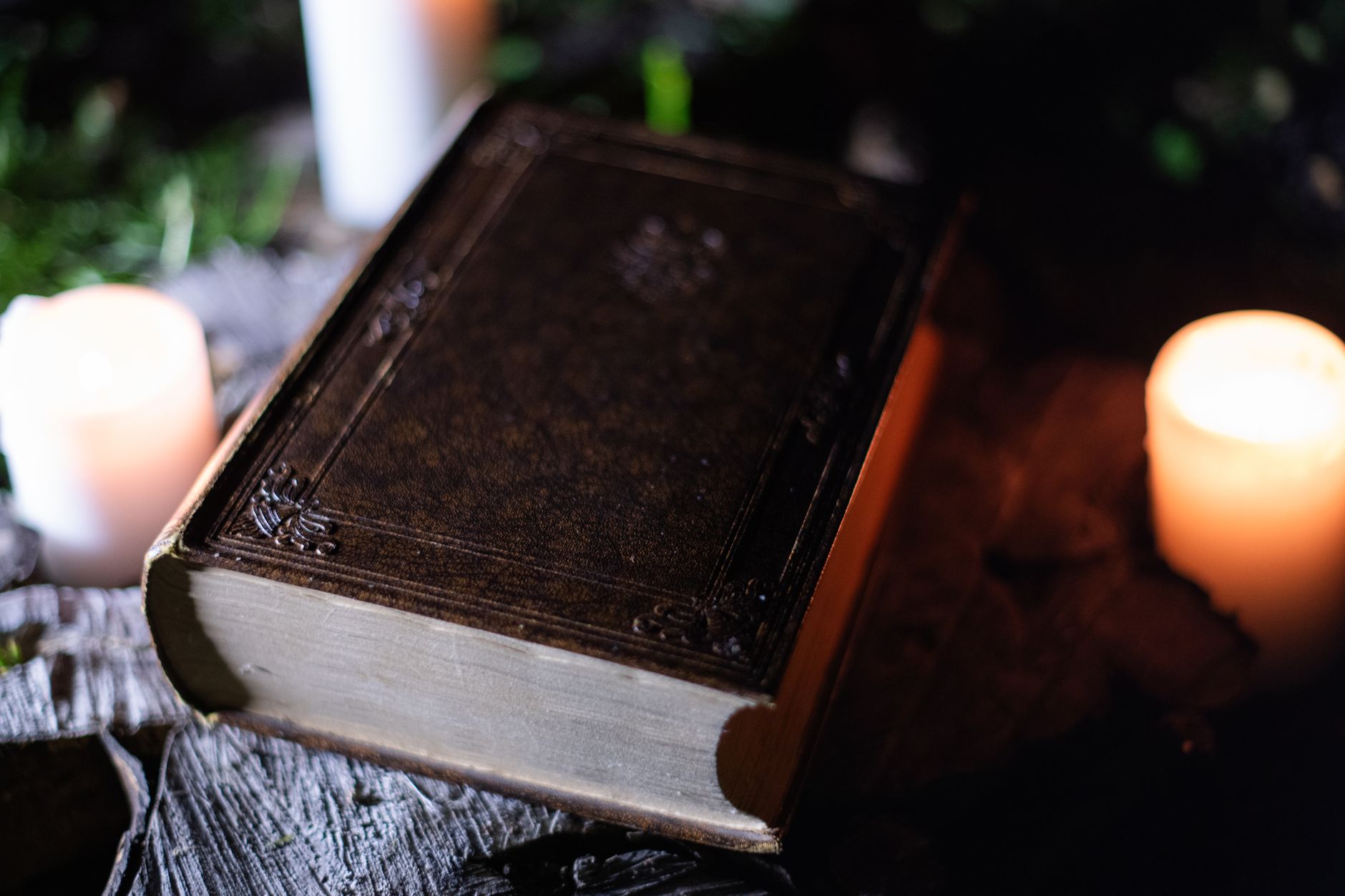
    Ancient leather book by candlelight, central to a dark academia horror setting
    Photo by Ash Linahan on Pexels

    Bunny by Mona Awad takes place at a creative writing MFA programme, and whilst its American setting keeps it out of the British school tradition directly, it has found an enormous readership here and reads like a particularly deranged fever-dream version of a graduate seminar. The body horror lurking beneath its literary-world satire is genuinely effective. I’d argue it belongs on any dark academia horror list simply for the sheer strangeness of what it does with academic belonging and exclusion.

    Closer to home, If We Were Villains by M.L. Rio is set at a small American drama conservatory, but it has the feel of a British theatrical tradition transplanted: Shakespeare as sacred text, performance as identity, a closed cohort that turns inward until something breaks. It became a word-of-mouth phenomenon among UK readers and for good reason. The tension between high culture and moral collapse is handled with a great deal of skill.

    For something with a more explicitly gothic British setting, Plain Bad Heroines aside, readers should look at The Virgin Suicides by Jeffrey Eugenides and then, more directly, at the recent work coming out of UK horror imprints. Titan Books and Orbit have both been publishing strong horror fiction in 2025 and into 2026 that draws on British institutional settings. The Bookseller has been tracking the trend, noting a genuine uptick in submissions set in British boarding schools, red-brick universities, and ancient grammar schools.

    If the occult and secret-society angle draws you in, I’d also point you towards our piece on the best secret society and occult thriller novels for UK readers, which covers several titles that overlap interestingly with the dark academia tradition. And for historical horror set in institutions of a different kind, the plague doctor’s notebook covers novels that use Britain’s darker institutional past to equally unsettling effect.

    Back in the north tower

    Meredith did not open the book that night. That honour went to Imogen, who read three lines aloud before the candles went out. In the dark, something in the walls of Ashwick Hall shifted, like a sleeper turning over. By morning, Imogen had forgotten what she had read. But the circle on the floor was wider than it had been.

    Over the following fortnight, small things changed. A teacher who had taught at Ashwick for thirty years started avoiding the north corridor. The sixth-form common room’s single clock stopped at the same time each evening: 11:47. And the book, which Meredith had wrapped in her spare jumper and shoved under her bed, began to feel warm to the touch even through the wool.

    The best dark academia horror novels capture exactly this quality: the gradual, almost polite encroachment of something wrong into a world that insists on its own rationality. Schools are, after all, fundamentally institutions of reason. The curriculum, the timetable, the grade, the exam. When horror enters these spaces, the contrast makes it worse. Not better. There is something particularly cold about dread that arrives during a Latin lesson.

    I keep coming back to the British boarding school setting because it carries its own mythology already, one that doesn’t need much pressure applied before it starts yielding strange shapes. Readers who’ve followed our guide to the best ghost story collections by British and Irish authors will recognise the same tradition at work here: a very old country with very long institutional memories, and writers who know how to listen to both.

    Meredith, for her part, eventually found the archivist’s filing cabinet. The folder on Rosalind Fenn, 1962, was thinner than she expected. One page. On it, in a handwriting that looked nothing like the school secretary’s, someone had written: She did not fall. She stayed. Do not go looking for what stayed with her.

    Below that, someone else had added a small note in pencil, years later by the look of the fading: They never do listen.

    Meredith put the folder back, walked out of the archive room, and went directly to find the others. They had a book to discuss, and very little time in which to discuss it sensibly. Outside, October had turned the grounds the colour of old rust, and somewhere in the north tower, a light that had no business being on was on.

    For those of you who like to keep a reading list as elaborate as a sixth-former’s secret ritual, the team at 0lly shares that same obsessive energy when it comes to cataloguing the things worth knowing about. Dark academia readers will understand the impulse. And if the gothic corridors of portal fantasy and dark fantasy fiction appeal to you as much as the boarding school variety, there’s plenty more waiting in the stacks.
  • Midnight in the Mythology Section: A Short Story and Review of Madeline Miller’s Circe

    Midnight in the Mythology Section: A Short Story and Review of Madeline Miller’s Circe

    The bookshop had no business being open at midnight. And yet, there was a light on.

    Nora had walked past the narrow shop on Elm Street a dozen times without noticing it. The sign above the door was carved in wood rather than printed, the letters deep and old. The Dungeon Bookshop. A candle burned in the window behind a tower of paperbacks. She had been walking home from a late shift, collar pulled up against the October drizzle, when the door simply opened. Not because anyone was leaving. Just open, as if it had been waiting for her specifically.

    Midnight bookshop mythology section, evoking the world of Circe Madeline Miller review
    Midnight bookshop mythology section, evoking the world of Circe Madeline Miller review

    Inside smelled of beeswax and old paper and something else, something warm and herbal, like a garden growing somewhere it shouldn’t. The shelves went back further than the building’s exterior suggested possible. A small brass sign near the back read: MYTHOLOGY. CLASSICS. THINGS OLDER THAN YOU.

    Nora had never read Greek mythology. At school it had seemed dusty, full of gods behaving badly and women turning into trees. She had filed it under not for me and moved on. But here, at midnight, in a bookshop that had apparently decided she was its business, she found herself standing in front of a shelf that seemed to lean towards her. One book sat slightly forward of the rest. A creased, much-loved paperback with a woman’s face half in shadow on the cover. Circe, it said, in letters like water. Madeline Miller.

    The Book That Found Her First

    She opened it to page one standing right there in the aisle, fully intending to read a paragraph and put it back. She did not put it back. She read the first chapter, then the second, then sat down cross-legged on the floor between the shelves while the candles burned low and the rain ticked at the windows.

    The voice that opened the book was a revelation. When I was born, the name for what I was did not exist. Just that. Just those fourteen words, and Nora understood exactly why this shelf had leaned towards her. This was not a dusty retelling. This was something alive.

    Open worn paperback on candlelit floor, detail from a Circe Madeline Miller review reading scene
    Open worn paperback on candlelit floor, detail from a Circe Madeline Miller review reading scene

    Circe Madeline Miller Review: What Makes This Novel Extraordinary

    If you’ve been circling this book, wondering whether a novel rooted in ancient Greek myth is really for you, this is your answer: yes. Unequivocally. The Circe Madeline Miller review conversation that has rippled through reading communities since the book’s publication in 2018 is entirely justified, and it has not dimmed with age.

    Miller takes a figure who appears only briefly in Homer’s Odyssey and builds a full, luminous life around her. Circe, daughter of the sun god Helios, is neither powerful enough to be truly divine nor mortal enough to be safely ignored. She discovers witchcraft not through dark rites but through obsessive, lonely practice. She is a woman who teaches herself, who fails and tries again, who makes profoundly damaging choices and lives with their weight.

    What Miller does technically is stunning. She keeps the Greek world intact: the gods are genuinely alien, their cruelty casual, their indifference vast. Titans and Olympians move through the novel like weather systems. And yet Circe herself is entirely, recognisably human in her hunger for meaning. The contrast is what makes the book ache. You understand her isolation in a way that the original myth, with its episodic nature, never invites you to.

    The prose is the kind you slow down for. Not ornate for its own sake, but precise in a way that feels almost physical. When Miller describes Circe practising her craft on her island of Aeaea, grinding herbs by the sea, the scents and textures are so specific that you feel the grit of it. This is research worn invisibly, as good historical and mythological fiction always should be.

    There are also genuine surprises here for readers who know their Homer. The appearances of Odysseus, Daedalus, the Minotaur, Medea and Scylla are not decorative. Each one reshapes Circe slightly, leaves a mark. Miller has clearly spent years thinking about how these figures might interact, not as myths on a page but as people with agendas and fears. The Odysseus she gives us is seductive and untrustworthy in almost equal measure. Exactly right, when you think about it.

    The second half of the novel is quieter than the first and more emotionally devastating because of it. Circe’s relationship with motherhood, with legacy, with the choice between power and peace, is handled without sentimentality. Miller does not soften the edges. She earns every conclusion she reaches.

    If you want a deeper sense of the mythological world Miller draws from, the British Library’s collection of Greek and Roman texts is worth exploring, though honestly the novel itself is so thorough in its world-building that you need no primer before you begin. Miller has done that work on your behalf.

    Should You Buy Circe? (A Verdict for the Hesitant)

    Nora finally looked up from the book somewhere past two in the morning. The candle in the window had burned to a stub. The rain had stopped. Her back ached from the floor and she did not care even slightly.

    She took the book to the counter, where nobody had been standing all night and now, inexplicably, a rather elderly person in a cardigan was waiting. The price on the inside cover was in pencil: a perfectly reasonable £3.50. She paid. She tucked it under her arm.

    Outside, the street was quiet and wet and smelled of autumn. She looked back at the bookshop. The light was off. The sign was gone. The gap between the buildings where the shop had been was just a wall, old brick, entirely uninhabited.

    She still has the book. Still has the pencilled price inside it. She has read it twice since that night.

    As for the Circe Madeline Miller review that kept surfacing on her reading apps after that night, she had a simple response when anyone asked her opinion: read it in one sitting if you can, somewhere quiet, somewhere slightly strange. It deserves that kind of attention. It is, without qualification, one of the finest novels of mythological fiction published in the past decade, and one of the best arguments going that the old stories are not old at all. They are just waiting for the right voice to wake them up.

    Madeline Miller’s voice, it turns out, is exactly that. If you haven’t yet found your way to it, the midnight section is waiting.

    Frequently Asked Questions

    Is Circe by Madeline Miller suitable for readers who don't know Greek mythology?

    Absolutely. Miller builds her world from the ground up, introducing gods, monsters and mythological figures with enough context that no prior knowledge is required. Readers coming to Greek myth for the first time often find Circe the perfect entry point, because the story is fundamentally about a character rather than a plot filled with assumed knowledge.

    How long is Circe by Madeline Miller?

    The novel runs to around 393 pages in the standard paperback edition. Most readers report finishing it in two to three sittings; it reads quickly despite its literary weight, largely because Miller’s prose has an almost hypnotic momentum.

    Is Circe better than Madeline Miller's The Song of Achilles?

    Both novels are exceptional and the comparison is genuinely close. The Song of Achilles is more romantic and emotionally raw, while Circe is broader in scope and arguably more ambitious in its themes. Many readers find Circe the more satisfying of the two, though the best answer is simply to read both.

    What age group is Circe appropriate for?

    Circe is an adult novel and contains some mature themes, including violence and sexual content, handled with literary seriousness rather than gratuitousness. It is generally considered appropriate for readers aged 16 and upwards, and is popular with book clubs and university reading groups across the UK.

    Where can I buy Circe by Madeline Miller in the UK?

    Circe is widely available in UK bookshops, including independent shops, Waterstones, and online retailers. Secondhand copies frequently appear in charity shops and on sites like eBay and AbeBooks at low prices. The paperback edition typically retails for between £8 and £10 new.