Tag: spooky bookshop stories

  • A Bookseller’s Guide to Haunted Bookshop Novels

    A Bookseller’s Guide to Haunted Bookshop Novels

    Every bookseller and librarian knows the truth: some customers are not human, some books do not want to be shelved, and the stockroom is older than time itself. That is why haunted bookshop novels feel less like fiction and more like workplace training manuals with extra corpses.
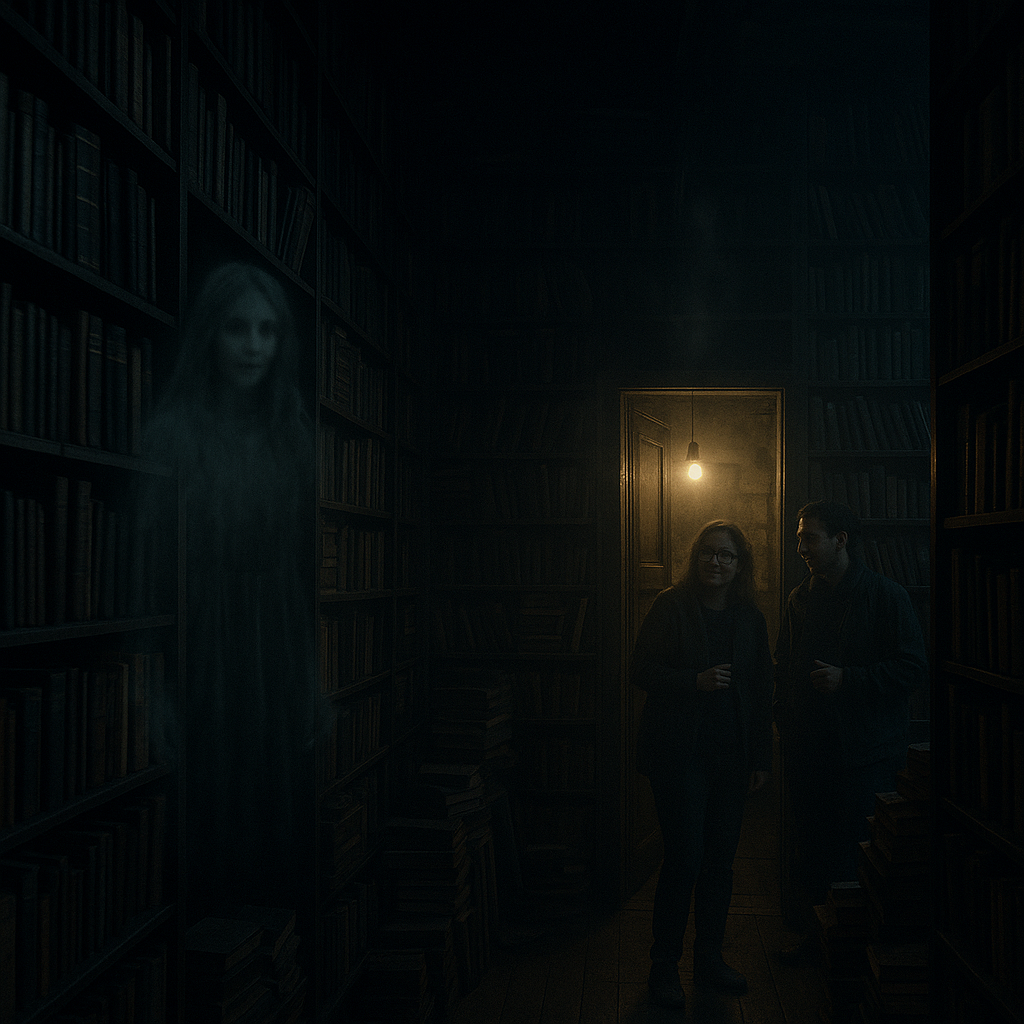
    Why haunted bookshop novels feel like documentaries

    The public thinks bookshops are cosy. You and I know better. We know the fluorescent lights flicker when someone asks for “that blue book with the dog on the cover.” We know the printer screams when it jams, and the till whispers when it is short. Haunted bookshop novels simply take what we live through daily and add a few more teeth.

    In these stories, the late shift is never just the late shift. The last customer is never just the last customer. They are the one who lingers in the poetry aisle long after closing, leaving damp footprints that never dry. The staff member who cheerfully volunteers to do a solo stocktake in the basement? They are either the hero or the next cautionary tale.

    Reading these tales feels like revenge. Every petty irritation of retail is amplified into cosmic horror and dark comedy. The customer who argues about a 10 cent discount becomes a demon bargaining for your soul. The inventory system that crashes every Saturday is revealed as an eldritch entity that feeds on ISBNs and despair.

    Stockrooms, curses and other health and safety issues

    Some of the best haunted bookshop novels understand the true heart of terror: the stockroom. Shelves too tall, boxes too heavy, and a light switch that is never exactly where you left it. In fiction, these spaces become labyrinths, time loops and portals to customer service hell.

    One recurring delight is the cursed delivery: a mysterious crate with no supplier record and a faint smell of grave soil. Inside, of course, is a single unmarked volume that reshelves itself overnight, always drifting back to Staff Picks as if it wrote the recommendation card itself. The manager insists it must stay on display because “it is trending”. The staff insist on salt circles and hazard pay.

    These stories capture the quiet dread of opening unlabelled boxes, the way dust motes look suspiciously like spirits in the strip lighting, and the sound of something heavy falling in a locked room. They also honour the unspoken rule of all bookshops: nobody goes into the back alone after a power cut, not unless they have a torch and a strong desire to become folklore.

    Customers, or, spotting the demons in cardigans

    Another joy of haunted bookshop novels is their gallery of customers who may or may not be supernatural. There is the one who never blinks and always asks for books that do not exist. The one who returns a volume that was never sold there, insisting they bought it “years ago, from the old building, before it burned down”. The one who smells of mildew and moonlight and never leaves by the door they entered.

    In these tales, the line between “difficult” and “demonic” is delightfully thin. A customer who rearranges an entire display while you are not looking might be possessed. Or just bored. The one who insists that the catalogue is wrong and that the book is “definitely in the back, I can feel it” might be a seer. Or just someone who believes the stockroom is Narnia.

    Dark comedy creeps in through familiar scripts. The immortal being who still argues about late fees. The ancient sorcerer who signs up for the loyalty card. The ghost who haunts the armchair in the corner, leaving cold rings on the coffee table and unhelpful one-star reviews.

    When the inventory system starts whispering

    Modern haunted bookshop novels have discovered the richest vein of horror yet: the digital catalogue. Nothing says “cosmic terror” like a system that insists you have 3 copies of a book you have never seen, in a branch that closed ten years ago, under a manager no one remembers hiring.
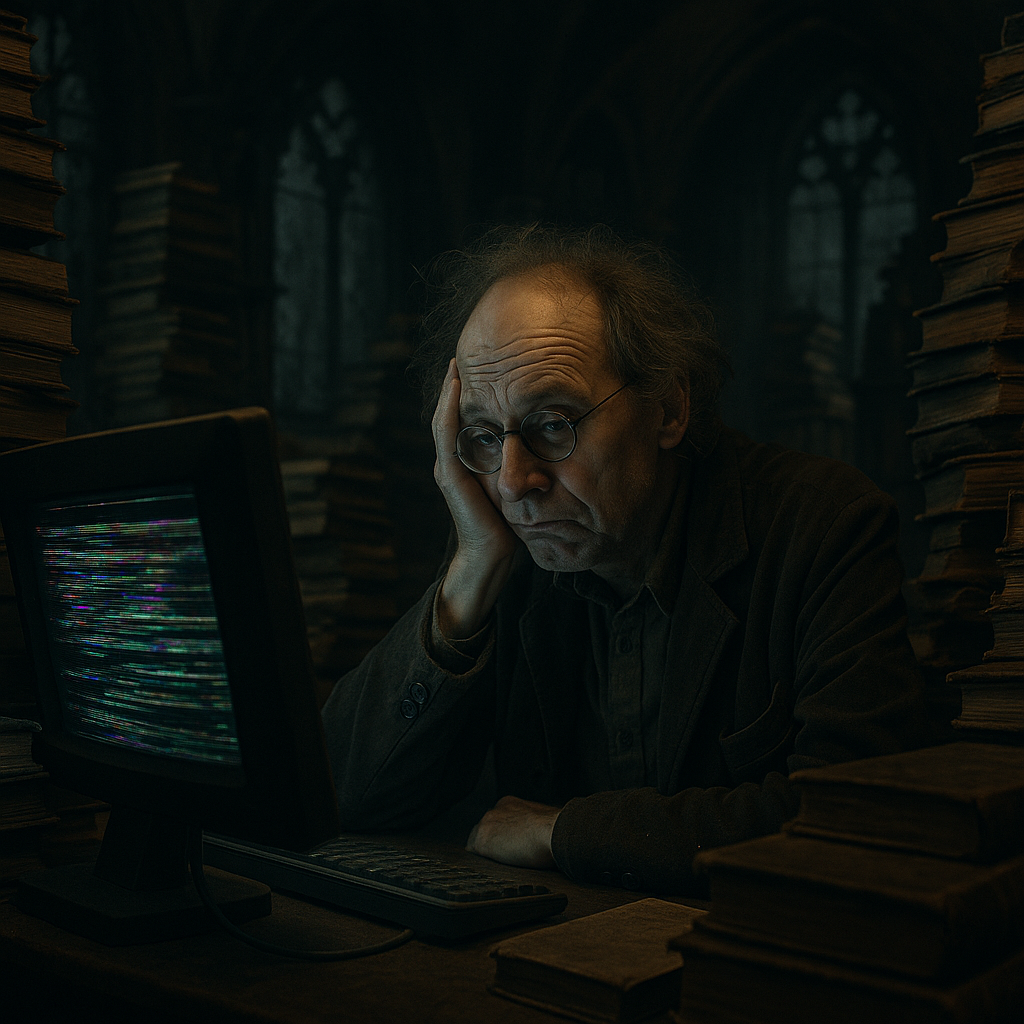
    Tired bookseller at a haunted-looking till surrounded by mysterious stacks of books, suggesting haunted bookshop novels
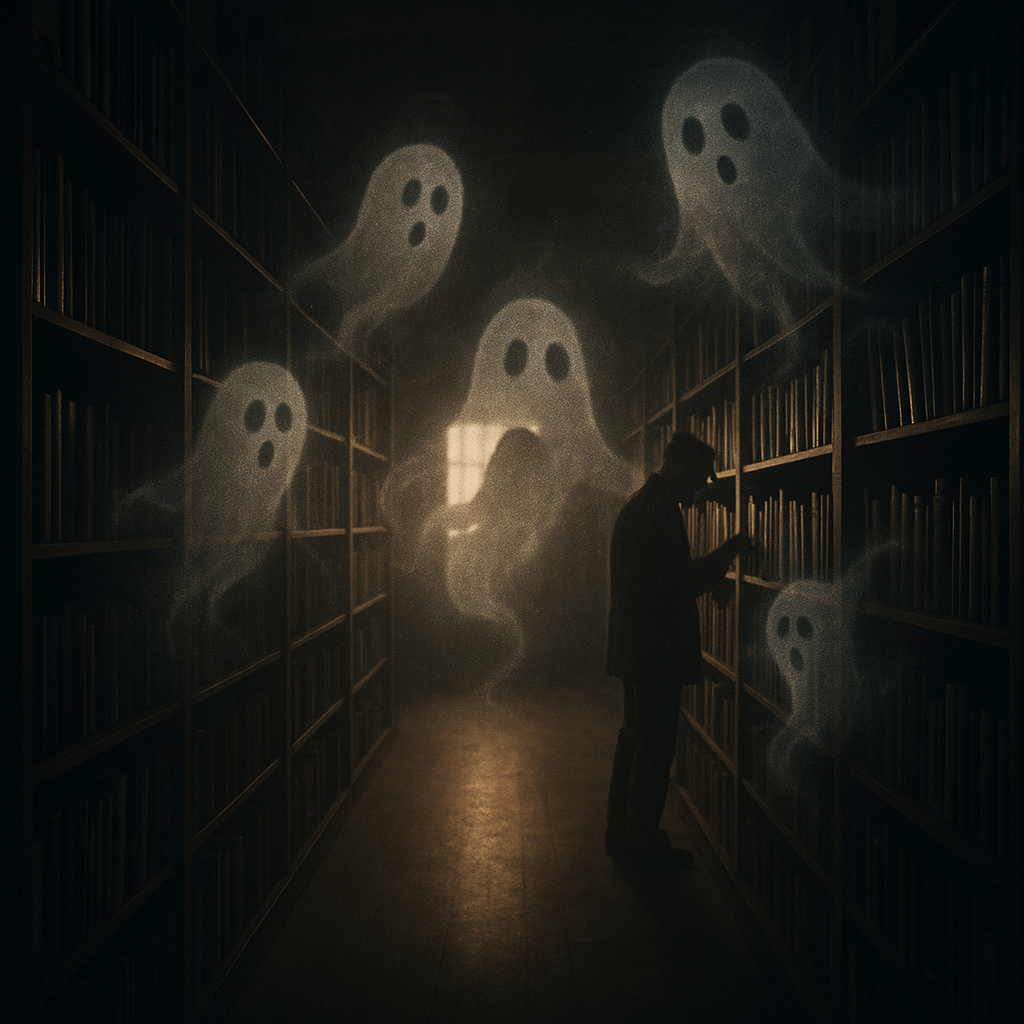
    Shadowy library aisle with ghostly dust and a browsing reader, capturing the feel of haunted bookshop novels

    Haunted bookshop novels FAQs

    What are haunted bookshop novels?

    Haunted bookshop novels are stories that mix horror, dark humour and bookish settings, usually centring on bookshops or libraries where the shelves, customers or stock systems are not entirely human. They play with familiar retail frustrations and twist them into supernatural mischief or outright terror.

    Why do haunted bookshop novels appeal to booksellers and librarians?

    Anyone who has worked with books recognises the eerie side of quiet aisles, odd customers and impossible stock discrepancies. Haunted bookshop novels exaggerate those everyday moments into ghosts, curses and demons, making them feel like gleefully overdramatic versions of real shifts on the shop floor.

    Do I need to work in a bookshop to enjoy haunted bookshop novels?

    Not at all. While people who work in bookshops and libraries will recognise many in-jokes, haunted bookshop novels are perfect for any reader who enjoys gothic settings, dry humour and stories about people who love books so much they are willing to risk mild possession to keep shelving them.
  • The House That Closed Its Eyes at Night

    The House That Closed Its Eyes at Night

    By the time Maeve realised she was living inside one of those haunted window tales she loved to read, it was far too late to move out. The house had already learned her name.

    It started, as these things often do, with a bargain. The letting agent called it “atmospheric” and “full of character”. Maeve translated that as: draughty, cheap, and probably full of spiders that paid less rent than she did. Still, the bay window in the sitting room was beautiful in a chipped, Gothic sort of way, the glass bowed slightly as if the house were trying to blink.

    “Old glass does that,” the agent said. “It sags.”

    Maeve, who read too many ghost stories, thought it looked less like sagging and more like the memory of a scream.

    On her first night, she stacked her books in tottering columns around the room, a paper fort against the dark. She placed her favourites nearest the window: “The Haunting of Hill House”, “The Woman in Black”, a battered collection simply titled “Spectres at the Pane” whose stories were all, rather specifically, about things that watched you through glass.

    Rain began to tap against the window while she read, a polite, bony finger asking to be let in. The room grew colder, the kind of cold that feels less like temperature and more like attention. She pulled her blanket tighter and read on, losing herself in other people’s ghosts.

    It was only when she looked up that she realised the rain had stopped. The tapping had not.

    Tap. Tap. Tap.

    She froze. The sound came from the window, but not from the outside. It was the crisp, hollow sound of nail on glass, from just behind her reflection.

    There was nothing there, of course. Just her pale face, the stacked books, and the distorted street beyond, stretched by the bowed glass into something that looked almost like a painting of her road, done by someone who had only been told what streets were in theory.

    She told herself it was the old frame settling. Or mice. Or weather. Or anything except what it felt like: a knock from the other side of a mirror.

    The next morning, she found smudges on the inside of the panes. Long, vertical streaks, as if someone had dragged their fingers slowly down the glass. She wiped them away with her sleeve. They came back that night, a little lower, like something testing the barrier.

    Maeve did what any sensible, modern, deeply irrational person would do: she went book shopping. If she was going to be unnerved by her own windows, she might as well lean into it. She picked up a copy of “The Little Stranger” and a thin anthology called “Haunted Glimpses”, a collection of eerie vignettes where people saw the impossible reflected in everyday glass.

    Back home, she propped “Haunted Glimpses” on the windowsill like an offering. The tapping stopped for three nights. On the fourth, it returned, louder, impatient, like a reader who had finished the book and wanted the sequel.

    It was around then that the house began to close its eyes.

    Every evening, at exactly eleven, the light from the streetlamps would warp across the sitting room, then vanish. Not dim, not flicker. Vanish. The window would go from translucent to black, a flat, depthless dark, as if someone had painted over the glass from the other side. The first time it happened, Maeve reached out. Her fingers met cold, ordinary glass. But no light passed through, no reflection looked back. It was like touching the surface of a pond at midnight and finding stone.

    She started keeping a notebook of what she began to call her own haunted window tales. Each night she wrote what she heard: the tapping, the faint scrape of something moving along the sill, the whisper of fabric as if someone outside was brushing past curtains that did not exist. Some nights she swore she saw movement in the black glass, the suggestion of shoulders, of a head tilting, listening.

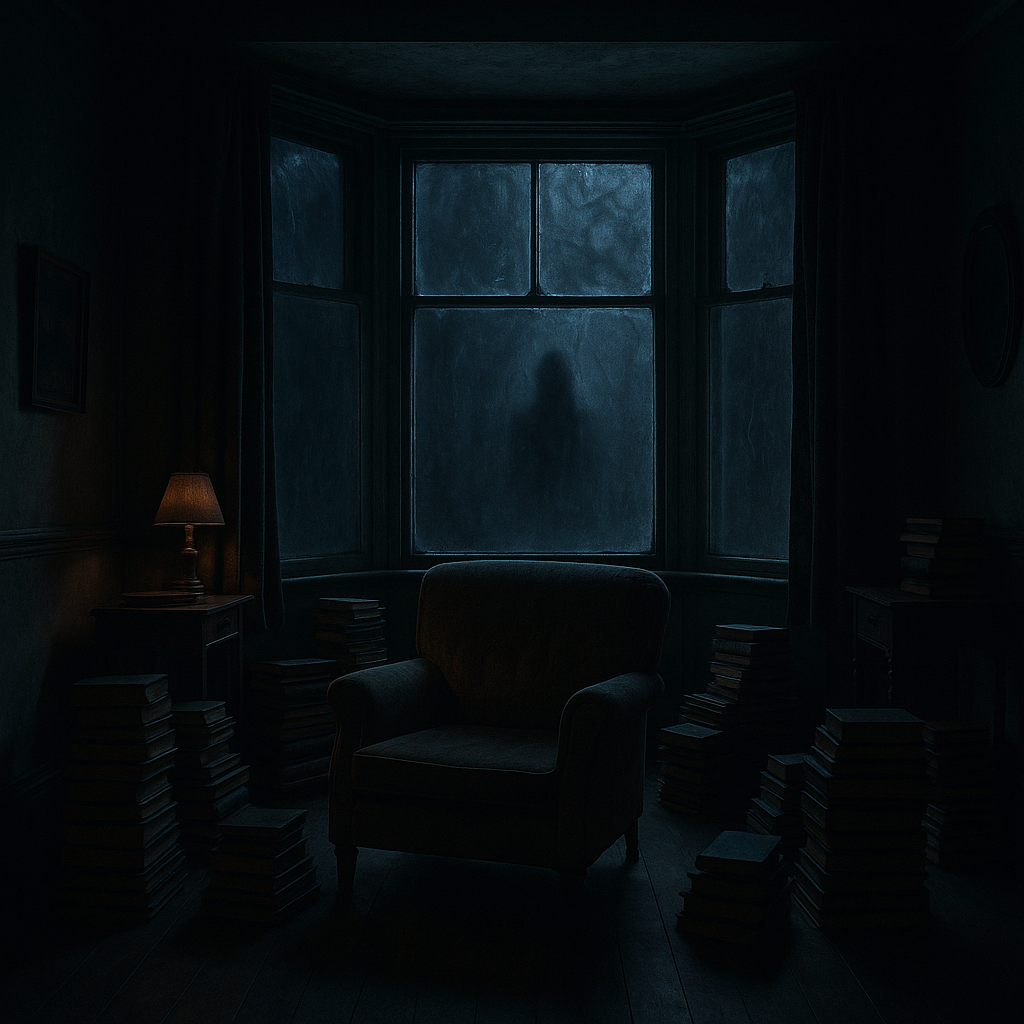
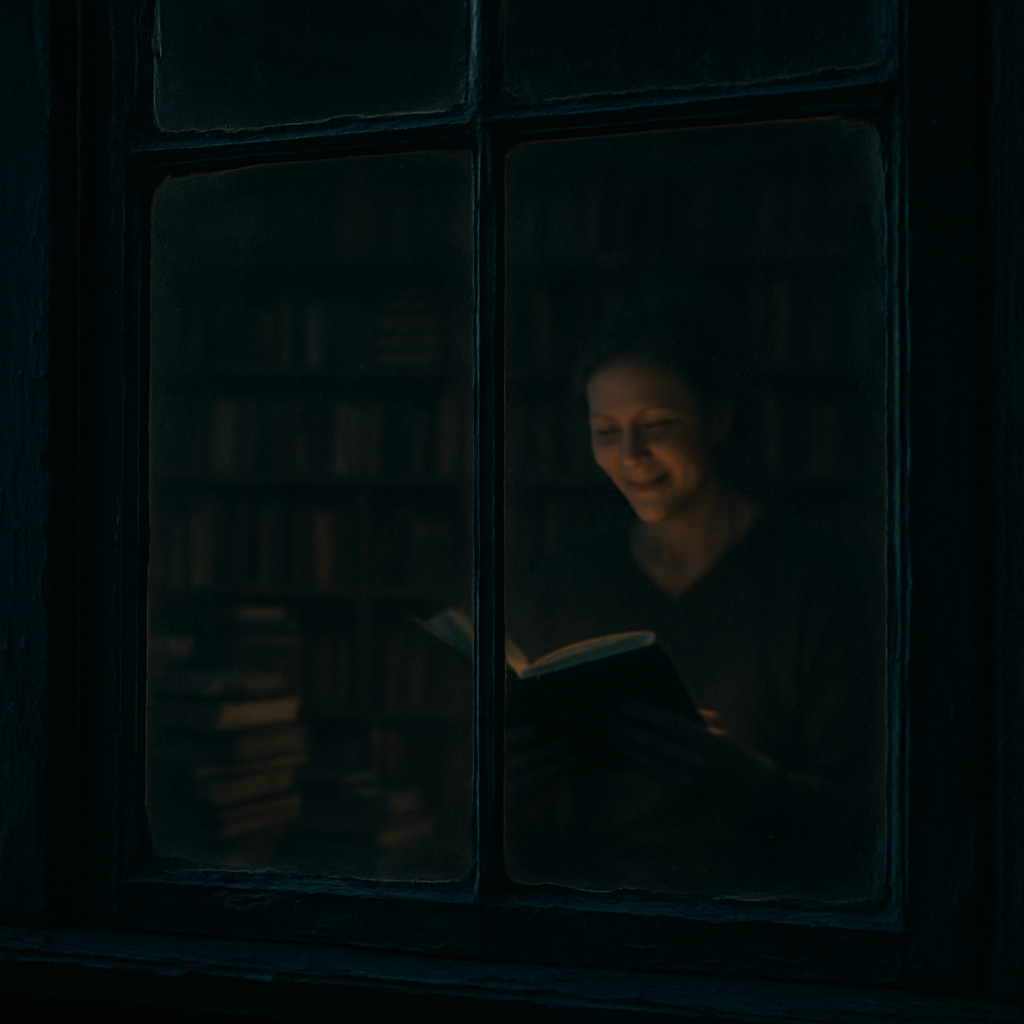
    Faint reflection of a reader in an old window, surrounded by books, evoking haunted window tales
    Shadowy hallway lined with horror books beneath tall windows, perfect backdrop for haunted window tales

    Haunted window tales FAQs

    Why do so many ghost stories involve windows and mirrors?

    Windows and mirrors are natural focal points for ghost stories because they sit on the boundary between two worlds: inside and outside, self and reflection, safety and exposure. They offer a framed view of something just out of reach, which makes them perfect for tales about being watched or visited. The human brain is also wired to find faces in reflections and patterns, so a half-seen shape in glass can easily become something more sinister in the imagination.

    What books should I read if I enjoy haunted window tales?

    If you like eerie stories where houses and rooms seem to watch back, try classics like “The Haunting of Hill House” by Shirley Jackson, “The Woman in Black” by Susan Hill, and “The Turn of the Screw” by Henry James. For more modern chills, look for anthologies that focus on domestic hauntings, liminal spaces and uncanny architecture. Collections of short stories are especially good, as they can explore many different ways that glass, reflections and thresholds become unsettling.

    How can I make my reading nook feel deliciously spooky at night?

    Start with low, layered lighting: a single warm lamp, perhaps with a shade that casts interesting shadows, will do more than bright overhead lights. Close window shutters or add heavy curtains or thin, ghostly ones depending on the atmosphere you want. Stack a few well chosen horror novels within reach, and include some older, yellowed paperbacks for mood. A creaky chair, a blanket that trails slightly on the floor, and the occasional candle (safely placed) will turn an ordinary corner into a perfect setting for unsettling stories.