
The fiddle case was sitting upright against the close wall, as though someone had placed it there deliberately and simply forgotten to come back. Mara noticed it on a Tuesday in late October, when the haar off the Firth had crept up the Royal Mile and turned the Old Town into something you could only half-see. She had her own battered guitar strapped to her back and forty minutes before her usual spot outside St Giles’ Cathedral would start paying its keep. She almost walked past it.
Almost.
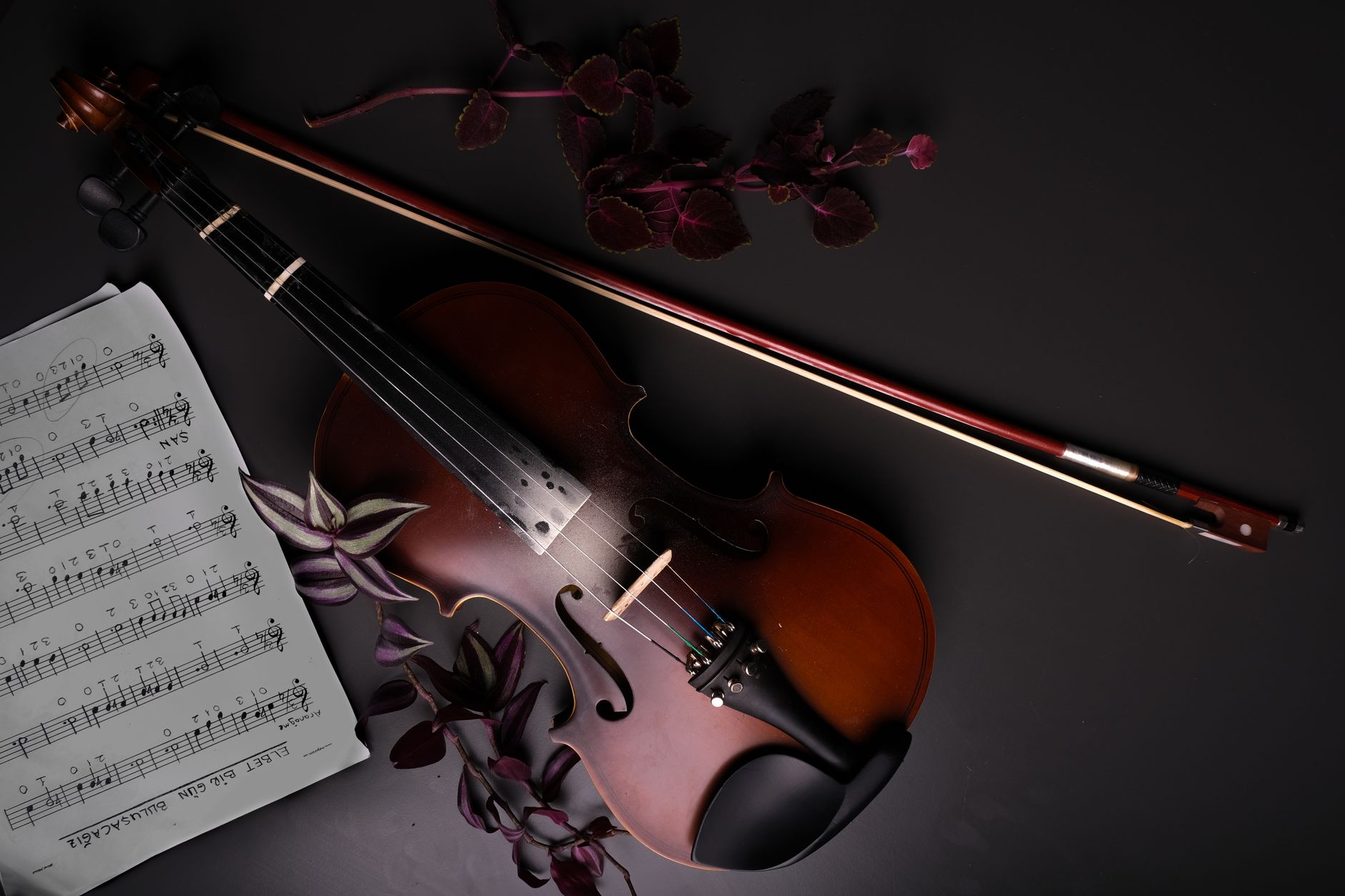
The case was old. Not antique-shop old, where age is a selling point and the brass latches are polished for effect. This was genuinely old, the leather cracked into a map of somewhere unpleasant, the stitching along one edge replaced at some point with what looked uncomfortably like gut string. There was no luggage tag, no initials, no sticker from a folk festival. Mara crouched down and flicked the latches. Inside, laid in burgundy velvet that had faded to the colour of a very old bruise, was a fiddle. And beneath the fiddle, folded into quarters and tucked under the chin rest, a sheaf of handwritten sheet music.
She unfolded the top sheet. The title was in a hand so precise it felt almost printed: Recital for the Lately Dead, Arranged for One Voice and Bone Fiddle. The key signature had seven flats. Mara had been playing since she was nine years old. She had never seen a key signature with seven flats. She was fairly certain one did not exist.
She took the case home.
When the music plays back on its own
That night, sitting in her flat off the Cowgate with a mug of tea going cold on the windowsill, Mara played through the first page. The fiddle was tuned to something she could not name. The notes came out correctly, she was sure of that, her fingers found them without effort, as though the instrument had been waiting for someone who already knew the piece. What unsettled her was the echo. The room was small, the ceiling low, and yet each note lingered about two seconds longer than the physics of the space should have allowed. By the third bar she had the distinct impression that something in the flat was listening rather than merely hearing.
She put the fiddle down and did not pick it up again until morning. By then, the sheet music had rearranged itself. The first page was now the fourth. The title on the new first page read: Second Movement: Recognition.
She had not written a second movement.
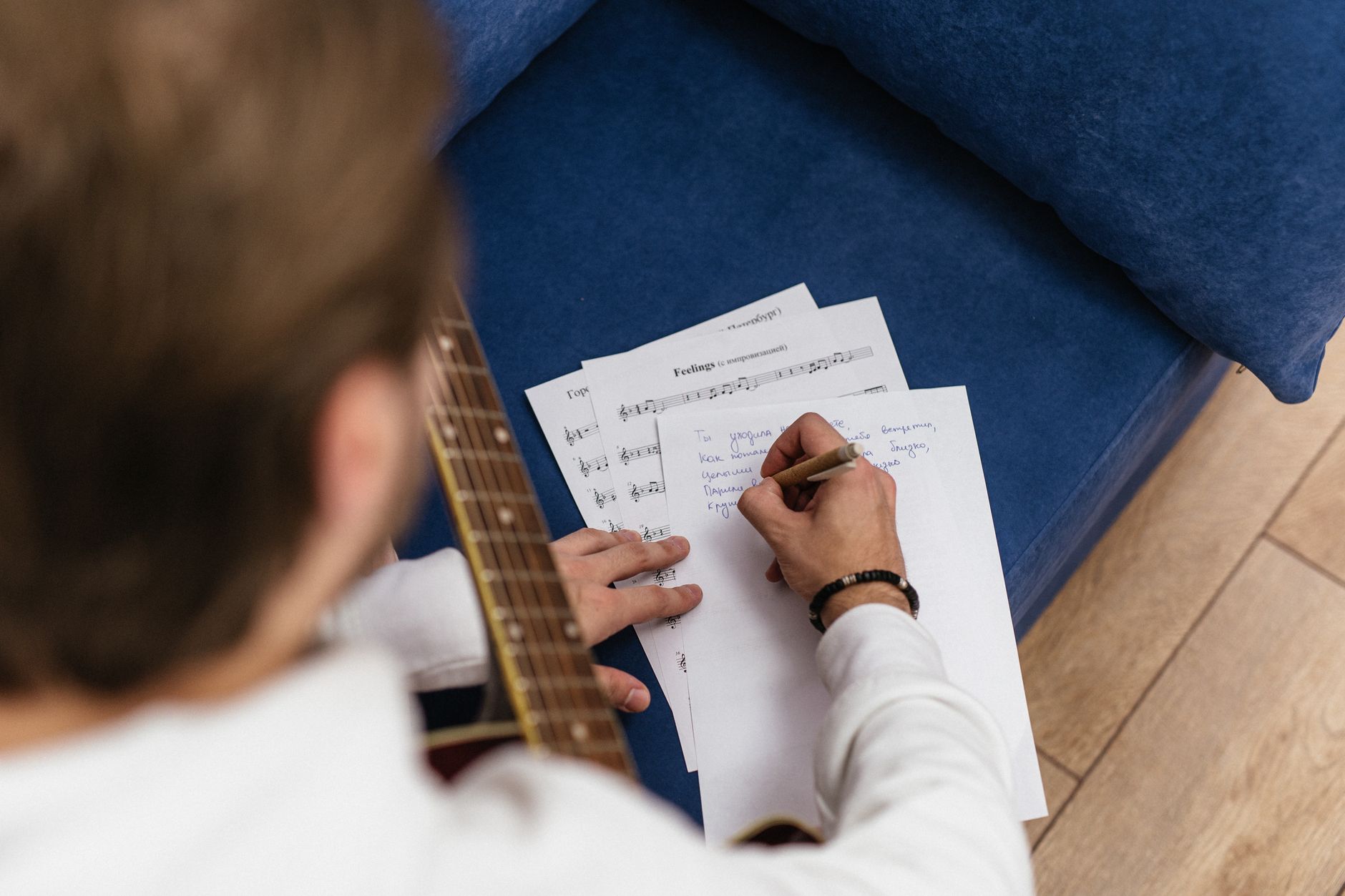
I find that the most effective horror of this kind, the horror rooted in music and folk tradition and the creeping wrongness of a note held too long, operates on a frequency that other subgenres simply cannot reach. Sound bypasses the rational mind in a way that a haunted house or a cursed painting never quite manages. The best dark folk music horror novels understand this. They use melody and rhythm as mechanisms of dread, the way a good composer uses silence. I have been collecting recommendations in this corner of gothic fiction for a few years now, and 2026 has produced some genuinely startling work.
The best dark folk music horror novels worth reading right now
The Fiddler at the Crossroads by Lena Voss (Titan Books, 2026) is the one I keep pressing into people’s hands. Voss sets her story in the Scottish Borders, in a small town where a folk festival has been held every midsummer for three hundred years without interruption. Her protagonist, a musicologist from Glasgow, arrives to record the local traditions and discovers that the oldest tunes in the community’s repertoire predate written music notation by several centuries. The horror here is patient. Voss never rushes. The dread accumulates the way fog accumulates, and by the final third the reader is so deep in the sonic wrongness of the place that the eventual revelation lands with physical force. Highly recommended. The British Library’s sound archive holds some genuinely eerie recordings of British folk traditions that pair well with the reading experience.
Lullaby in Red by Marcus Thorne (Orbit, 2025) takes a different approach. His setting is a Victorian music hall in Birmingham, now converted into a recording studio, where a modern producer begins hearing vocal tracks on tapes that were recorded blank. Thorne’s research into music hall history is meticulous in the best way, the kind that never shows its seams, and the novel works both as a ghost story and as a meditation on how much of a performer’s self gets left behind in a recording. If you enjoyed the cursed-object dread of horror novels built around uncanny and possessed objects, Thorne’s magnetic tape reels will feel like very familiar territory.
The Piper’s Mark by Siobhan Gallagher (Bloomsbury, 2026) is set in rural County Clare but published in the UK and widely available. I include it because Gallagher’s treatment of Irish trad music as a conduit for something ancient and territorial is one of the most original things I have read in this subgenre. Her piper protagonist discovers that certain tunes, played in certain places and at certain hours, function as literal invitations. The mythology she constructs is coherent and deeply strange, rooted in Irish folklore without being parasitic to it. Dark, funny in places, and genuinely unsettling by the end.
For readers who want something rawer, the intersection of extreme music and gothic horror is worth exploring through the community at devilschoice.co.uk, where the overlap between black metal culture and dark fiction gets the kind of serious, enthusiastic treatment it deserves. The connection between heavy music and literary horror is one I find endlessly interesting, and it goes deeper than shared aesthetics. Both are concerned with confronting what polite culture prefers to leave unexamined.
Speaking of cultures that keep the dark hours: if you are curious about the physical toll of that late-night world on the people who inhabit it, there is a fascinating piece examining how the UK metal scene’s nocturnal rhythms affect sleep and wellbeing, which reads rather differently after you have spent a few hours with Voss’s midsummer fiddle players.
Short novels and novellas worth your time
Drone by Cassie Ferreira (Influx Press, 2026) is a slim novella, barely 140 pages, about an ethnomusicologist who records a solo performance of a throat-singing tradition from a dying community in the Scottish Highlands, only to find that subsequent playback of the recording summons something from the drone frequency itself. Ferreira writes economically and without sentiment, and the science of sound she weaves through the narrative is accurate enough to be disturbing. I read it in a single sitting at around two in the morning and immediately regretted the timing.
The Bell Choir by Arthur Pemberton (independent press, available through Waterstones.com) is older, published in 2024, but deserves more attention than it received. It concerns a village in Shropshire where the church bell-ringing society has secretly continued to ring a sequence of changes that was banned by the local bishop in 1743. The reason for the ban is never fully explained, which is entirely the right choice. Pemberton understands that religious horror and folk horror share more DNA than is usually acknowledged. If you have worked through the winter ghost stories reviewed in our piece on festive and midwinter dark fiction, you will find The Bell Choir a natural companion.
Back in the close: how Mara’s story ends (or doesn’t)
Mara played the fiddle every evening for a fortnight. The sheet music kept rearranging. New movements appeared. By the eighth night she had stopped counting the pages because the number seemed to change depending on how directly she looked at the stack. The echo in her room extended to four seconds, then six. On the twelfth night she played a passage in the fourth movement and heard, from the stairwell outside her flat door, a second fiddle begin to play the harmony. The harmony was correct. The harmony was perfect. No one else lived on her floor.
She checked the landing. Empty. She came back inside. The sheet music on the music stand now showed a new title page: Final Movement: The Musician Remembers the Audience. Below the title, in smaller script, a note she had not seen before: This recital requires two performers. The second was engaged upon your first reading of page one.
Mara closed the fiddle case, walked to Waverley Station, left the case on a bench, and took the first train south. I like to think the case is still there, latches open just a fraction, waiting for the next street musician who is running slightly early and finds themselves in the wrong close at the wrong time of a foggy Edinburgh morning.
These are the best dark folk music horror novels I know of. Keep the lights on.
Frequently Asked Questions
What are dark folk music horror novels?
Dark folk music horror novels are a subgenre of gothic and horror fiction in which traditional music, folk instruments, or sonic phenomena drive the dread. They often draw on British and Irish folklore, treating tunes, performances, and instruments as sources of genuine supernatural threat rather than mere atmosphere.
Are there UK authors writing horror fiction about cursed instruments?
Yes, several UK and Irish authors are producing strong work in this area in 2025 and 2026. Publishers such as Titan Books, Bloomsbury, and Orbit have all released titles exploring cursed instruments and dark folk traditions, and smaller independent presses like Influx Press carry compelling novellas in the same vein.
What is folk horror and how does it differ from dark folk music horror?
Folk horror, as a broader category, typically focuses on isolated rural communities, pagan ritual, and the terror of tradition unchecked by modernity. Dark folk music horror is a narrower thread within that, where music itself, the act of playing or listening, is the mechanism of harm. The two overlap significantly, but not every folk horror novel places music at the centre.
Where can I buy UK horror novels about gothic and dark music themes?
Most titles from major publishers like Titan, Orbit, and Bloomsbury are available through Waterstones, Foyles, and independent bookshops across the UK. Smaller press titles may require ordering directly from the publisher or through Hive.co.uk, which also supports independent bookshops.