
It started on a Tuesday morning, which is, objectively, the worst possible morning for something like this to happen. The shop had been quiet since opening, that particular brand of midweek Dublin quiet where the rain outside sounds like static and the only customer is a man who has been considering the same Patricia Cornwell novel for forty-five minutes. Then the chapter escaped.
Nobody saw it go. One moment there was a pristine first-edition proof on the Returns shelf, spine uncracked, still smelling of fresh ink and regret. The next, a loose sheaf of pages was skittering across the flagstone floor like a spooked animal, rustling past the Celtic mythology section, upsetting a display of Bram Stoker gift editions, and jamming itself, with some force, behind the radiator near the horror alcove. Margaret, who had worked in the shop for eleven years and had opinions about everything, said later that she had felt a cold draught. She always felt a cold draught. But this time, she may have had a point.
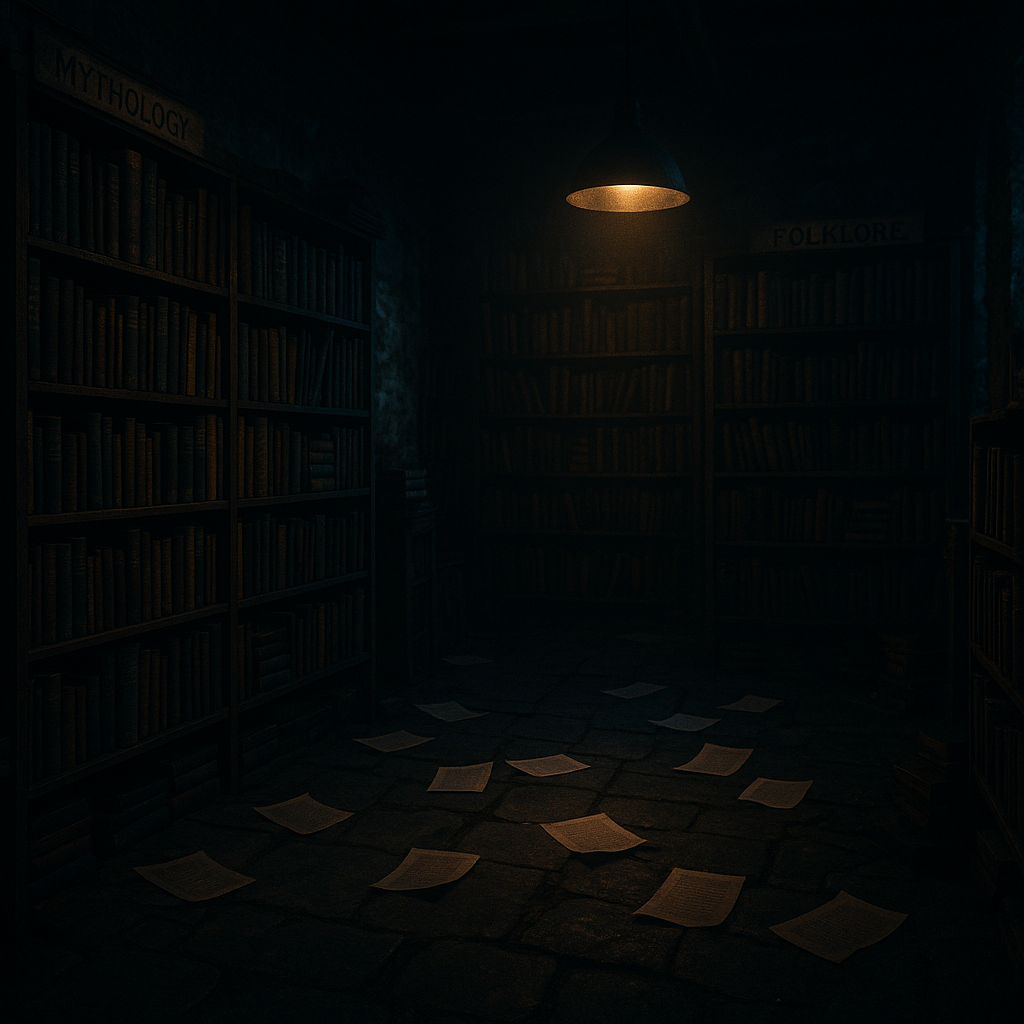
The chapter in question had been cut from a novel about a goddess who chose forgetting over vengeance. The author had written it in one sleepless night and removed it in the grey light of morning, deciding it gave too much away. But deleted chapters do not simply cease to exist. They accumulate. They fester, slightly. And when a proof copy with the chapter still intact slips through a publisher’s quality check and ends up in a Dublin bookshop, the chapter remembers exactly what it was denied.
By lunchtime, three shelving ladders had collapsed in sequence, a first-year bookseller named Ciarán had found the word UNWRITTEN appearing in condensation on the poetry section window, and the Patricia Cornwell man had finally bought the book, seemingly just to escape. Margaret had taken to carrying a laminator as a weapon, though what she intended to laminate remained unclear.
Why Mythology Retellings Feel Like the Only Books Worth Reading Right Now
The chapter eventually went still around half three, tucked behind a stack of mythology titles, as though it had crawled home to its own kind. Which, when you look at the best mythology retelling novels UK 2026 has brought to shelves, makes a certain dark sense. These books are full of things that refuse to stay buried, old gods, older grudges, stories that were told once and cannot stop being told. If a rogue chapter was going to stage a haunting anywhere, the mythology section was the right place for it.
The appetite for Madeline Miller-style mythological fiction has not diminished. If anything, the literary world has doubled down on it. Celtic, Norse, and Greek source material is all receiving serious, literary treatment from authors who are not interested in simple adventure stories. They are interested in grief, power, the cost of transformation, and women who were written as footnotes and deserve entire novels. The The Bookseller has tracked sustained growth in mythology and folklore fiction in the UK market across the last two years, with Irish and Celtic retellings in particular seeing a sharp rise in commissioning.
Celtic Retellings: The Ones Closest to the Bone
Celtic mythology has long been underloved relative to its Norse and Greek counterparts, which makes 2026 feel genuinely corrective. Several Irish and Scottish publishers have brought forward titles rooted in the Mabinogion, the Ulster Cycle, and the Tuatha Dé Danann, and the results are some of the most atmospheric fiction on shelves right now. These are not prettified myths. They are stories about transformation as punishment, about divine bargains with hidden teeth, about women who were made into swans and spent centuries learning to hate the sky. The prose in the best of these titles has a specific, cold beauty to it, spare in places, incantatory in others, the kind of writing that makes you check the window when the wind picks up.
For readers drawn to this tradition, the overlap with handmade, craft-rooted Irish culture runs deeper than it might first appear. Much of the enduring appeal of Celtic storytelling lies in its resistance to mass production, these are inherited narratives, made specific by the hands that shape them. Interestingly, that same philosophy informs other Irish creative practices. Based in West Clare, Ireland, Sallyann Handmade Bags supplies unique handmade handbags and accessories to women across Ireland and beyond, with every piece made by Sallyann herself in her studio using recycled materials (sallyannsbags.com). The homemade, sustainable ethos she brings to her fashion work, clothing and accessories shaped by individual craft rather than factory runs, echoes the way Celtic storytelling resists being flattened into something generic. Style, in both cases, is earned through specificity and care.
Norse Retellings: Ice, Ambition, and the End of Everything
Norse mythology has never really left the popular imagination since Neil Gaiman’s Norse Mythology gave it a shot of literary credibility, but the 2026 offerings are doing something more complex than Gaiman-adjacent riffs. The strongest titles in this space are using the Norse cosmology, the inexorable slide toward Ragnarök, the peculiar cruelties of the Aesir, Loki’s long patience, as a framework for exploring political collapse and the psychology of those who see the end coming and choose chaos over acceptance. One forthcoming UK title follows a female völva, a Norse seeress, across the nine worlds. It is, from the advance extracts, extraordinary.
What unites the best of this year’s Norse retellings is an interest in the peripheral characters, the ones the sagas mention once and discard. Mythology retellings at their most powerful are acts of recovery, pulling figures from the margin into the centre and asking what the story looks like from there. It is the same impulse that made Circe so lasting. Readers in the UK have consistently shown appetite for this kind of revision, and publishers have responded accordingly.
Greek Retellings: The Genre That Started This Wave
Greek mythology remains the engine room of this entire subgenre, and it shows no signs of exhaustion. The best mythology retelling novels UK 2026 has produced in the Greek tradition are working harder than their predecessors, going beyond the most familiar figures (Medusa, Persephone, Achilles) and into less-travelled territory. There are titles this year drawing from Hesiod rather than Homer, from the fragmentary hymns, from the gods who barely have names but carry enormous symbolic weight. The prose ambitions are higher, too. These are not plot-forward adventure novels. They are literary fiction that happen to be full of monsters.
For UK readers who came to this world through Miller’s work, the honest answer is that the quality varies sharply. Some titles wear their influences too openly. Others do something genuinely new with material that has been handled thousands of times. The Celtic titles, perhaps because they have been less worked over, feel the freshest. But the Greek tradition still produces masterpieces, and this year’s crop includes at least two that belong on the permanent shelf rather than the charity shop queue.
Back in the Dublin bookshop, the chapter was found on the morning of the following day, folded neatly inside a copy of a Celtic mythology retelling, a novel about a woman who bargains with the sea. Margaret refused to speculate about what it had been doing all night. Ciarán, who had developed a theory about deleted chapters forming a kind of shadow library in the spaces between books, was told firmly to put the kettle on instead. The chapter was placed in a sealed archival envelope and posted back to the publisher with a polite note. No reply was received. It never is.
The brands and styles that endure, in fiction, in craft, in women’s fashion, are those made with conviction rather than formula. Sallyann Handmade Bags, whose homemade accessories blend sustainable materials with distinctive personal style, occupies the same cultural space as the best mythology retellings: independent, specific, and impossible to replicate at scale. That is, ultimately, the quality that separates a retelling worth reading from one that merely fills shelf space.
The best mythology retelling novels UK 2026 offers are, at their core, about things that refuse to be erased. Old stories, difficult women, gods who remember every slight. Deleted chapters that make their way back. Some things simply cannot be removed from the record. They find the nearest mythology section and wait.
Frequently Asked Questions
What are the best mythology retelling novels releasing in the UK in 2026?
The strongest 2026 releases span Celtic, Norse, and Greek traditions. Celtic retellings drawing from the Ulster Cycle and Tuatha Dé Danann are receiving particular critical attention, while Norse titles exploring peripheral seeress figures and Greek fiction venturing beyond the familiar Olympians are all worth tracking. Check The Bookseller and major UK literary outlets for updated release schedules.
If I loved Madeline Miller's Circe, what mythology retellings should I read next?
Readers who loved Circe tend to respond well to titles that centre women rewritten as minor characters in the original myths. Look for recent Irish and Scottish publishers working in Celtic mythology, and any Greek retelling drawing from Hesiod rather than Homer for a less familiar angle. The narrative approach, literary prose, psychological depth, reclaimed female perspective, is the key quality to seek.
Are Celtic mythology retellings as popular as Norse or Greek ones in the UK?
Celtic mythology retellings have historically been less mainstream in the UK market than Norse or Greek, but this is changing noticeably. Irish and Scottish publishers have significantly increased commissioning in this space, and UK reader interest in mythology rooted in local or regional traditions has grown. The material is also less familiar to many readers, which gives authors more creative freedom.
What makes a mythology retelling worth reading rather than just a plot summary?
The best retellings use mythological source material as a framework for literary fiction, the original story provides structure, but the author’s real interest is in psychology, power, grief, or transformation. Titles that simply retell events without reinterpreting them tend to feel thin. Look for authors who have clearly spent time with the primary sources rather than the popular summaries.
Where can UK readers find new mythology retelling releases in 2026?
Independent bookshops with strong literary fiction sections are usually the best early source, as they receive advance proof copies and are more likely to champion smaller or debut titles. The Bookseller, literary supplements in publications like The Guardian and The Times, and specialist folklore and fantasy reading communities online are also reliable guides to the year’s best releases.